






 8:30 PM
 J-Mad
J-Mad

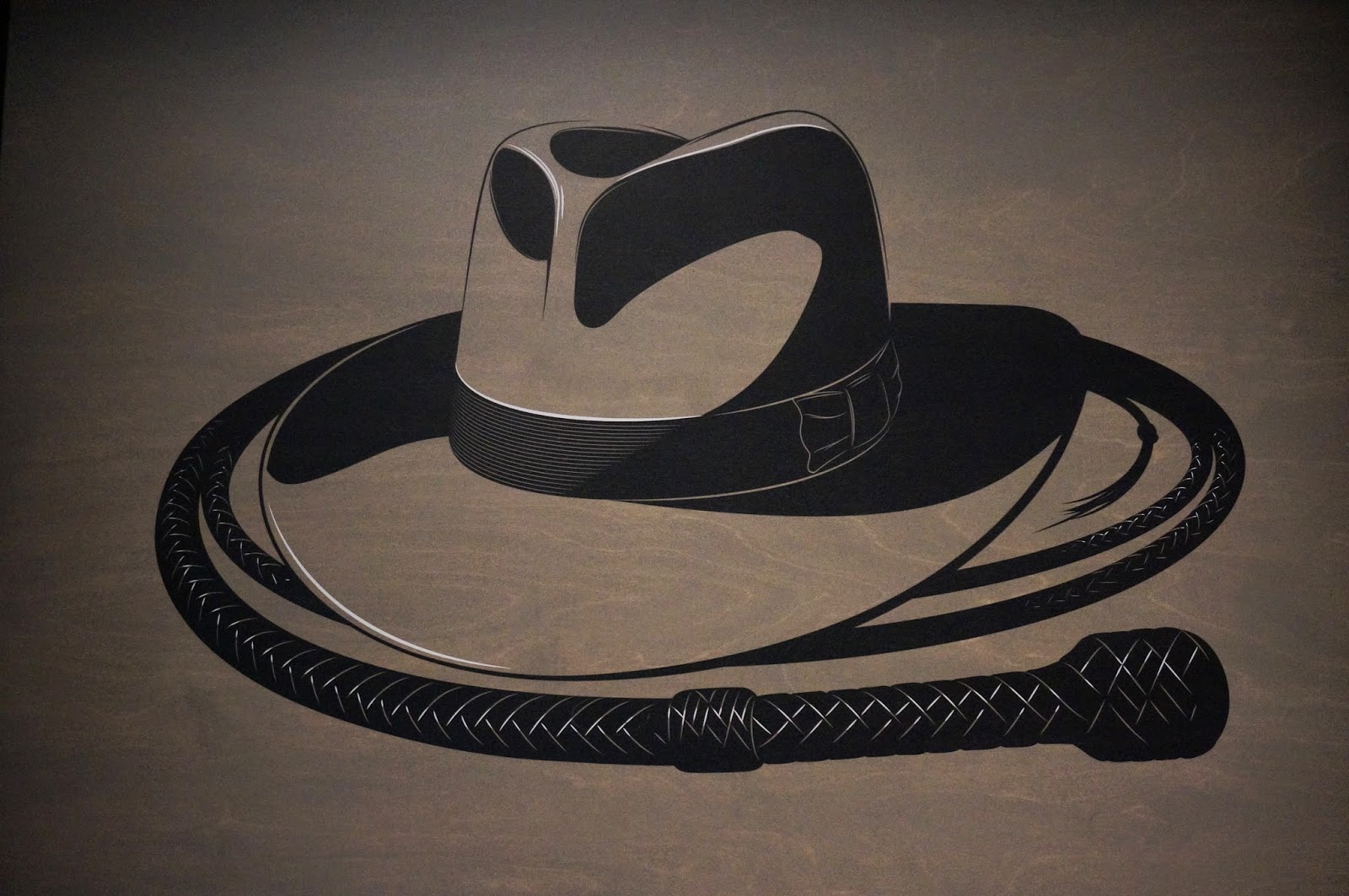
As a kid growing up, no one made archaeology or adventure cooler than Indiana Jones. On a random day off from work, I took a walk just past the main business thoroughfare of Washington, D.C., to visit the National Geographic Museum to check out their brand new exhibit: Indiana Jones and the Adventure of Archaeology.


The exhibit is a traveling exhibit in partnership between National Geographic and LucasFilms, Ltd., among others, and will be at the National Geographic Museum until January 3, 2016.

 The exhibit was a really cool combination of behind-the-scenes from the four Indiana Jones films and a look at some of the real archaeological achievements among scientists who inspired Indy.


The exhibit opens with the first film, Raiders of the Lost Ark. The process behind the opening temple scene where Indy is almost crushed by a giant boulder is revealed - the boulder is made of fiberglass and its sound effects were produced by driving a jeep over large rocks, then slowing down the sound and amplifying the bass.


The golden Chachapoyan fertility idol from the film was also decoded. The amazing thing to me was the level of research that went into these key film props. Although the Chachapoyans were a real indigenous group in the South American rain forests, the idol itself is a fake created by the filmmakers influenced by fertility idols across many ancient civilizations.

Even the pendant from the bar in Nepal that Indiana Jones used to find the location of the Ark has historical influences. The falcon symbol and the sun are representations of the Egyptian god Ra and the text around the falcon is a Phonetician script.

Between sections about the films, the exhibits also walked you through significant discoveries and concepts in the field of archaeology. For example, a shell necklace and a diamond ring demonstrate different societies' conceptions of value - that what makes an item precious is the value that we assign to it. With the seashell necklace, the shells are commonly found but were used as currency and indicated high social status when used as jewelry; a diamond is simply compressed carbon, one of the most common elements, that is cut and polished.

The exhibit also showed the significance of early forms of writing and public records keeping through a merchant's shipping list found on a common clay tablet and the oldest map depicting an area of a city taken over by the government. The clay tablet is from the Mesopotamian city of Nippur and is thought to date back to 1500-1155 BC.

Around every corner, there were ancient artifacts intermingled with history and pieces about the films.

The next Indiana Jones cinematic adventure, The Temple of Doom, featured an intricate cocktail dress made of beads and sequins from the 1920s. When the dress was torn on set, the costume designer had to fly in to repair it with the few remaining original beads and sequins left.

The behind the scenes look at the mine cart sequence was particularly cool. Miniature figurines in carts on a mini-track were filmed for the long shots of the cart. Close-ups were shot by making a full-size track with two rail lines - one for the actors and one for the cameras to follow. The camera shots were so shaky that crew members were concerned the shots might be worthless, but director Steven Spielberg loved them for the real effect they created. The cast and crew even closed down a Disney park for a day to record the audio riding on roller coasters. The film also has a unique place in motion picture history as it was the reason a PG-13 rating was created due to the nature of the scenes with the Thuggies' cult (which was a real cult outlawed in India).

While navigating toward The Last Crusade, the museum also merged a cool piece of National Geographic and archaeological history. In 1911 & 1912, Hiram Bingham found the Machu Picchu ruins, previously known only to Peruvian locals, and spent time extensively photographing the ruins of the lost Inca city. National Geographic partially funded the expedition and published his photographs in their magazine, making the city known to the rest of the world. You can read more about the history of this discovery and the original 1913 National Geographic Magazine article here.

Accompanying the expose on Bingham's work was a small example of how archaeologists can date a site and the people who lived there by the dates of artifacts found at varying levels through the excavation. The exhibit used pottery from ancient Persia as an example.

Technological advancements have also allowed archaeologists to delve deeper into the history of lost empires. Angkor Wat in Cambodia was an ancient abandoned metropolis that, with the use of a special radar developed by NASA called AIRSAR, was discovered to have extended even further than previously thought.
Although the city was abandoned and is now overrun by jungle, scientists were able to use the radar to discover that the city was sustained by innovative irrigation channels. The Smithsonian Channel has a really cool 3D imaging of what the city used to look like.
 While the extensive channels brought life to the ancient metropolis, they also were likely the reason for its decline. Once the networks became too unwieldy to manage causing the inhabitants to abandon the kingdom, returning the site to the jungle.
 While the Rosetta Stone is famous for being the artifact that cracked Egyptian hieroglyphics, Tatiana Proskouriakoff's work on the Mayan glyphs at Piedras Negras ("Black Rocks") in Guatemala unlocked the code to the complex Mayan symbols. Due to her work, some of the glyphs can even be read out loud.
 Moving from Proskouriakoff's work, The Last Crusade was unveiled. Although the film's iconic Cross of Coronado is a prop made especially for the film's opening scene ("That belongs in a museum!"), it draws upon several accurate religious influences.
 The film also draws heavily on the Crusades history of the real Knights of Templar.


 Science and cinema even merge at the end of the film to show Indiana Jones' methodology in selecting the real Grail cup.

 Indiana uses clues about Jesus' life as a poor carpenter to determine that a cup truly belonging to him would be simply made with low technical skill and easily accessible material.
Another fun fact from the film is that Sean Connery's costume was designed based on the costume designer's grandfather. However, Connery's glasses were especially designed to be rimless so that the frames would not obscure his face. Because rimless frames were not available at the time the film was made, the costume designer custom-made them uniquely for the film.

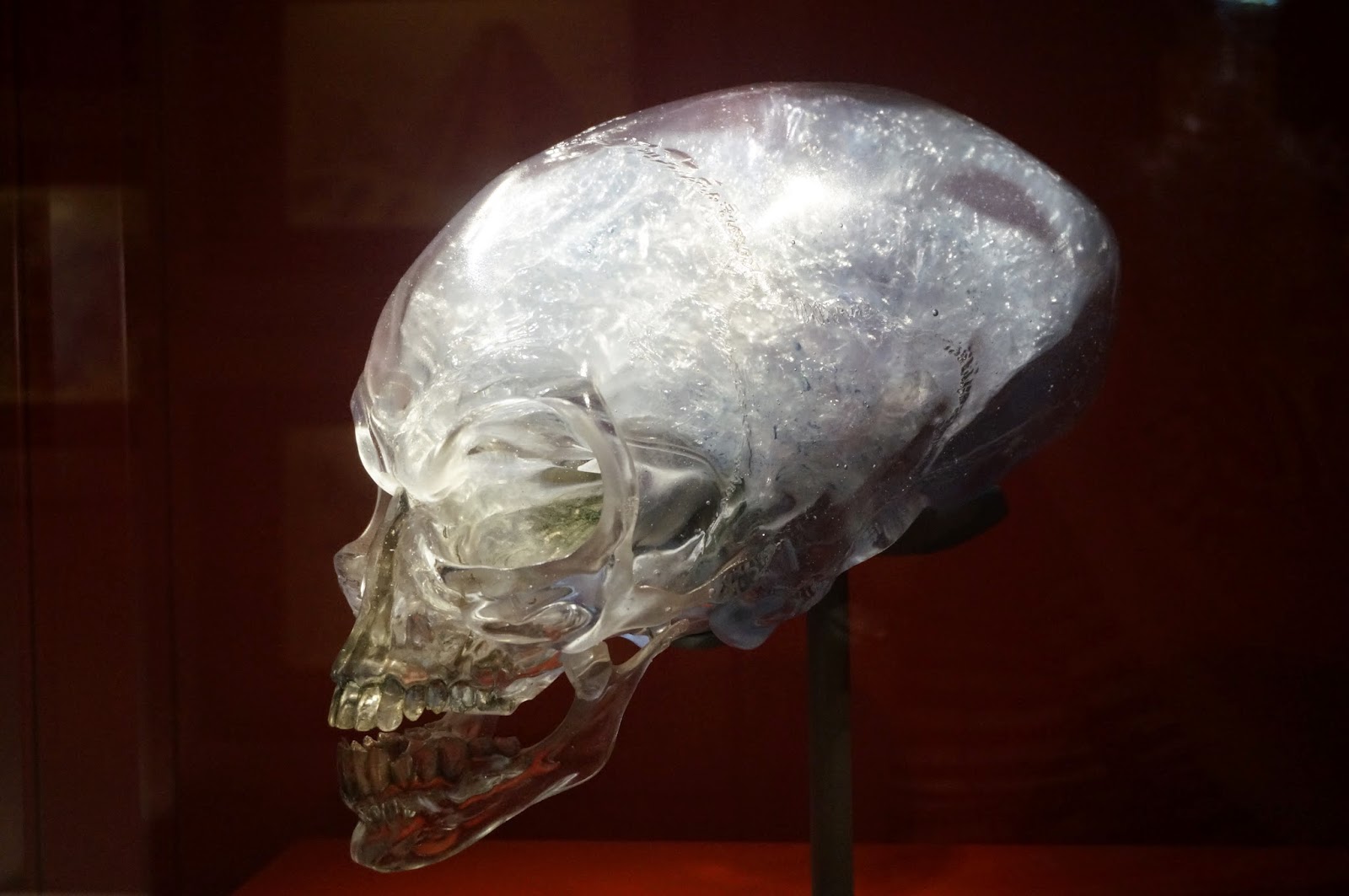
 The archaeological science ended with Nazca (Nasca) pottery from Peru, real Peruvian artifacts whose fictionalized history of which appeared in the final Indiana Jones flick, The Kingdom of the Crystal Skull.


 The Crystal Skull exhibit even discussed a bit about the popular culture intersections between ancient civilizations and the possibility of extra-terrestrial involvement in their creation.


 The exhibit was so much fun, and the information and extra videos contained in the free audio guide (included in the price of admission) was extremely helpful in illuminating all the artifacts, cinematic and historical.
 With a little adventure, there's no better way to spend a day off from work.




 Posted in:


