This past weekend, three of my friends from work and I used some of our vacation days to travel to
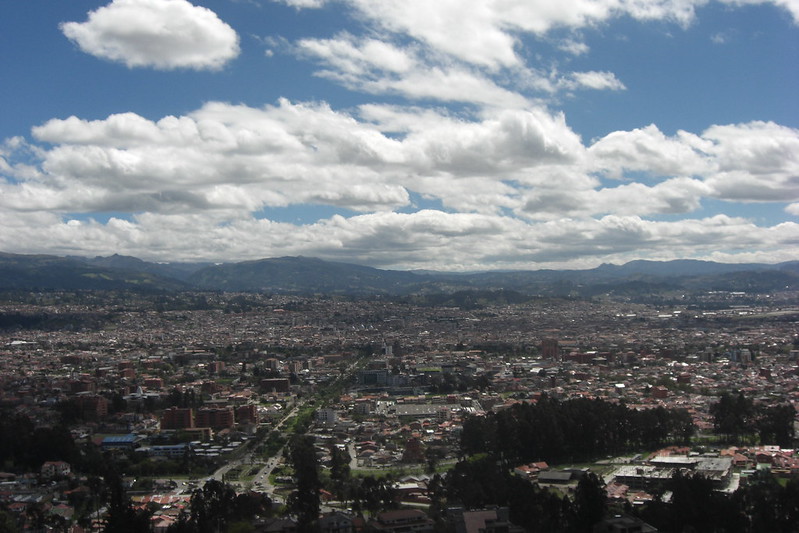
Cuenca, Ecuador. Cuenca is about a 10 to 12 hour bus ride south of Quito and is a really beautiful city. Everyone I knew who had been to Ecuador before recommended it, and I am glad that we had the chance to go.
We left Thursday night (July 25th, 2013) from Quito to Riobamba to spend the night in a hostel. We were surprised to find that Riobamba is much colder than Quito at night. Luckily, the hostel had warm, fuzzy panda blankets on all the beds (but no light in the bathroom - not helpful when arriving at 10:00pm - although it did have a skylight so I guess we shouldn't complain). The hostel was actually pretty nice. We woke up early in the morning and left the hostel by 7:00am to walk to the bus station to catch a bus to Alausí. We managed to hop right onto a bus just as it was pulling out of the station, and about an hour later, we found ourselves in a cute little touristy town of Alausi.
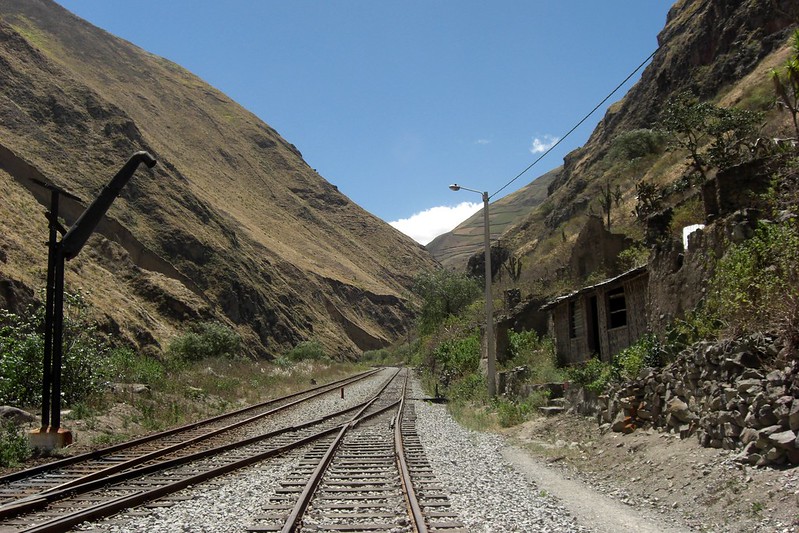
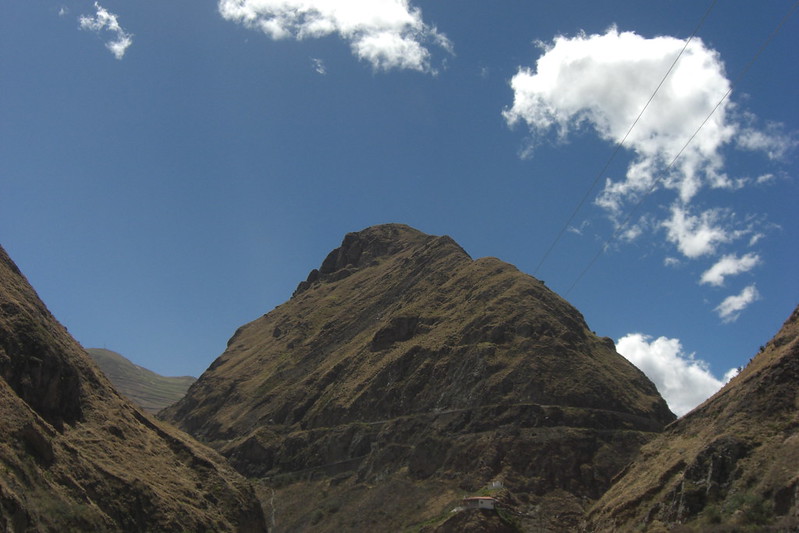
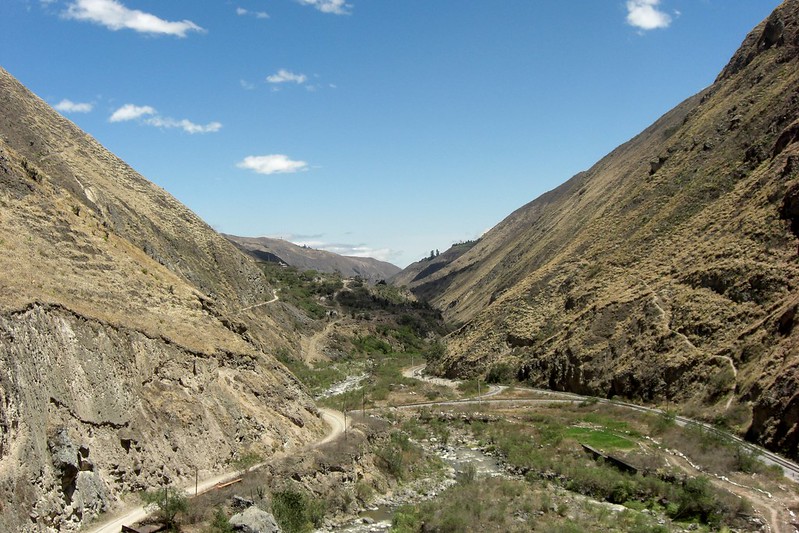
Alausi is home to the Nariz del Diablo train ride, a pretty cool engineering feat from 1902 with the train still taking tourists through the double switchback path. Apparently the ride was cooler two years ago when you could sit on the roof (scary) and see Chimborazo, Ecuador's tallest peak (cool). We couldn't see Chimborazo, but learning about railway's construction and getting the chance to see that part of the country was pretty neat. Construction began in the 1880s, in an attempt to connect Guayaquil to Quito by rail. By the end of construction of the Nariz del Diablo portion of the track, nearly half of the workers had died from disease, labor, or the climate. This section was built under Eloy Alfaro's presidency in Ecuador and he brought in two American brothers, John and Archer Hammon, to help. John Hammon was a major in the US Army and a West Point educated engineer. Here are some other facts about the history of the Nariz del Diablo route construction (completed in 1902), taken from the museum:
[The railway] brought workers from the English colonies in the Caribbean, believed to be resistant to tropical climate and diseases. There were 4,000 Jamaicans, 240 Puerto Ricans, and 204 from Barbados. In addition, there were 500 prisoners from these colonies who were promised freedom if they survived the construction. Indigenous people were also used, but the desertion rate was high, during the planting and harvesting seasons, and the precarious working conditions, which included the use of explosives, didn't help. In addition, the hacienda owners did not allow them to work on the railway, so forced recruitment was used.
...
In the Andes, the Oroya in Peru used the switchback before it was used on the Devil's Nose. John Hammon [American] chose this method n Ecuador to create three levels. "The railroad will rise with a grade of 3.5% along a narrow cornice cut by blasting the wall of the perpendicular rock of the Nose and will extend beyond the bifrucation of the railway. When the train goes beyond the bifrucation, a switchman will jump from the locomotive and raise the lever to change the track; then , the train will continue on its way up to the next narrow cornice, in reverse, until the next switchback. Then, the switchman will change the tracks again, and the train will continue on its way through the cornice, until crossing the Devil's Nose."
...
According to the men who worked on the train, the Devil's Nose was damned by Satan because he didn't want a railway to be built there. Acts that go against the Devil's wishes are paid for in human lives: first, there was the massive death toll among Jamaican workers and later several railway employees died.
After the train ride in Alausi, we hopped a bus headed to Cuenca (we caught it on the side of the Panamerican Highway). We stood for about 40 minutes in the aisle until four seats opened up and we were able to ride the rest of the way. Typically, people hop on and off the bus selling anything from potato chips to ice cream to CDs, and this bus ride was no exception. However, one guy hopped on the bus to sell potato chips, but when one man in the back shouted that he wanted to buy some, the seller hopped off the bus. He wasn't really trying that hard and the hungry guy in the back of the bus was left dumbfounded. It was pretty comical.
We arrived in Cuenca on Friday evening, with enough time to check into the hostel, drop our things off in our room, and then walk around the city for a little bit. The city is definitely smaller than Quito (although apparently the third largest in Ecuador) but it was so much safer. In Quito, you definitely would not be wanting to walk around anywhere at night, especially not in the historical center. However in Cuenca, there were lots of people out and about after dark with many restaurants and cafes open throughout the historical center. We had fun just exploring one of the main streets, Calle Larga, before going back to the hostel for the night.
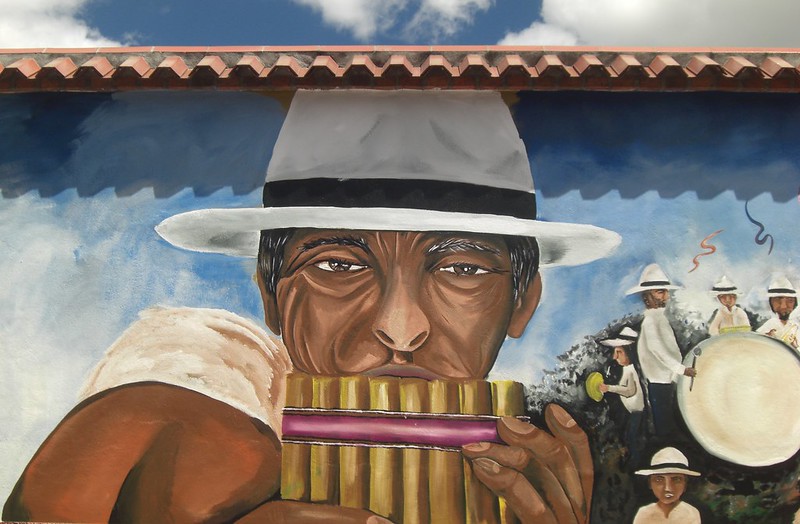
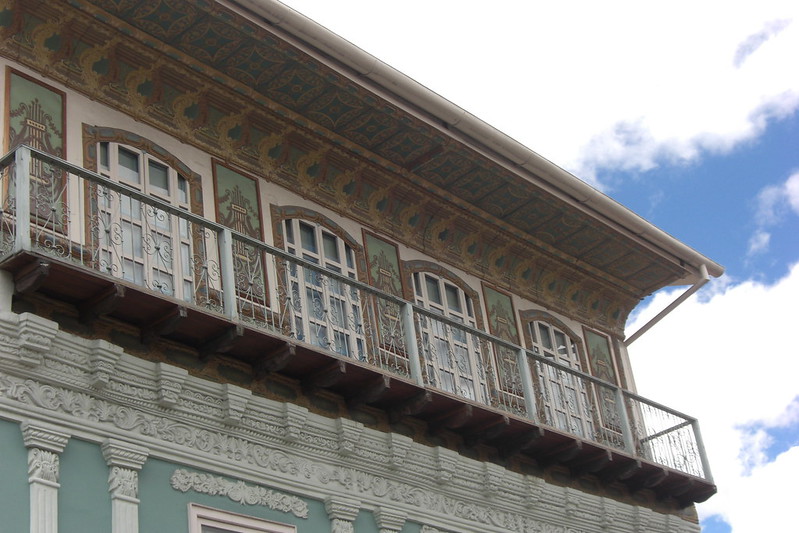
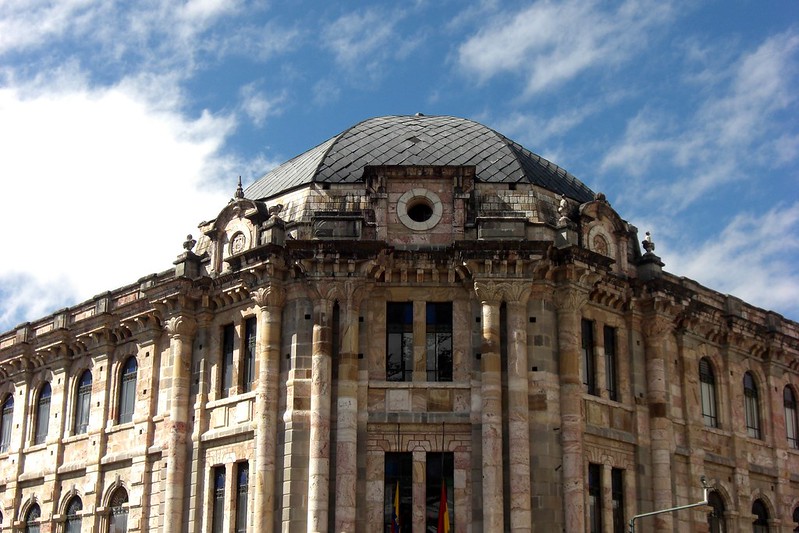
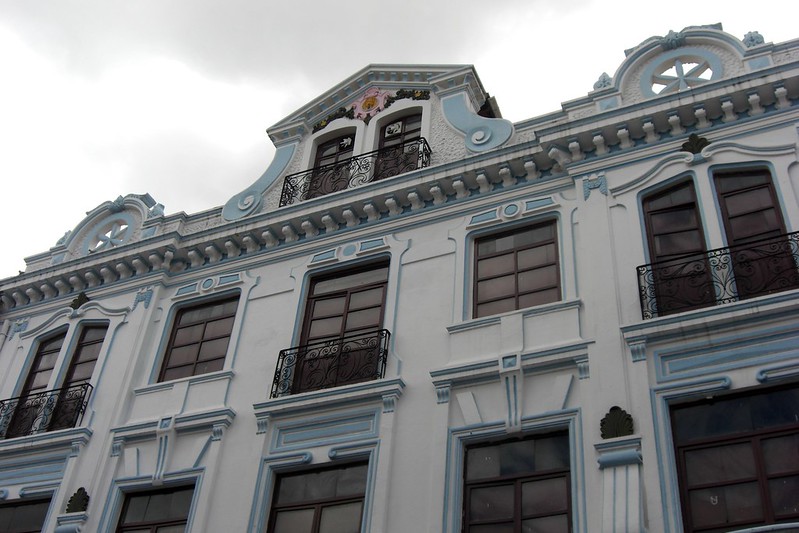
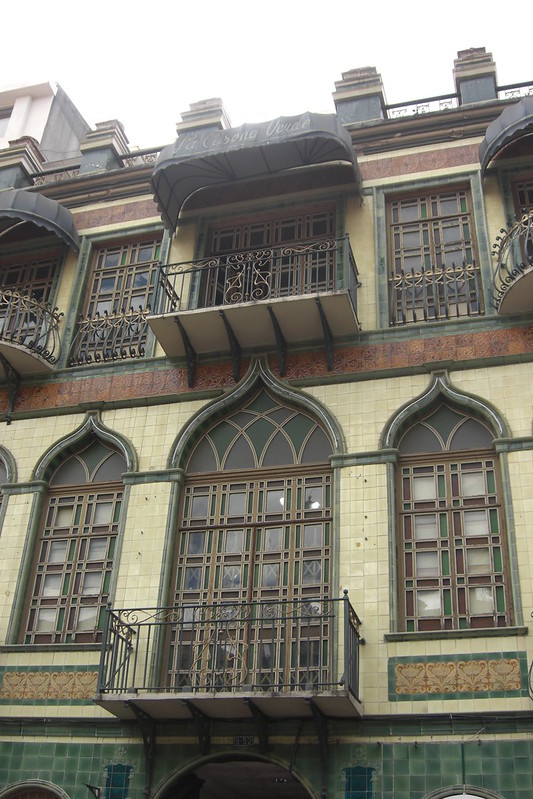
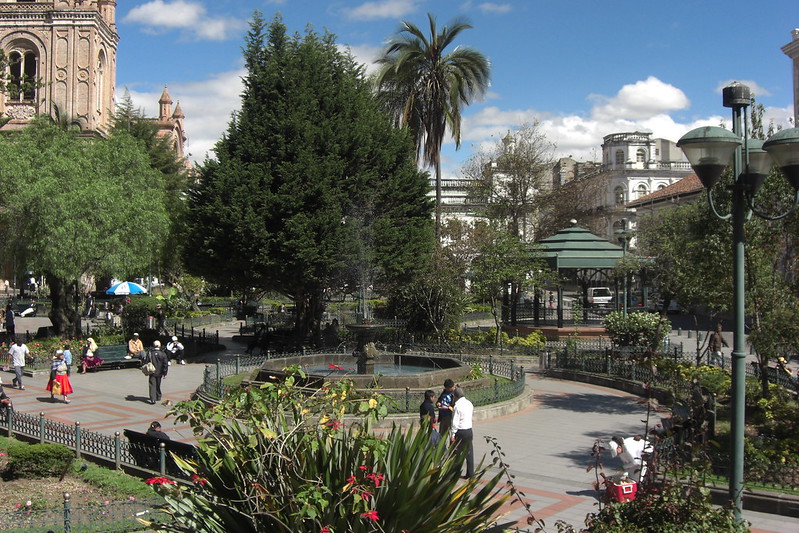
On Saturday morning, we woke up early to catch a quick breakfast and then head to the center of the city for a city bus tour. We ended up going to the only restaurant that was open at 8:00am, a cafe run by American ex-pats called Windhorse Cafe. A Cuenca fun-fact: there are over 5,000 American retirees living in the city. The atmosphere was nice although the service was a bit to be desired. After a quick breakfast, we walked up Calle Larga and found a morning market with fruits, vegetables, meat, fish, and a random assortment of other goods. We walked around the market for a bit just to get a taste of what it was like before heading out to the main square, Parque Calderon, to catch a red double decker bus for the city bus tour. Only $5.00 got us a fantastic guided bus tour of the whole city and it was really cool to see the different French, Spanish, and Arab influences in the old colonial architecture as well as see the four rivers that run through the city. We also managed to get some great pictures.
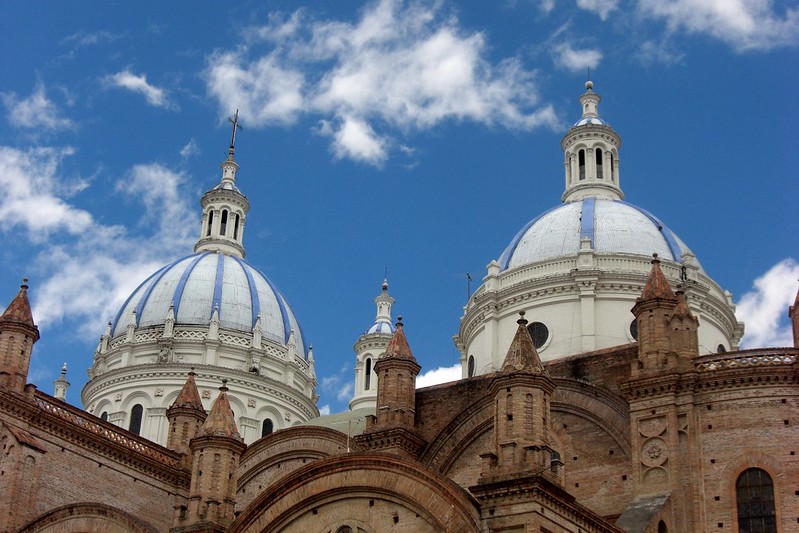
After the bus tour, we sat for a while in the park before checking out the inside of the main cathedral on the square. It was absolutely beautiful, and I loved the three blue copulas set against the henna-colored brick and bright blue sky. We wandered around the city some more, walking around the park by the river behind Calle Larga. It was so nice to see people and families out enjoying themselves in a safe, clean public park that actually had a decent playground for the children (and even grass!). Quito doesn't really have anything like that, so it was very relaxing to just sit in the sun in the park by the water for a bit.
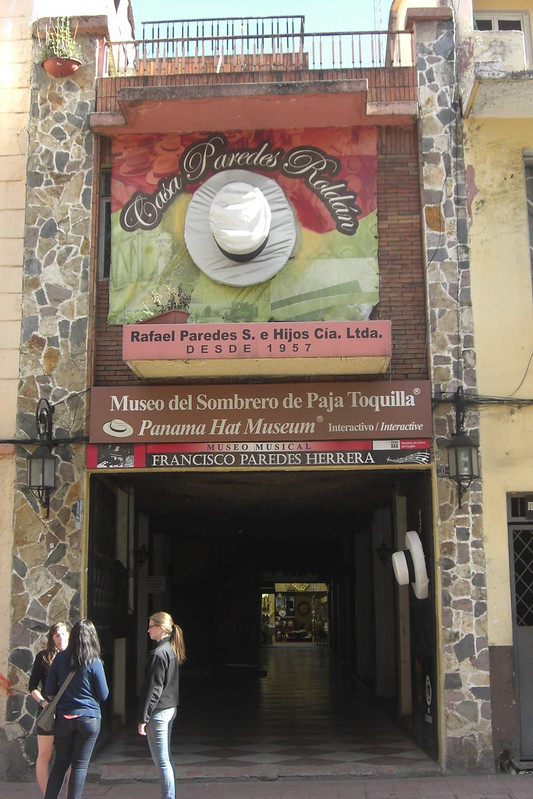
The bus tour and our lunch finished a little while after most of the museums had closed for the weekend, so instead we went to the Museo de Sombreros, the Panama Hat museum. The hat museum was actually really cool. We learned all about the history of the hat and the traditional, indigenous techniques used to weave the hats. It was pretty cool too to see how hat making techniques have evolved over time. One of our friends even got to try out one of the modern molding machines to form a hat's style and shape.
The hats start out coming from the boiled leaves and fibers of a particular plant grown in the Costa region of Ecuador. Then, these fibers are separated and shipped to Cuenca (and surrounding villages) where indigenous women select the bushels that they want. They then begin weaving the hats, starting from the center on the crown and weaving by hand outward. The finer the fibers, the higher quality the hat and the longer it takes to weave it. There are still no machines that can match the quality of weaving by hand or copy the designs.

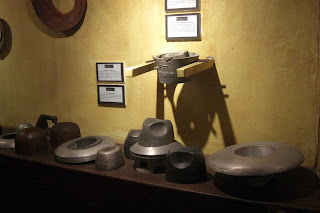
Molds were used to help style and size the hats. Originally these were made out of stone, then later wood. There are many traditional styles and modern ones as well. There were also different techniques for measuring the size of a person's head in order to see which size hat the client would need. These hats are worn by both men and women. In order to soften the fibers, they were bathed in a sulfer & water mix in order to preserve the white color and then hammered with a wooden mallet to make the hat soft and maleable. Later, modern hammering machines were developed (it looks sort of like a piston) to process more hats more quickly.

After the hats have been washed, dried, and hammered, the hat needs to be shaped. The molds were used for this as well, but now modern machines have been developed with interchangeable molds that allow you to process many hats in a short amount of time. You take the hat and set it in the machine, then you place the style mold inside, then place a leather band to protect the brim of the hat from burning. Then, you close the machine and turn on the water. The steaming hot water steams the hat for a minute or two, then you take the hat out of the machine. You wait a couple minutes then repeat this process four or five times with the same hat. While the one hat is cooling, you can change the mold and do another as long as you don't lose track. The finer the hat, the more you can bend and roll it and it will not lose its shape. The superfine hats however can run up to $1,000.00 so typically these hats are not placed in the molds until a serious client comes in to purchase one where he or she can select the shape and style.

At the end of the tour, we got to try on a lot of the hats in the showroom and had fun goofing around and taking pictures with some pretty cool hats. Prices can vary widely though - anywhere from $15 to $800 or more, depending on the quality of the hat.
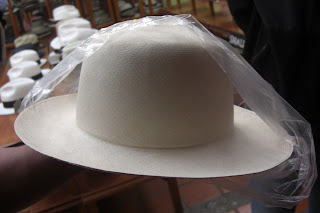 |
| Unfinished super-fino hat. Starting price of $850. |
After the hat museum, we still had some time to kill before our dinner reservation at a highly recommended restaurant called Tiesto's, so we passed the time chilling in Wunderbar Cafe. It was a cute little place with a pretty decent playlist on in the background. Dinner at Tiesto's was a lot of fun, too. The food was fantastic and the atmosphere was just as good. Since one of our coworkers back in Quito had raved about it all summer, we made a pact to tell him upon our return that the place was overrated (although it was as good as he said), just to see the look on his face.
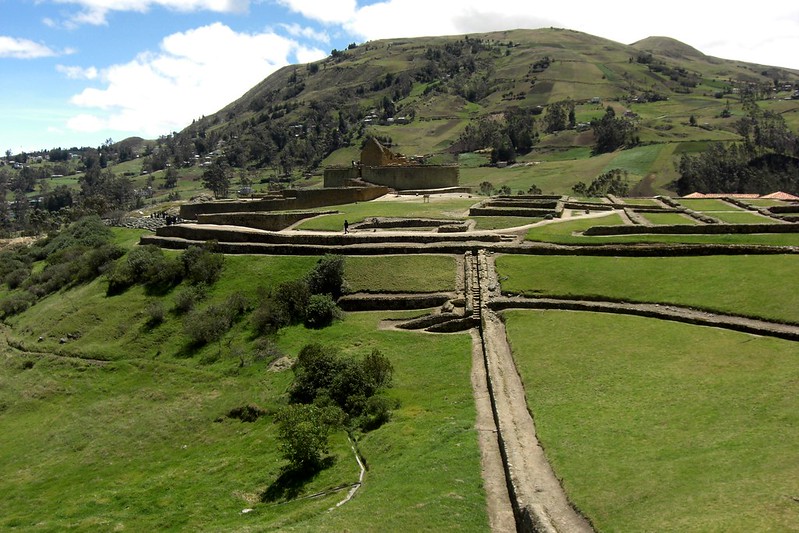
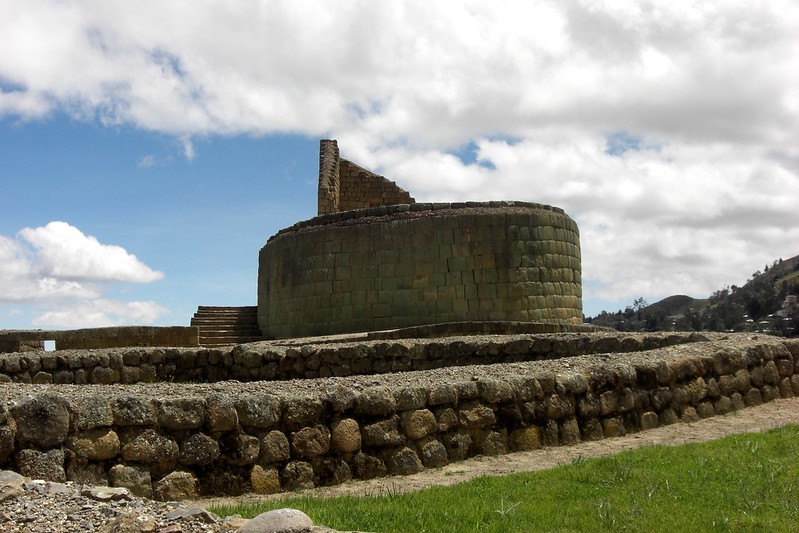
On Sunday, July 28, 2013, we paid for the same city bus tour company to take us to Ingapirca, Gualeceo, and Chedorleg. We left around 9:00am but had some bus trouble along the highway. We were stuck on the side of the road for a while right by a field of cows until two vans came to take us to Ingapirca. Ingapirca is COLD and WINDY. None of us were expecting that. It was pretty cool though to see the Inca and Cañari ruins and learn a bit more about the cultures there as well as to see the architectural mastery of the time. There are even remnants of the Inca road connecting Cuzco to Quito that run through the site today. Some of the remaining Inca structures were built in such a way that no cement or mortar was used to join the blocks of stone. Instead, the stone was fit so tightly together that it is still standing. I bet someone got their fingers squished along the way building these kinds of structures. There were also remnants of what was probably a ceremonial area, holes filled with water to measure the phases of the moon, Cañari tombs, the Incan road that connected Cuzco to Quito, houses, and food storage areas. Unfortunately, the llamas were all penned up so we did not get to see the llamas wandering the ruins.
After Ingapirca, we hopped onto a [much warmer] bus to take us to lunch then Gualeceo and Chedorleg, craft towns known for their jewelry and silverwork. Because of the earlier bus delays, we did not have a ton of time to look, but were still able to see a bit before heading back to Cuenca.
On Monday, we unfortunately had to take the bus back to Quito to be ready for work on Tuesday. It was quite a long bus ride (about 10.5 hours) and we were very happy to make it back to our apartments for clean showers and a good night's rest. All in all, it was a great trip and very fun to see a beautiful city in another part of the country we have all been living in for the past several months.






 10:00 PM
 J-Mad
J-Mad













 Posted in: