|
Museum aan de Stroom - Museum on the River
Antwerp, Belgium |
After spending
Friday exploring Brussels (and then again on Sunday), my friend and I explored his native
Antwerp and nearby
Bruges. My friend, a native of Antwerp but works in Brussels, has a bit of a Brussels-phobia and patently refuses to live in Brussels, preferring to commute from Antwerp (about a 45 minute drive each way, but likely longer during the week). That said, he was happy to show me what Antwerp has to offer in Belgium as well.
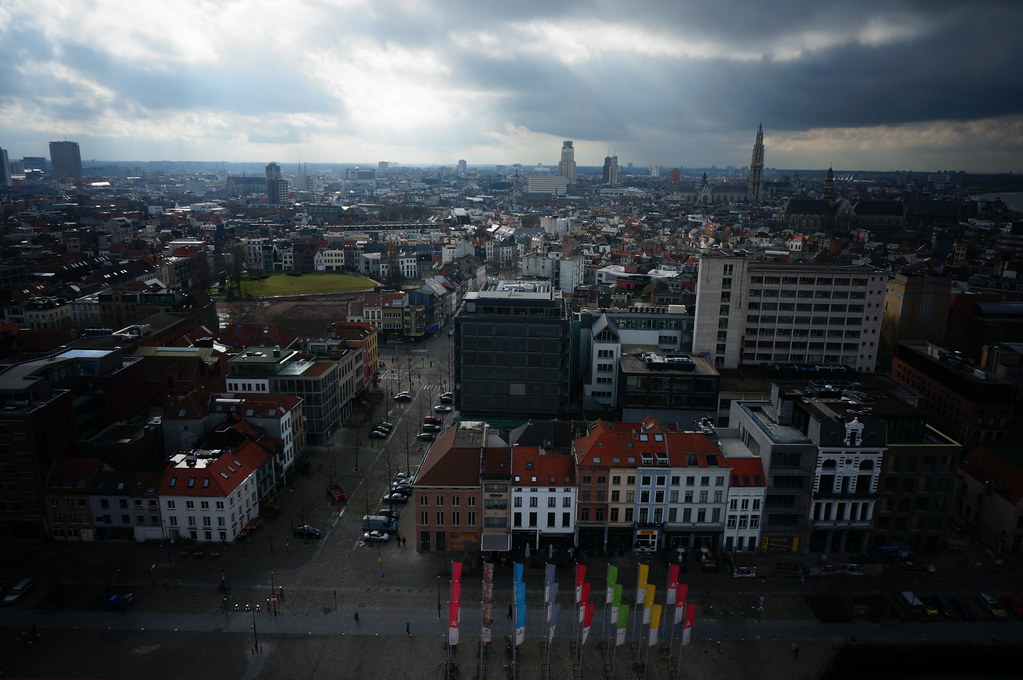 |
| view from MAS |
 |
| view from MAS |
We walked to the brand new
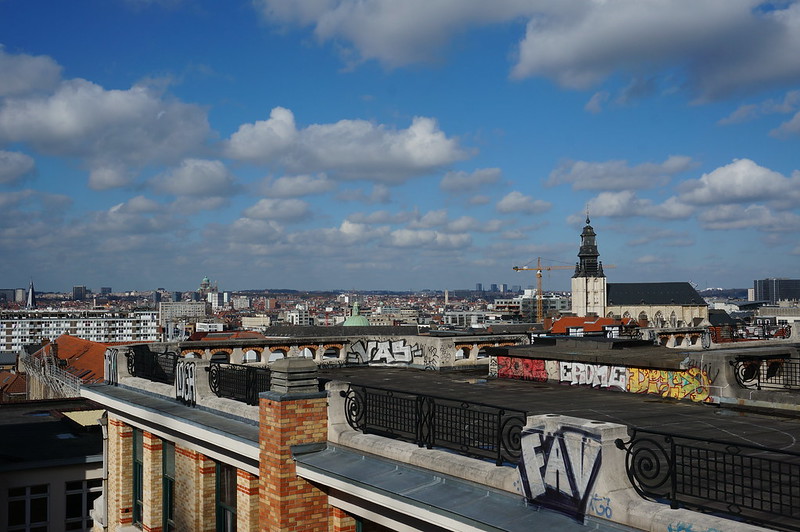
MAS - Museum aan de Stroom, a modern art museum on the water. In fact, the museum's name literally means "museum on the river," and it is located on docks on the Schelde River. The museum actually has several different exhibits and combines the collections from the former Ethnographic Museum, National Shipping Museum, and the Folklore Museum, in addition to the Vleeshuis and Janssen arts collections. While we had other things on our agenda for the day and did not see the dedicated museums, we took the escalators up to the very top of the museum where there is a (free) rooptop panorama. The rooftop view is beautiful and allows you to see the entire city from the bend of the river.
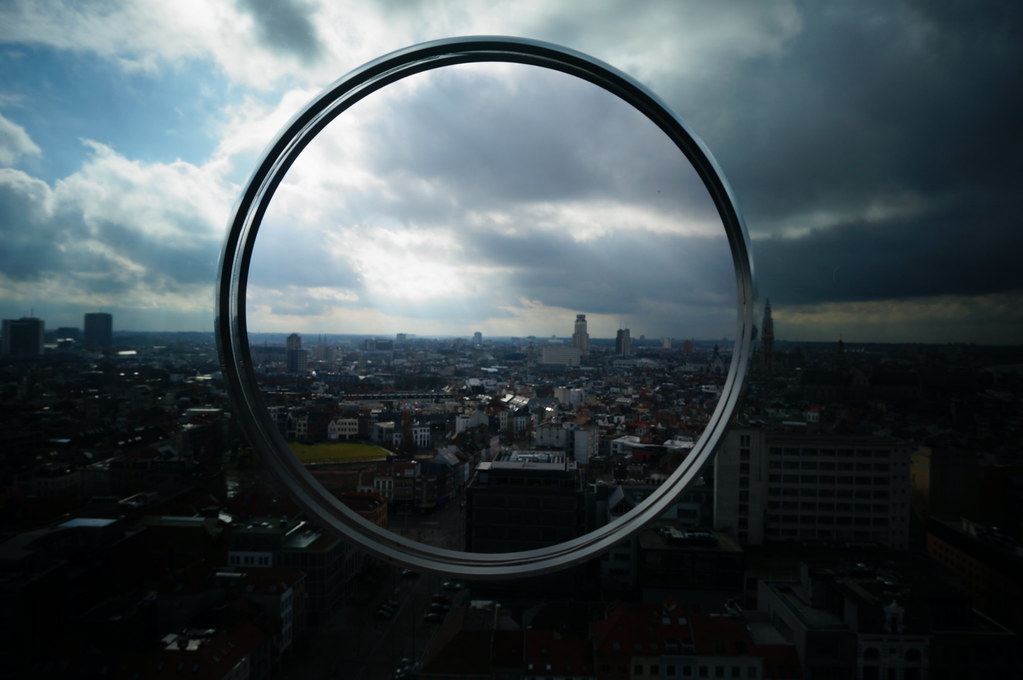 |
| views from MAS |
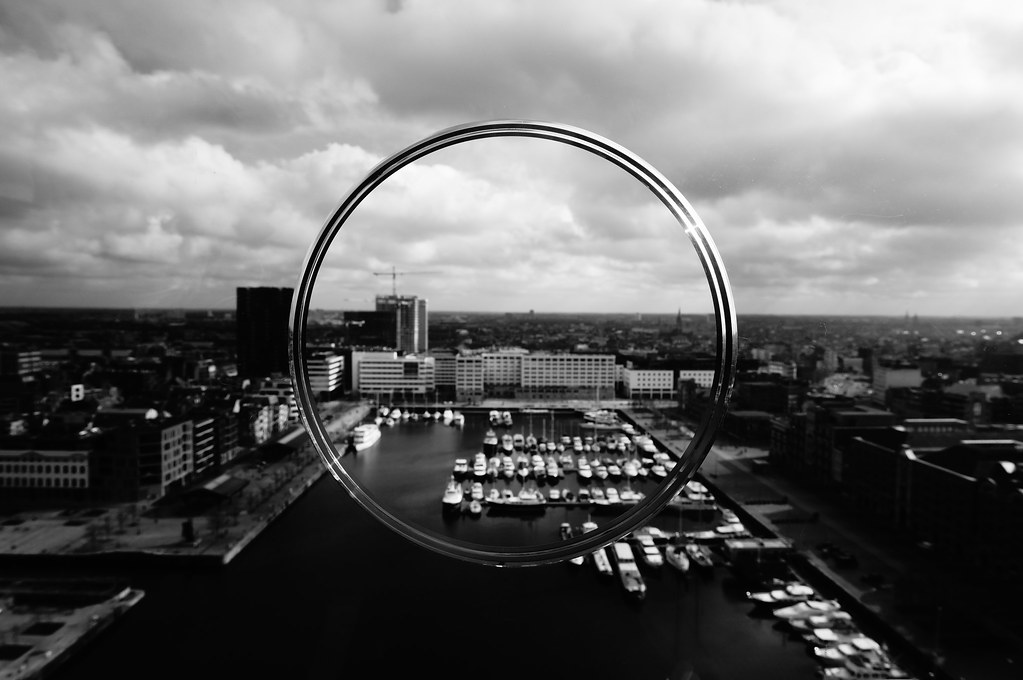 |
| views from MAS |
After taking in the morning air at the Museum aan de Stroom, we went to the cafe where my friend's roommate worked to drop off the roommate's hairgel then drove to Bruges (about an hour's drive away). Driving to Bruges, the landscape is actually very similar to western Michigan (flat and plain), apparently attractive to immigrants from the Netherlands and Belgium (there is even a town named
Holland, Michigan, known for its wooden clogs and tulips as well). Driving into Bruges, we cranked up the music, pulling the Benz through the old winding streets looking for the always-elusive parking.
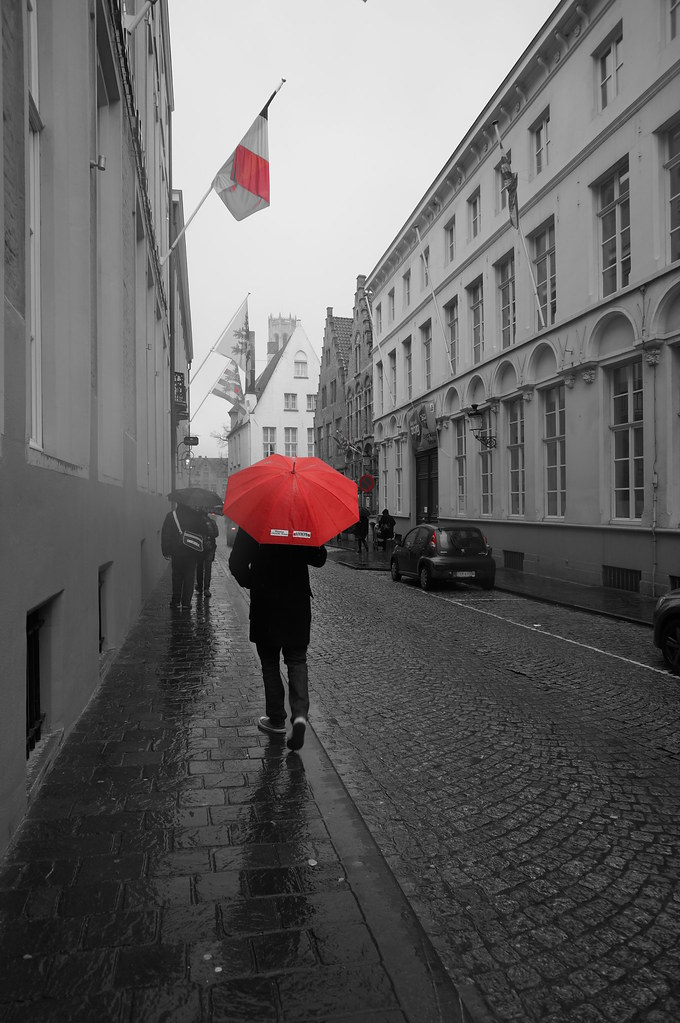
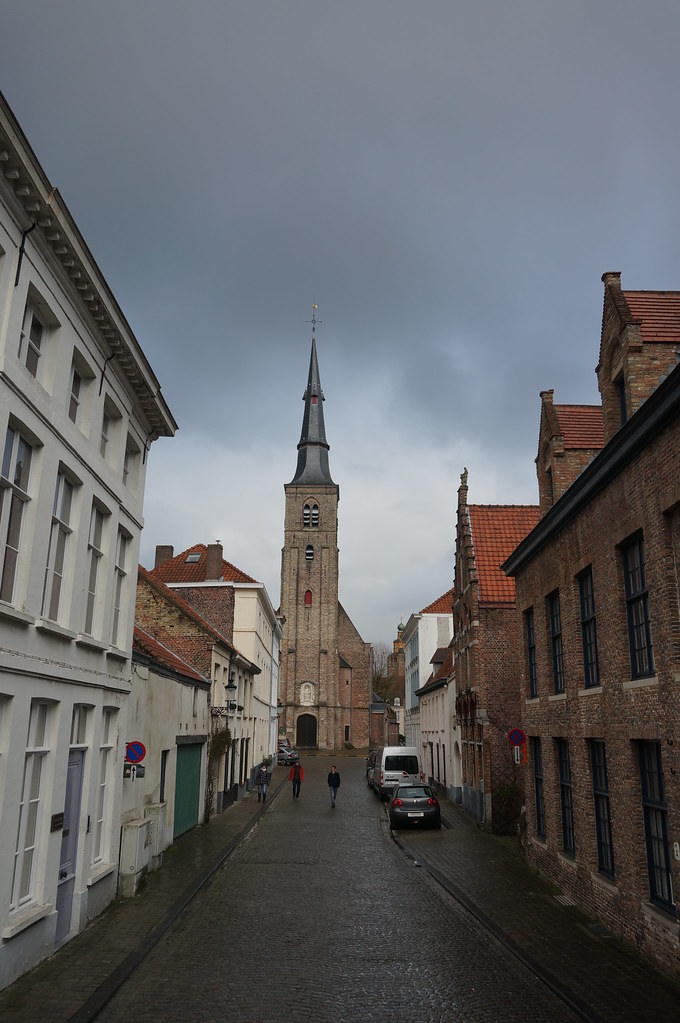
Our first stop in Bruges was to explore the old canals on our way to the old town's center square. The canals' prominence in Bruges comes from the Middle Ages, when the canals were continuously adapted to allow trading vessels to reach deeper throughout the city. Along the canals, the rooftops of the oldest houses are crow-gabled, a style famous to this part of Belgium and the Netherlands, from the 15th through 18th centuries.
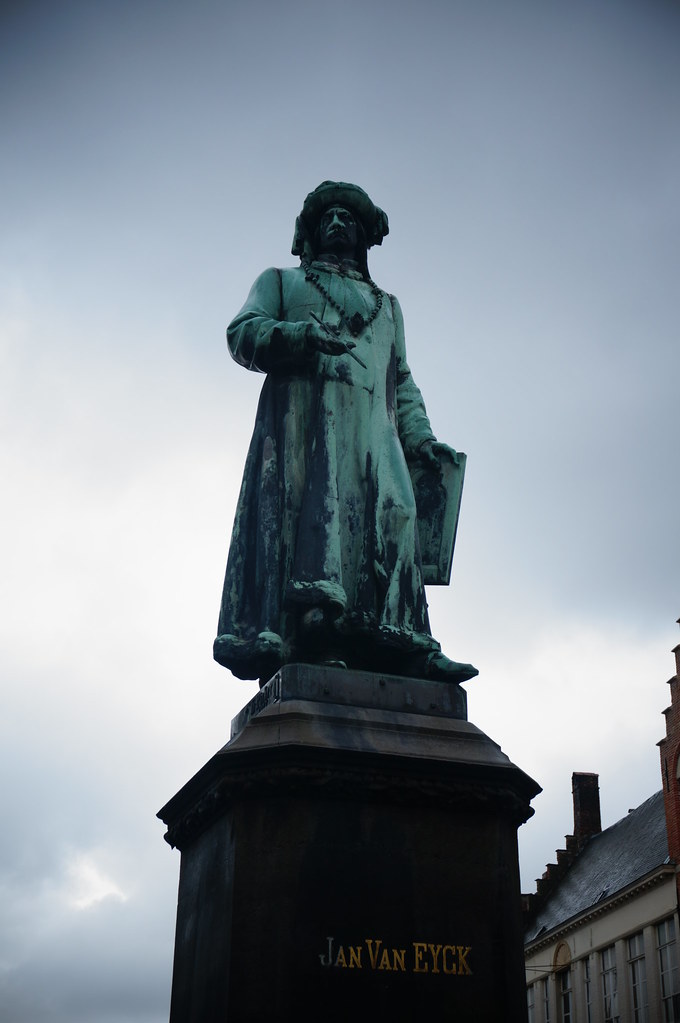
The canals wind by a small square behind the old city's center. This square has a statue of
famous Flemish painter Jan van Eyck, who was from Bruges and died around 1441. There are several statues around Brussels, Antwerp, and Bruge of famous Belgians - when my friend started pop-quizzing me as to who the figures were, I learned that the safest answer is a painter. Apparently, there are a great number of famous Belgian painters.
We made our way to the old city center. Here, we came across the
famous Basilica of the Holy Blood (the "blood chapel"). The church is famous for holding a relic - a cloth holding drops of Jesus Christ's blood. After the Crucifixion, Joseph of Arimathea is said to have wiped blood from Jesus' body and preserved the cloth. A Count of Flanders sent several relics from the Holy Land to Belgium, and particularly to Bruges. The Count brought the relic to Bruges in 1150 and placed it in the chapel he had built on the main Burg Square. The church itself is dark, but has a combination of Romanesque columns and design, hand-painted murals, and stained glass work, spanning several centuries.
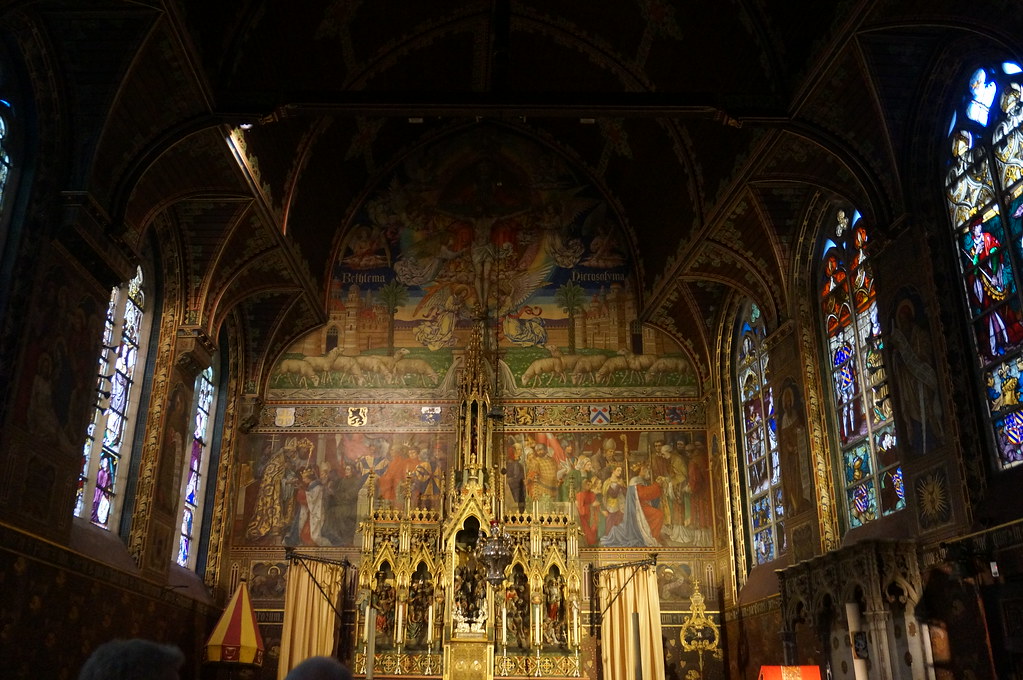 |
| Inside the Blood Chapel |
Back outside in the main square, we found a little food card with freshly made, hot, and authentic Belgian waffles. The hot waffles were a great treat against the cold wintery rain that morning. Suddenly, there was a gust of wind and the waffle's white powdered sugar blew over my black jacket. Laughing (and finishing the waffle quickly), we continued to explore the Old Town.
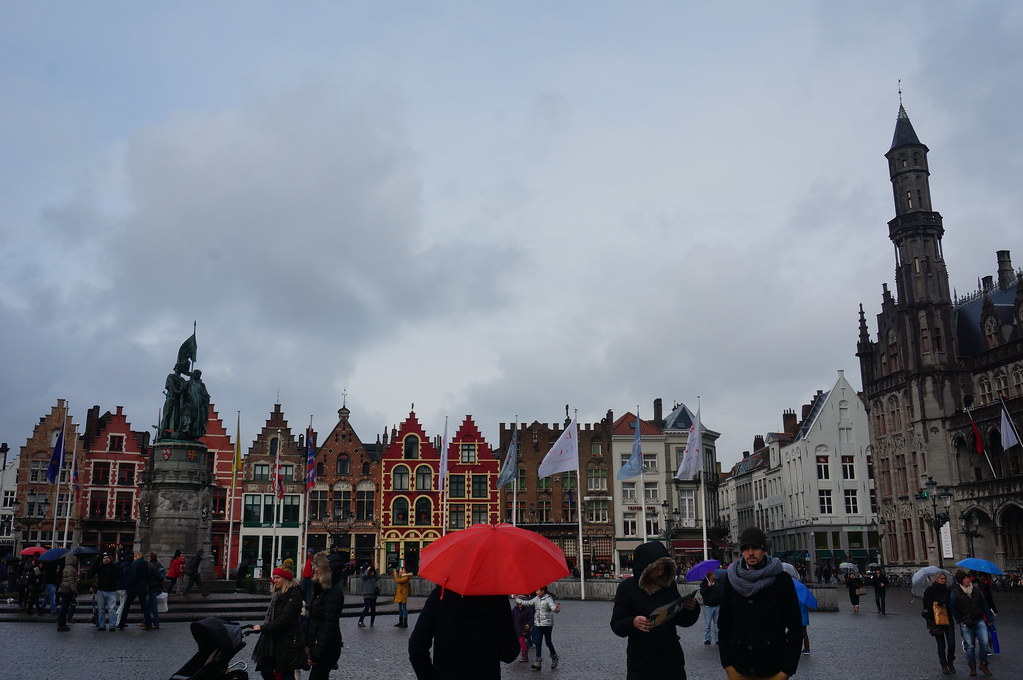 |
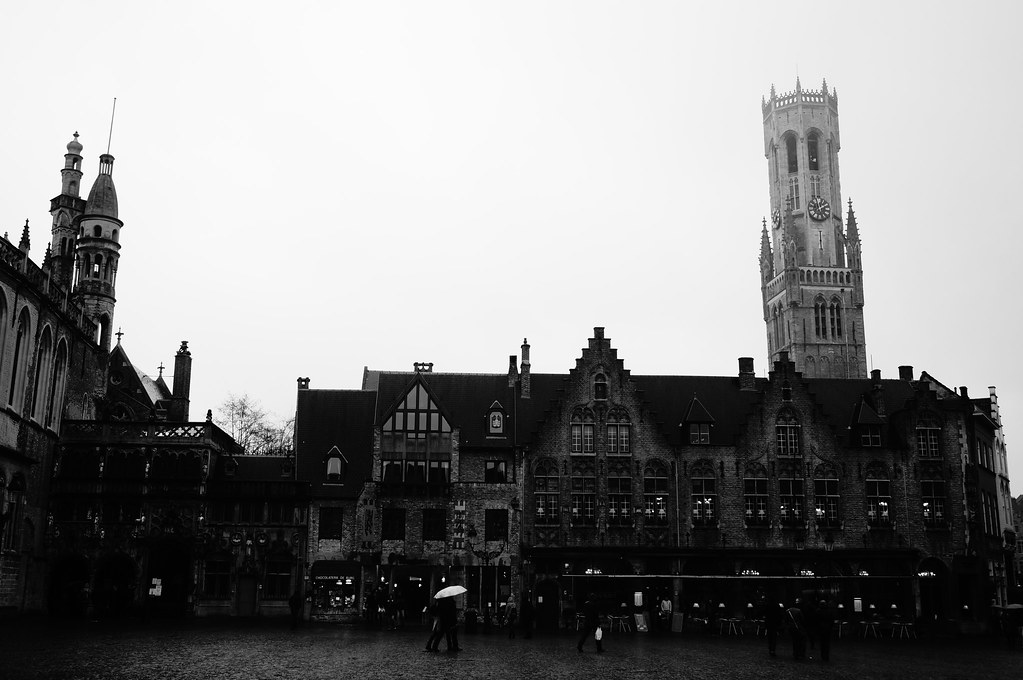
| Burg, main square, in Bruges |
Bruges is famous for a clock tower next to the Blood Chapel. You can climb up the winding stairs up to the top where apparently the view is magnificent. However, even early in the morning, the line was long (an estimated 45 minute wait), and the sky was gloomy and overcast. We figured that for the amount of time spent waiting in line for a view obscured by dark rain clouds, our time in Bruges would be better spent exploring other parts of the city.
We continued to wander around the streets, where my friend would quiz me about random Belgian history (about which I know next to nothing - not my best test scores ever). It got to the point where sometimes I could tell he was making up certain things. I decided to get even. Upon passing a brightly painted yellow building on an old street, I started telling him how I had read in my travel guide about the historic "Lemon District."
 |
The center of the historical "Lemon District"
Although there is no such place as the "Lemon District," the crow gabled roof is real and a historical feature of medieval Bruges. |
The Lemon District, I said, was a part in the old city where citrus fruits, especially lemons, were brought to Bruge through the canals and sold. Because of the exotic fruits, I further explained that the houses and shops were you could find the citrus fruits were painted in the colors of the fruit, like lemon yellow, so that Bruges' residents, merchants, and visitors knew where to buy the fruit. Apparently, it was believable enough that he paused for a second and believed me, before I cracked up laughing.
We dropped into
the Historium for a little while to learn a bit about the medieval Burges of the 15th century. We wandered past the old
Bruges City Theatre (
the Stadsschouwburg), built in 1869 and fully restored in 2001. The elegant neo-Renaissance theatre hosts national and international productions of contemporary dance, theatre, and concerts. Outside the theatre, there is a statue of Papageno, the bird man from Mozart's
Magic Flute, which I used to listen to as a child.
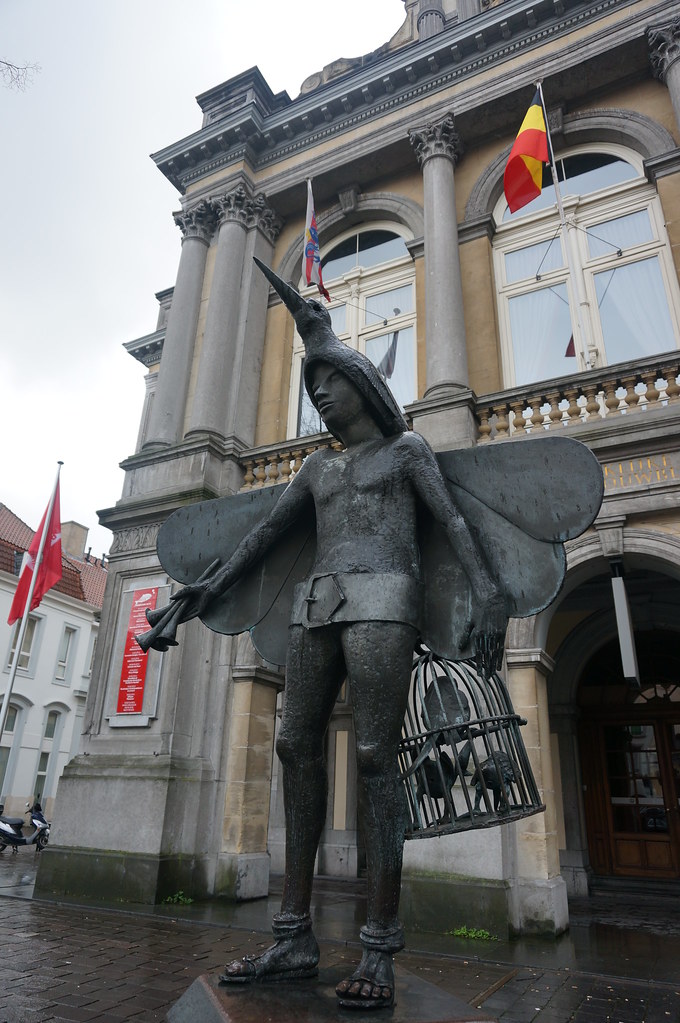 |
| Mozart's Papageno from The Magic Flute |
Our last stop in Bruges was to wander back to a main square where we found a mini-fair. The fair had your typical country fair/carnival food, including the apparently universal fried dough. Here in Belgium, it's called an "
oliebol" and it's delicious (of course). We ate the oliebollen while walking back through the old streets lining the canals to find our car and head back to Antwerp.
Back in Antwerp, we stopped first at the beautiful central train station. My friend said that the train station was always one of his favorite things about coming back to Antwerp because it was such a beautiful building. I can definitely understand that - the building is truly grand and its architecture is gorgeous. Like all train stations, it is filled with life.
 |
| Antwerp's Central Train Station |
However, the zoo next to the train station is another story. While the zoo's entrance has beautiful sculptures and tile mosaics too, they paint a much more somber picture...
As evening crept up on us, we made our way to Antwerp's old town. We stopped outside the old cathedral. The cathedral in Antwerp is unique because only one of the belltowers is completed. The second tower was never completed. There was a fire that ravaged the church in the 1500s, which delayed the construction of the second tower. Eventually, the delay became permanent, leaving the second tower at the height it remains today. However, instead of distracting from the church's overall beauty, the unfinished tower serves to add to the church's arresting presence, from any angle at day or night.
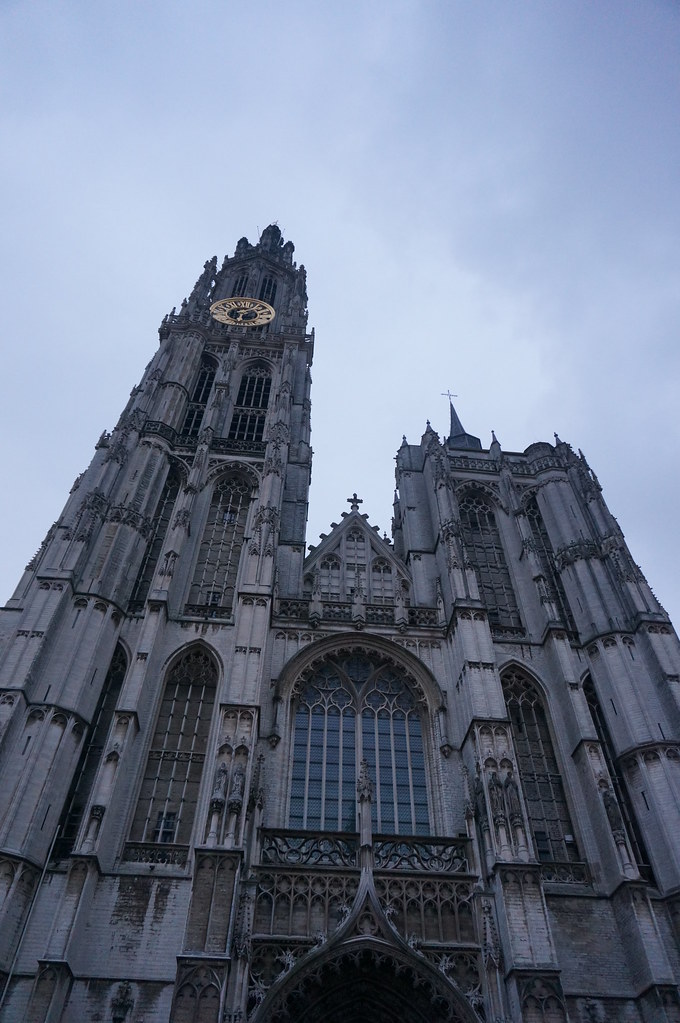

We stopped by a really neat hole-in-the-wall Belgian pub called
Pater's Vaetje (
located here), where my friend ended up running into one of his old friends from college. From the pub, we went to dinner at a fun restaurant called the Pelgrom (
official site,
English information). The Pelgrom is set up to look like a typical Belgian restaurant and tavern in the medieval era, even down to the menu. The atmosphere is fun, and there is even a jester who comes down around the tables to do magic tricks and other entertainment, like there might have been at the time.
 |
| Antwerp City Hall and the Hero Brabo defeating the giant |
On our way back to celebrating a friend's birthday at a restaurant nearby the Museum aan de Stroom, we enjoyed the views of the old city of Antwerp at night. One of the most impressive views is that of the City Hall of Antwerp with the statue of the famous Brabo. According to Belgian folklore, the city of Antwerp got its name from the legend of Brabo and the giant Antigoon. Antigoon used to live along the Schedlt river and extract a toll from those who sought passage across. The giant would cut off a hand of those who could not pay (or let's be real - Antigoon is a brutal giant, so probably those he did not like) and would throw it into the river. Belgian champion Brabo took down the giant in an epic battle resulting in Brabo cutting off the evil giant's hand and throwing it into the river. In Dutch, Antwerpen (the city's name in Dutch) means "thrown hand." The statue in front of City Hall commemorates Brabo's victory over the giant Antigoon.
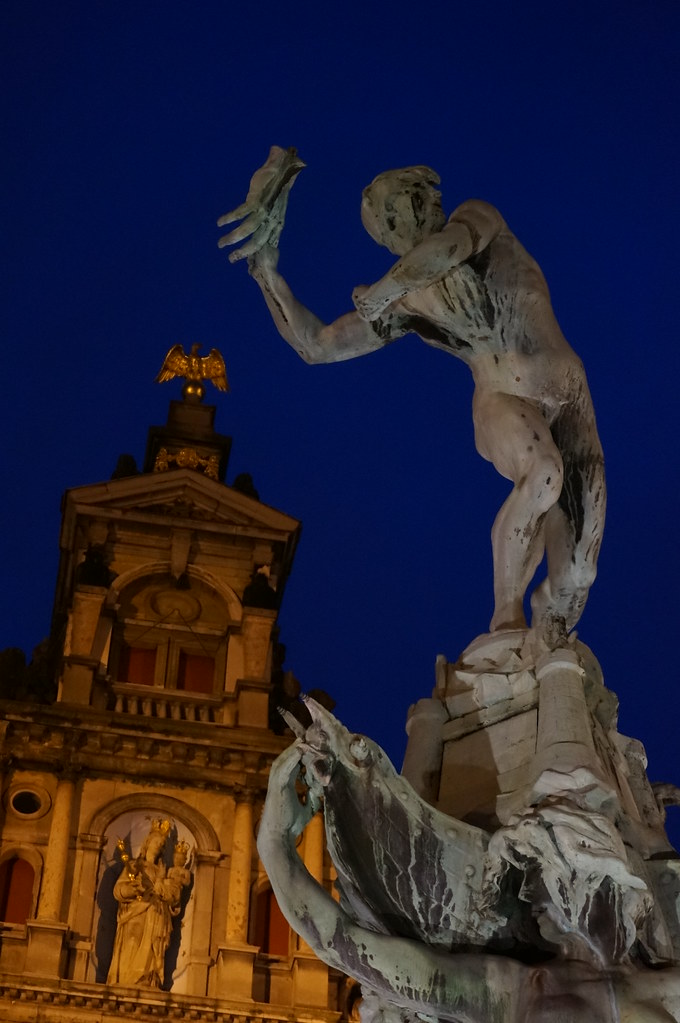 |
| The Champion Brabo |
Bruges and Antwerp were beautiful. Like Switzerland (although perhaps much more intensely),
language and culture matter. Belgium similarly has areas of the country divided by linguistic groups - here, a split between French and Flemish (Dutch). While it was exciting to
experience francophone Brussels, it was exciting to experience Flemish Belgium as well.
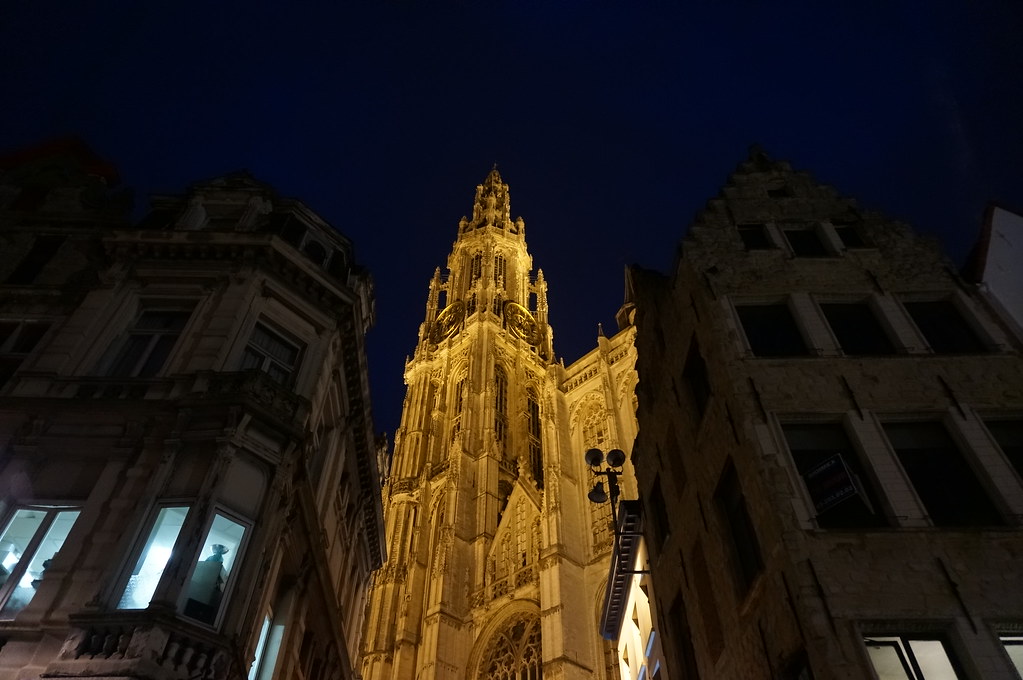 |
| Antwerp Cathedral |
More pictures of Belgium here.




 11:00 PM
 J-Mad
J-Mad








 Posted in: