Showing posts with label History. Show all posts

Monday, May 25, 2015

A (Free) Ticket to Paradise at the Smithsonian's Hawaiian Festival

Last weekend, the Smithsonian's National Museum of the American Indian brought a little piece of paradise to Washington, D.C., with the 2015 Hawaiian Cultural Festival.  The festival, lasting May 16 & 17, brought together artists of all sorts to share hula, chanting, storytelling, traditional and contemporary Hawaiian music, food, traditional artists to celebrate Pele and Hi'iaka with D.C. residents and visitors.
Pele and Hi'iaka are Hawaiian deities that figure prominently in indigenous culture.  Pele is the goddess of fire, volcanoes, and maker of lands, and Hi'iaka is her brave and clever youngest sister.  Because Pele is the goddess of fire and volcanoes, she is honored by the color red.  Pele holds such a special place in Hawaiian culture that there is a custom in her honor as a volcano erupts.  It is said that as a volcano erupts and its lava flows down, a family should clean their home and set out a meal before leaving.  If they do this, it will be seen as a sign of welcoming and respect for Pele and her lava's path will part around the family's home, leaving it unscathed by her wrath.  
As shared by the Smithsonian, the epic journey of Pele and Hi'iaka (the abridged version; click here to watch the full story being told) goes like this:
Pele was driven out of the island of Kahiki (an island far from the Hawaiian islands) by her older sister Namaka.  Pele, the Fire Goddess and maker of lands, bids farewell to Kahiki knowing she can never return.  One majestic canoe carries her family across the vast ocean.  A favorite uncle and keeper of the sacred fire sticks travels with Pele, and she is led across the oceans by her brother Kamohoali'i.  After several battles with Namaka, Pele finally settles on the Big Island of Hawaii, where she occassionally spars with the goddess of snow and ice, Poli'ahu.   
Once, while in a deep dream, Pele travels to the island of Kauai and falls in love with a prince Lohi'au, an Ali'i (royal) of the island.  When her youngest sister Hi'iaka awakens her, Pele finds that she is far too weak to travel and begs Hi'iaka t travel and fetch Lohi'au for her.  Hi'iaka reluctantly agrees, as long as Pele takes care of Hi'iaka's sacred Lehua grove (a flowering tree unique to the islands) while Hi'iaka is on her journey.  Pele gives Hi'iaka a magic skirt of lei, and with it, Hi'iaka embarks upon an epic quest.  Along her journey, Hi'iaka battles fierce dragon-like monsters, the Mo'o clan and their leader Mo'olau.  Hi'iaka rescues Lohi'au from the monsters and brings him back to the impatient Pele, only to find that Pele, in her despair, had destroyed Hi'iaka's beloved Lehua grove.

This epic story was brought to life through the talented storytellers (and ukulele players) Taryn Lelea'e Wong, Moses William Goods III, and Kealoha Kelekolio.  These storytellers are phenomenal.  Thankfully, the Smithsonian recorded and webcast their tale, and you can watch it here!  

In addition to talented storytellers, the rhythm of the Islands filled the museum's atrium with performances by hula dancers to music by the Aloha Boys.  The dancers, dressed in red to honor Pele, brought to life traditional Hawaiian dances as well as showing newer forms of Hawaiian dance blended with contemporary Hawaiian music.  
Many of the dances were reminiscent of the ocean's waves, but the dancers evoked an especially fiery energy while dancing as Mo'o (fierce dragon-like monsters of Hawaiian legend).  
There were also several talented craftsmen and women showcasing traditional Hawaiian arts to visitors.  They showed eager viewers techniques involved and explained the significance of each item in Hawaiian culture.  
Here, William Char demonstrates traditional lei making with different leaves, plants, and flowers found on the Hawaiian islands.  The red lei represents Pele, and the white lei to the left represents the ice of Poli'ahu, the Snow Goddess.
Above, Taryn Lelea'e Wong demonstrates traditional feather leis that served a unique role in Hawaiian culture.  Because Hawaii produces no natural gemstones, feather leis were a sign of royalty and high social status.  
This black and red lei took approximately 80 hours to make.
Its black feathers are the naturally colored feathers of a mallard, and the red feathers are dyed goose feathers.
The feathers are either a natural color or dyed, and are incredibly time-intensive to make.  Because of the detail and time required to make a feather lei, they are expensive and thus reserved for those who could afford to pay.  
Unlike other markers of royalty in traditional cultures, Ms. Lelea'e Wong explained, different colors did not necessarily connote higher class or royalty standing - just being able to own and wear a feather lei in itself indicated royalty.
I gained a deeper insight to Hawaiian culture and history and hope to someday experience the islands first-hand.  I am looking forward to Smithsonian and the National Museum of the American Indian's next big cultural festival - the Inti Raymi Andean summer solstice festival in Washington, D.C., and New York City.  I had the chance to see this festival while working in Ecuador in 2013 and am excited to participate in the Washington, D.C., celebrations.  

Sunday, April 12, 2015

Washington, D.C., Cherry Blossom Festival 2015

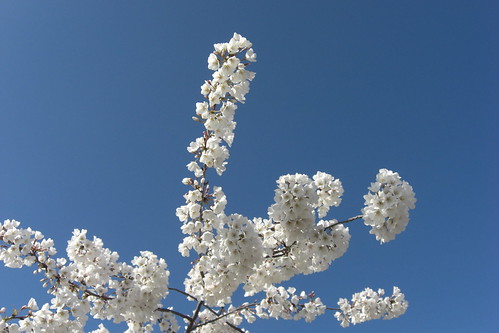
Every year between mid-March and mid-April, the Tidal Basin area of Washington, D.C., is bathed in soft white blossoms of the cherry trees.  The cherry trees were a gift from the Japanese mayor of Tokyo Yukio Ozaki to the city of Washington, D.C., in 1912 to honor the relationship between the two countries.  
Tokyo Mayor Yukio Ozaki, image courtesy of the BBC. 
To achieve the beauty Tidal Basin experiences every spring since 1912 was not a simple endeavor.  The idea to plant the cherry trees along the banks of the Potomac River was first proposed by socialite Eliza Scidmore, the first female board member of the National Geographic Society and fundraiser for the cherry tree initiative.  First Lady Helen Taft had lived in Japan while her husband, President William Howard Taft, was the president of the Philippine Commission.  First Lady Taft knew the beauty of the cherry trees and supported Ms. Scidmore's idea.  Once the Japanese consul in New York learned of the first lady's interest, the office suggested making a gift of the trees to the U.S. government from the city of Tokyo.  
First batch of trees in 1910 that had to be destroyed due to disease.
Image courtesy of the BBC.
The first shipment of 2,000 cherry trees arrived in 1910, but had become diseased en route and had to be destroyed.  However, with additional coordination between the Japanese and American governments and the efforts of Dr. Jokichi Takamine (famous chemist and founder of Sankyo Co., Ltd., today known as Daiichi Sankyo), Dr. David Fairchild of the U.S. Department of Agriculture, Ms. Scidmore, and First Lady Taft, more than 3,000 new, healthy cherry trees arrived in 1912.  On March 27, 1912, First Lady Taft and the wife of the Japanese ambassador (Viscountess Chinda) planted the first two trees on the north bank of Tidal Basin along the Potomac River.
The cherry trees and their gorgeous white blossoms became popular among D.C. residents and visitors, and in 1934, the city commissioners sponsored a 3-day festival of the blossoming trees.  This later grew into the annual Cherry Blossom Festival.  The trees remain an important symbol of the relationship between the United States and Japan.  In 1915, the U.S. government reciprocated the gift by sending Japan flowering dogwood trees.  After World War II, cuttings from Washington,, D.C.'s cherry trees were sent back to Japan to restore the Tokyo cherry trees that were destroyed by American bombing campaigns during the war.  In 1981, more cherry tree cuttings were given to Japanese horticulturists to help replace some of the cherry trees destroyed by a flood in Japan.  Today, the annual Cherry Blossom Festival spans four weekends between mid-March and mid-April and more than 1.5 million visitors come to view the results of the gift from a century before.  For more information on the history of the cherry blossoms in Washington, D.C,, check out the Festival's official webpage and the History Channel's profile.
Although the festival takes place over several spring weekends, the blooming of the delicate blossoms can be fickle and difficult to predict.  To help out with timing a visit, the National Parks Service even has the "Blossom Cam," a camera of the Tidal Basin area where you can check in on the blossoms' progress blooming.
Today however, the blossoms were definitely in their peak.  Along with some friends from law school, I joined the crowds along Tidal Basin to walk beneath the shade of the cherry trees and marvel at their soft white blossoms filtering the sunlight.

Saturday, March 29, 2014

Belfast's Political Past (and Present): Ulster Museum's Historical Overview

Belfast City Hall
As a sophomore in undergraduate university, we read a book for class about the public displays of national identity in Northern Ireland.  Everyone in our class enjoyed the book and the perspective it brought to interpreting how nationalism can be displayed and the effects this has within communities.  The book was Signs of War and Peace by Jack Santino.  Since reading about this in undergrad, I decided that if I ever had the chance to go to Belfast, I wanted to see some of the sights Santino describes.  
Beginning of the tour, in the Shankhill
Well, I finally made it to Belfast, some six years after reading the book in class.  Since the end of the Troubles, Belfast's tourism industry has been growing.  Downtown near City Hall, it seems as though you'd never know the Troubles took place if you were previously unaware of the history.  However, the wounds are slower to heal and still raw in west Belfast (and other parts of the city).  Because of the unique political history, there are actually various "black taxi" tours where a driver will take you in the taxi around west Belfast to see the famous murals on each side of the Peace Wall.  There are actually several companies that drive, and you can check out some options here, here, and here.  There is also a fantastic map of the locations of the murals around the city here, in case you'd rather walk all over.
King William of Orange mural in Protestant/Loyalist area of West Belfast
Since the taxi tour I reserved along with a friend I met at the hostel would not start until 11:30am on Saturday morning, I decided to see if there was an easy way to get some more context for what we were about to see.  Just around the corner from our hostel are the beautiful botanical gardens and the Ulster Museum (the botanical gardens are beautiful in their own right, in a glass and a white wrought iron building with a gorgeous room filled with flowers, built by designer of the nearby Queen's University Sir Charles Lanyon and completed in 1852 - definitely worth a visit).
Section of Peace Wall that divides the Falls and Shankhill;
view from Shankhill (Protestant side)

The Ulster Museum was free and it is a fantastic museum.  Kind of like a mini-Smithsonian for the city of Belfast.  There are actually several great exhibits in the museum on a variety of topics and aspects of history related to Northern Ireland, but the big money exhibit that we came to see was the exhibition on the Troubles.  Although I'm obviously not from Northern Ireland and do not know a whole lot about the conflict, especially not from the deeply personal perspective by which it was and still is felt by people living in Northern Ireland, I thought that the exhibit did a good job of presenting the history and informing the visitor about what it was like in Belfast over that 30 year period.
"International Wall" on Falls Road with
Republican Murals
Because I thought that the exhibit was so helpful in learning more about the conflict, I decided to create this visual layout based on the content from the museum, accompanied with some of my photographs, to better provide foundation for the post I will write about the murals and taxi tour itself.  As noted in the presentation, the majority of the textual content comes from the museum itself with a few external sources and links included.  I tried to keep the information as close to the museum's as possible in order to maintain a neutral and accurate presentation of a complex time period.  Hopefully, you will find the full timeline (truncated timeline available in the presentation) and the presentation itself below helpful in better understanding all the elements at work in the rawer parts of Belfast's lived past and present.
Famous Republican Mural along the Falls of hunger
striker and MP Bobby Sands
The Troubles: Introduction

The period of Northern Ireland’s history from 1968 is usually referred to as “The Troubles.”  Much of this period, because it is so recent and because it was so traumatic, is still painfully – often bitterly – remembered by those who were injured, their families, and the families of those who died.  In all, there were some 3,700 deaths, around 50,000 explosions, and innumerable sectarian incidents.


This gallery is arranged around particular events and themes.  Some of them may be upsetting – most of them remain contentious.  We acknowledge the sensitivity and the deeply-held views about the issued reflected here.  The exhibition is not intended as a comprehensive account of all that happened, but rather as a broad platform of information about complex issues which have shaped our recent history.  We welcome feedback on the approach and on the potential to develop the gallery.
Click on Image to Expand Timeline
My Prezi Presentation of the history of The Troubles.  Use the Arrow Keys to navigate forward and backward through the content.  You can also enlarge the presentation to enable full-screen viewing.


Thursday, May 27, 2010

Not Ohio


Last weekend, some friends and I went to Toledo, about 100 kms south of Madrid. Toledo is an incredible city with a very interesting history. After arriving at the beautiful Renfe station (national train company), we walked into the city. Toledo is surrounded on three sides by water. Once inside the city center, we hiked up and down and while looking for the Cathedral of Toledo, ended up at Alcazár, the old fortress to the left. Unfortunately, it is closed for repairs for 6 years while a museum is being installed. The outside is quite impressive though, and we could see the fortress while walking to the town from the train station.

We then made our way to the Cathedral of Toledo. While pictures are not allowed inside the cathedral, no one followed that rule. The cathedral was amazing - it is so large with so many ornate rooms that it is very easy to get lost inside. There were a couple really interesting parts of it (the knowledge was acquired from randomly joining various tour groups inside the cathedral). There is one section of the cathedral where red hats appear to be floating. Beneath these hats is where former cardinals are buried in the crypts that are beneath the cathedral. In another wing, there is a prayer area with red candles and a table with a glass top. People from all over the world have written various notes and prayers and slid the pieces of paper underneath the glass on the table. Towards the back of the cathedral, there is a door called the Door of Pardons. You are supposed to walk through the door and down the stairs into the cathedral to be pardoned, however, the door is never open, so.... Additionally, it is a lie that you cannot wear shorts inside. All the tourists (except us, of course) had shorts and t-shirts on in the 100 degree weather.

After the cathedral, we walked around a bit and found a park with an incredible view of the valley and the town, as well as a huge rose garden. Then, we went to the church of Santo Tomé, where the famous El Greco painting is. The church is small but beautiful and the Greco painting was commissioned in honor of Don Gonzalo Ruiz de Toledo, a rich man in Toledo who paid for the renovation of the church and continued to support the church and its clergy. Upon his death, he asked to be buried in the most humble part of the church and his body was moved to the chapel in 1327 (see right). However, in 1562, his estate stopped paying the church. The church filed a lawsuit and won, then commissioning El Greco's painting where Don Gonzalo is being placed in his grave. After the church, we went to the Santa Cruz Museum. The outside of the building is beautiful, but the actual museum gallery inside has about 10 gigantic tapestries. This would be cool, except that the tapestries are very old and there are not any descriptions of them. However, the museum also has an incredible garden right outside.

Our last stop in Toledo was my favorite - the Mezquita Cristo de la Cruz (the Mosque of Christ on the Cross). Of the 10 mosques that used to be in Toledo, this is the only remaining one (there are still a couple synagogues, but we did not have time to visit these). The mosque is really small and, while it is not nearly as ornate as the cathedral, its history is fascinating. Its construction was ordered by Ahmad ibn Hadidi, a leading member of the ulema in Toledo at the time, and built by two architects: Musa ibn Ali and Sa'ada. The mosque was completed in 999. There is construction all around the mosque and I learned (once again by attaching myself to another person's tour) that there is a Christian graveyard that was discovered on the north side. Underneath the mosque, a 5 meter wide Roman road was found. Inside the main part of the mosque, there is a glass floor. It shows the excavation of a room discovered underneath that might have been a hermit's home or an additional level of the mosque. Inside the mosque, the original paint is flaking away, but one can still see some of the original Muslim artwork and calligraphy alongside the Christian paintings from when the Christians took over the Moors. َUnlike most other places, the mosque does not have a very museum-feel to it and you can walk around it as people did centuries ago (the cathedral has many sections gated off so that you can only view from a distance).

Twitter Delicious Facebook Digg Stumbleupon Favorites More

 
Design by Free WordPress Themes | Bloggerized by Lasantha - Premium Blogger Themes | Walgreens Printable Coupons