Showing posts with label Smithsonian. Show all posts

Saturday, June 20, 2015

Inti Raymi 2015: The Andean Sun Comes to D.C.


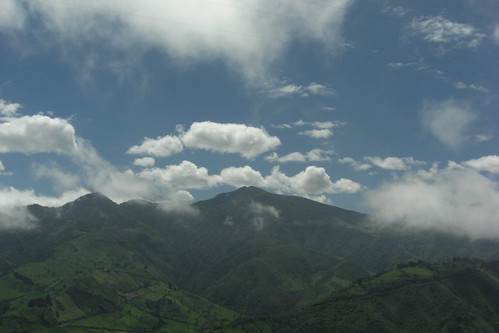
While working in Ecuador, one of my most memorable trips with coworkers was to visit Cotacachi and Cuicocha, a couple hours north of Quito in the province of Ibarra.  The area is beautiful, and our trip was made especially memorable because we happened to arrive in the town during Inti Raymi - the Inca festival of the sun.  
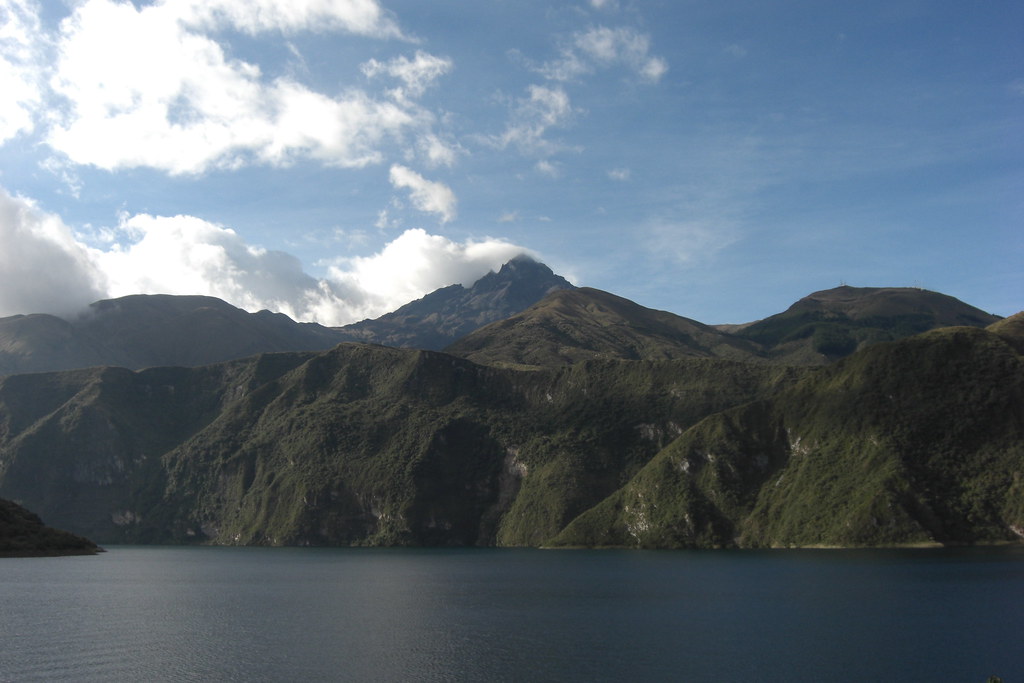
Lago Cuicocha, Ibarra, Ecuador, 2013
Inti Raymi is a celebration of the winter solstice throughout many Andean communities across Bolivia, Peru, and Ecuador (remember, it's the Southern Hemisphere so their winter solstice is the northern's summer solstice).  Taking place on the shortest day of the year, the festival is a celebration of the sun, longer days, planting, and the harvest to follow.  Although the festival itself is widely celebrated, each community has its own unique expression.
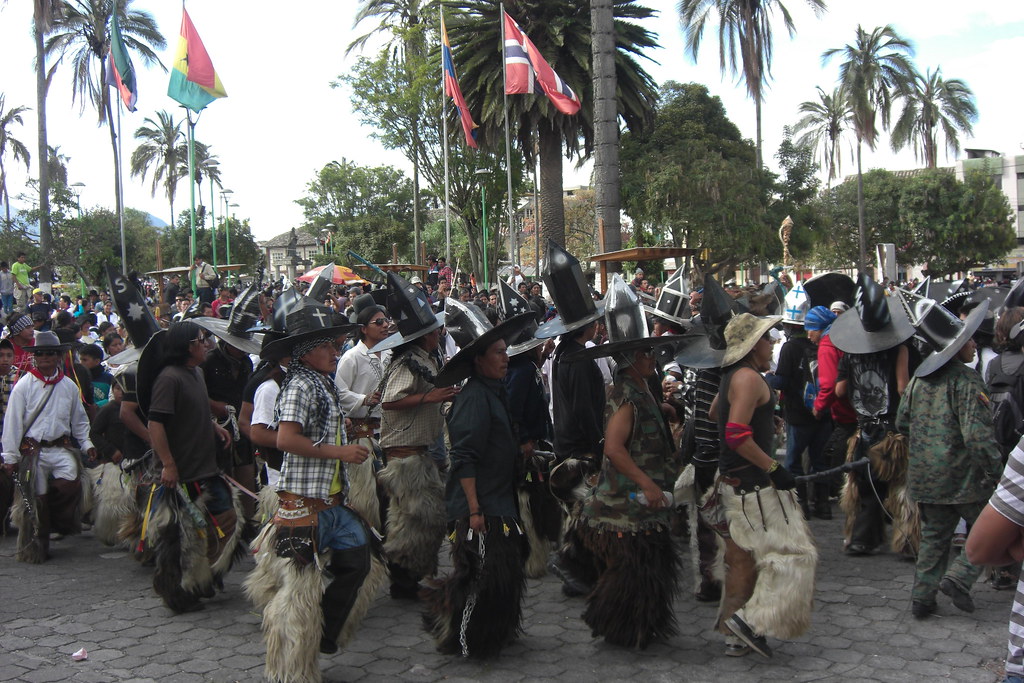
Inti Raymi Dancers, Cotacachi, Ecuador, 2013
On the day that we arrived, the festival was celebrated with groups of men in sheepskin chaps, tall hats, and metal whips whistling and dancing in circles, weaving their way through the town (with riot police on standby in case any dancer became overzealous).  The trip was a lot of fun, even with the gambles that come from eating street food and hitch hiking nighttime buses back to Quito.  


In Washington, D.C., the Smithsonian's National Museum of the American Indian hosted its own version of Inti Raymi this year.  You can see Smithsonian's pictures from the event here.  The festivities began with an opening ritual for the fertility of Pachamama (mother earth) in the tradition of the town of Macha, in the northern Bolivian province of Potosí.  The festival incorporates both pre-Columbian and Christian elements.  
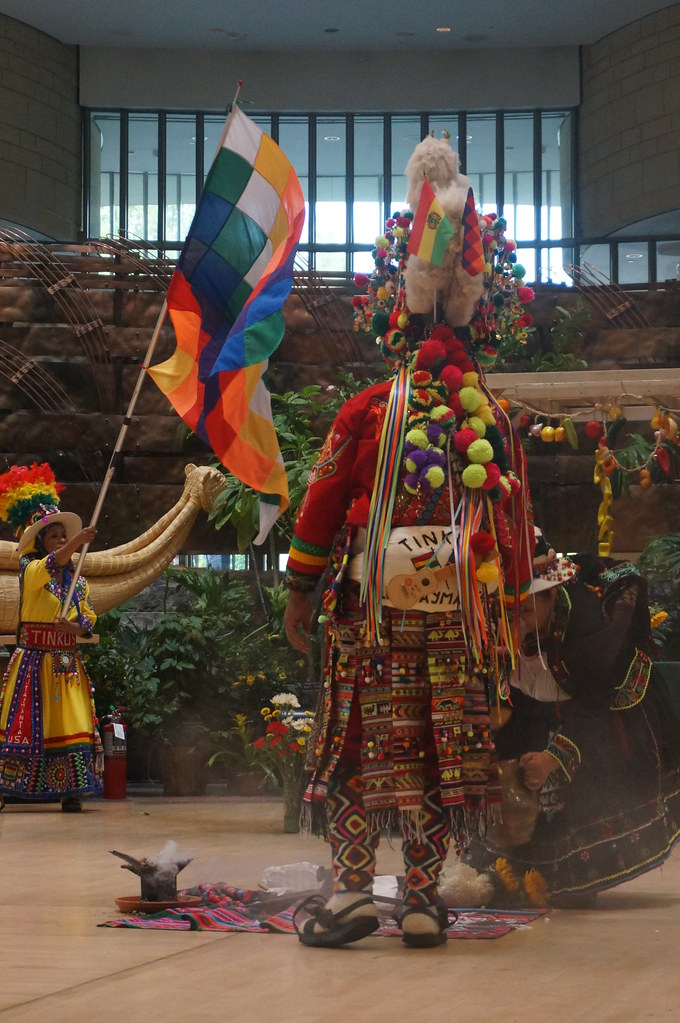
Tinku Pachamama Ritual
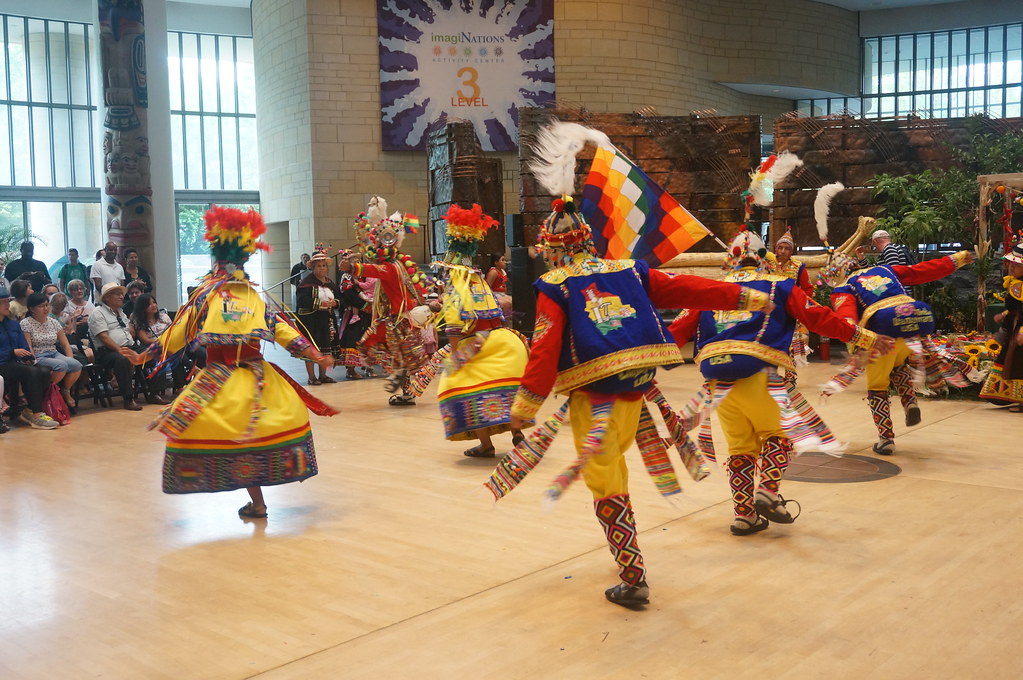
Then the dances began!  It's hard to capture here how amazing these dancers were.  They performed three performances with only a half hour break between each, but never lost any energy.  The beat pulsed through the museum with each unfaltering step.  
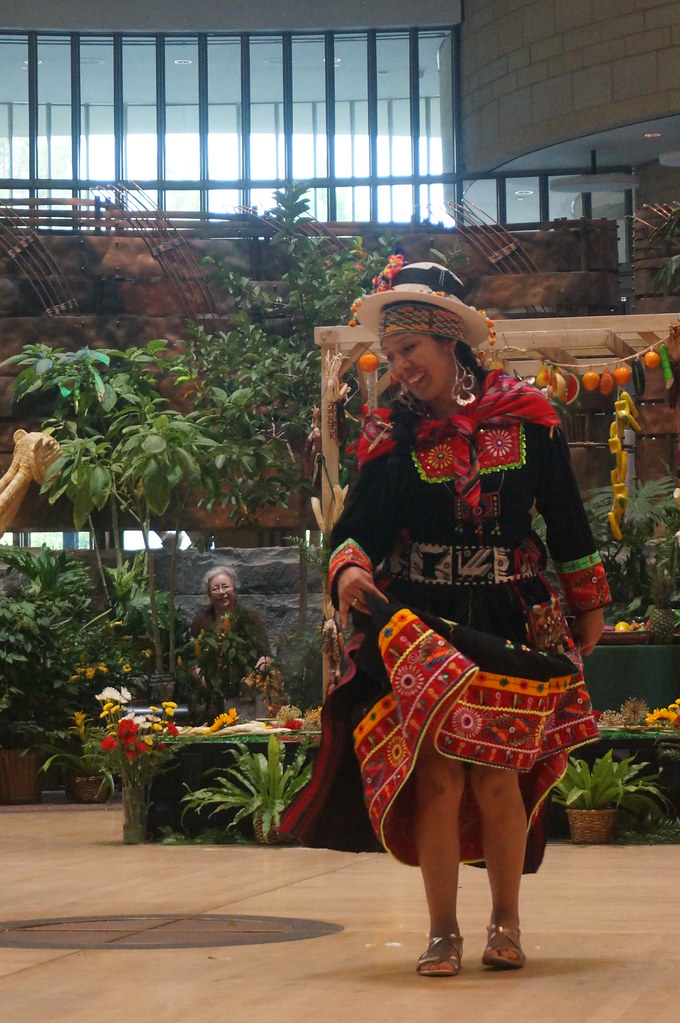
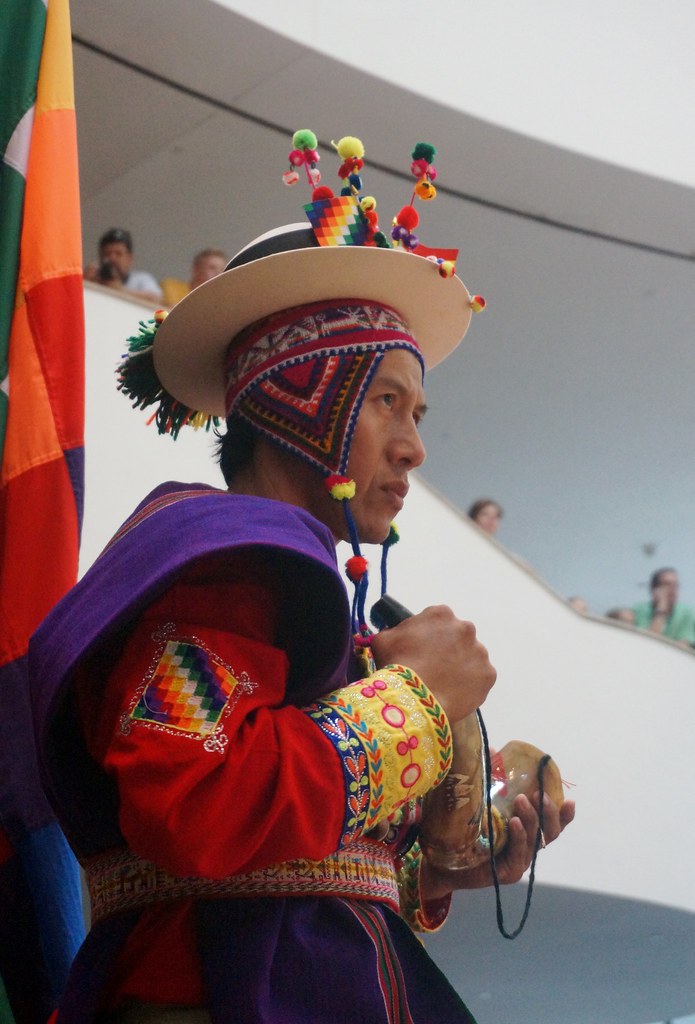
Bolivian Dancer
The first set of dances were the zapateados, dances that showcase the performers' footwork and focus on rhythm.  The next set of dances were the Huaylas, a dance from the highlands in which the dancers imitate the movements they perform in the fields while sowing potatoes.  
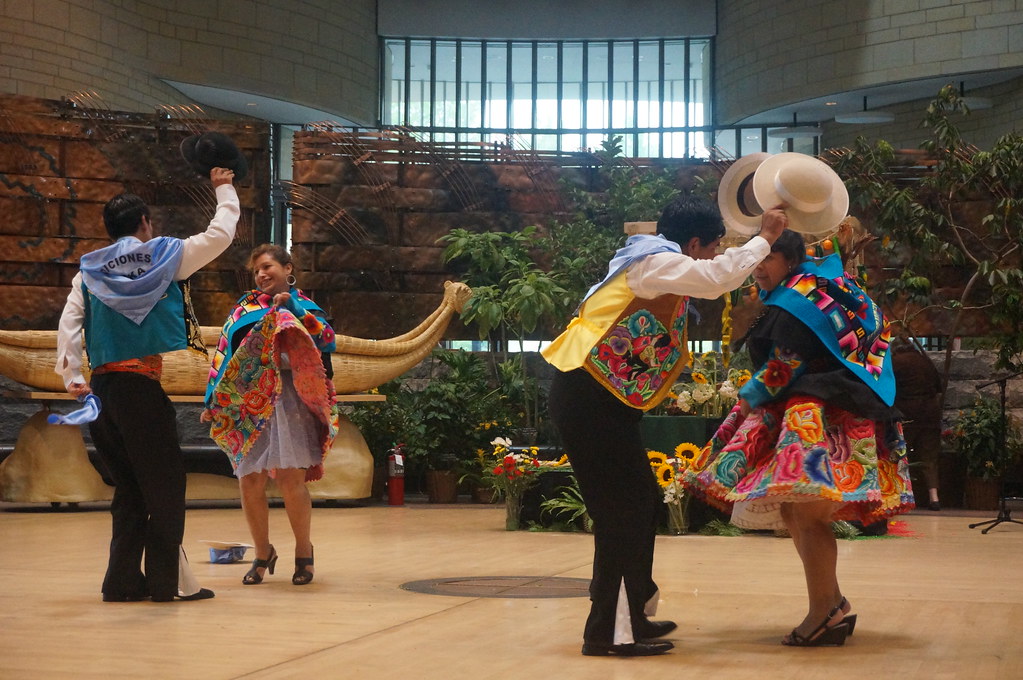
Huaylas Highland Dance
My favorite dance was the Tinku, variations of which are performed in parades.  This dance was the most energetic, with the dancers spinning and jumping, keeping pace with a quick rhythm.  The skill of the individual dancers, and the dancers as a whole, unparalleled with this dance.


Tinku Troupe Dance
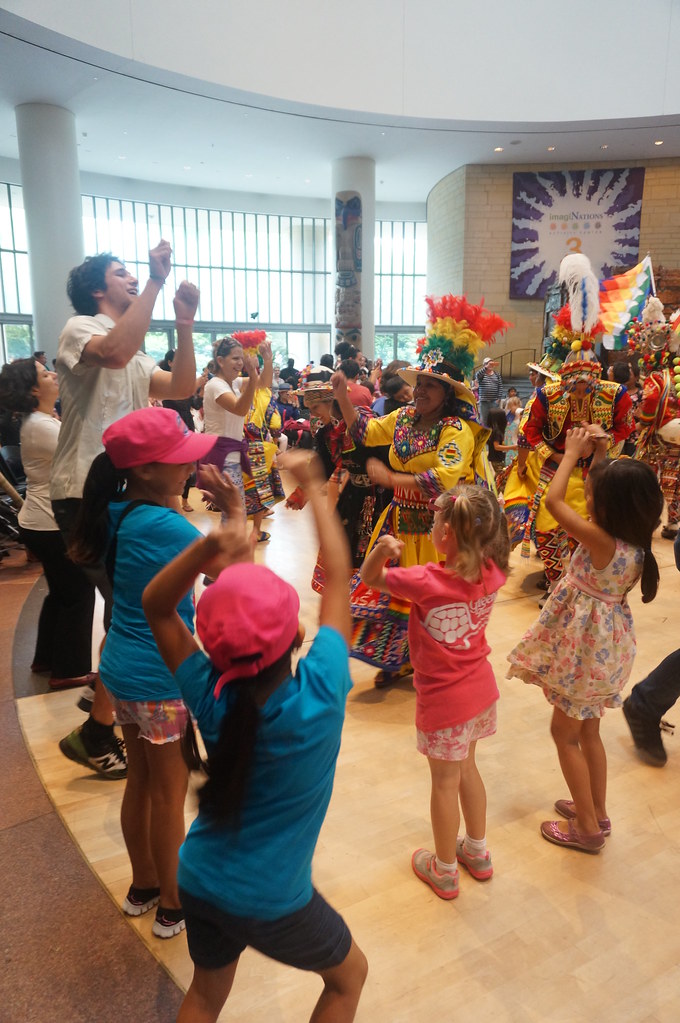
The audience even got involved too!


The dancing, music, and colors were beautiful.  The festival as celebrated in D.C. had more Bolivian and Peruvian influences, but it was really cool to see how a festival with similar roots was celebrated by these communities in the United States as compared to the festival I observed in a small Ecuadorian town.  


I thanked one of the Bolivian dancers after the show for sharing her performance, and her emotional reply left an impression with me: "I have lived in this country for 28 years and have never felt more Bolivian than I do today.  To perform in the Inti Raymi festival, in the nation's capital, here in this museum is a tremendous honor for me."
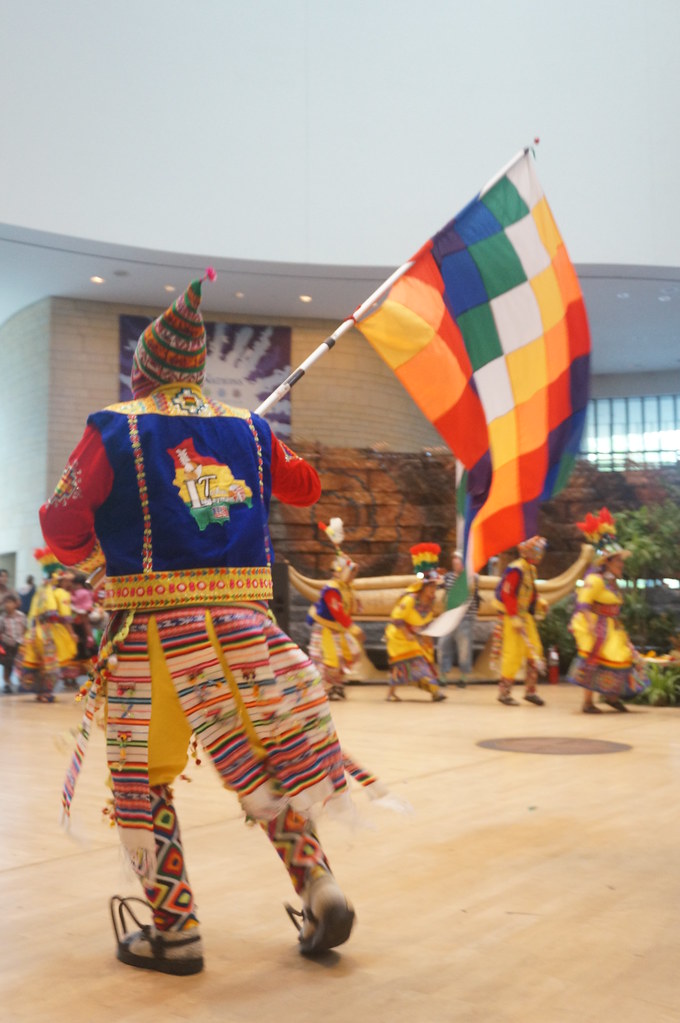
Dancer with Andean Indigenous Movement flag

Monday, May 25, 2015

A (Free) Ticket to Paradise at the Smithsonian's Hawaiian Festival

Last weekend, the Smithsonian's National Museum of the American Indian brought a little piece of paradise to Washington, D.C., with the 2015 Hawaiian Cultural Festival.  The festival, lasting May 16 & 17, brought together artists of all sorts to share hula, chanting, storytelling, traditional and contemporary Hawaiian music, food, traditional artists to celebrate Pele and Hi'iaka with D.C. residents and visitors.
Pele and Hi'iaka are Hawaiian deities that figure prominently in indigenous culture.  Pele is the goddess of fire, volcanoes, and maker of lands, and Hi'iaka is her brave and clever youngest sister.  Because Pele is the goddess of fire and volcanoes, she is honored by the color red.  Pele holds such a special place in Hawaiian culture that there is a custom in her honor as a volcano erupts.  It is said that as a volcano erupts and its lava flows down, a family should clean their home and set out a meal before leaving.  If they do this, it will be seen as a sign of welcoming and respect for Pele and her lava's path will part around the family's home, leaving it unscathed by her wrath.  
As shared by the Smithsonian, the epic journey of Pele and Hi'iaka (the abridged version; click here to watch the full story being told) goes like this:
Pele was driven out of the island of Kahiki (an island far from the Hawaiian islands) by her older sister Namaka.  Pele, the Fire Goddess and maker of lands, bids farewell to Kahiki knowing she can never return.  One majestic canoe carries her family across the vast ocean.  A favorite uncle and keeper of the sacred fire sticks travels with Pele, and she is led across the oceans by her brother Kamohoali'i.  After several battles with Namaka, Pele finally settles on the Big Island of Hawaii, where she occassionally spars with the goddess of snow and ice, Poli'ahu.   
Once, while in a deep dream, Pele travels to the island of Kauai and falls in love with a prince Lohi'au, an Ali'i (royal) of the island.  When her youngest sister Hi'iaka awakens her, Pele finds that she is far too weak to travel and begs Hi'iaka t travel and fetch Lohi'au for her.  Hi'iaka reluctantly agrees, as long as Pele takes care of Hi'iaka's sacred Lehua grove (a flowering tree unique to the islands) while Hi'iaka is on her journey.  Pele gives Hi'iaka a magic skirt of lei, and with it, Hi'iaka embarks upon an epic quest.  Along her journey, Hi'iaka battles fierce dragon-like monsters, the Mo'o clan and their leader Mo'olau.  Hi'iaka rescues Lohi'au from the monsters and brings him back to the impatient Pele, only to find that Pele, in her despair, had destroyed Hi'iaka's beloved Lehua grove.
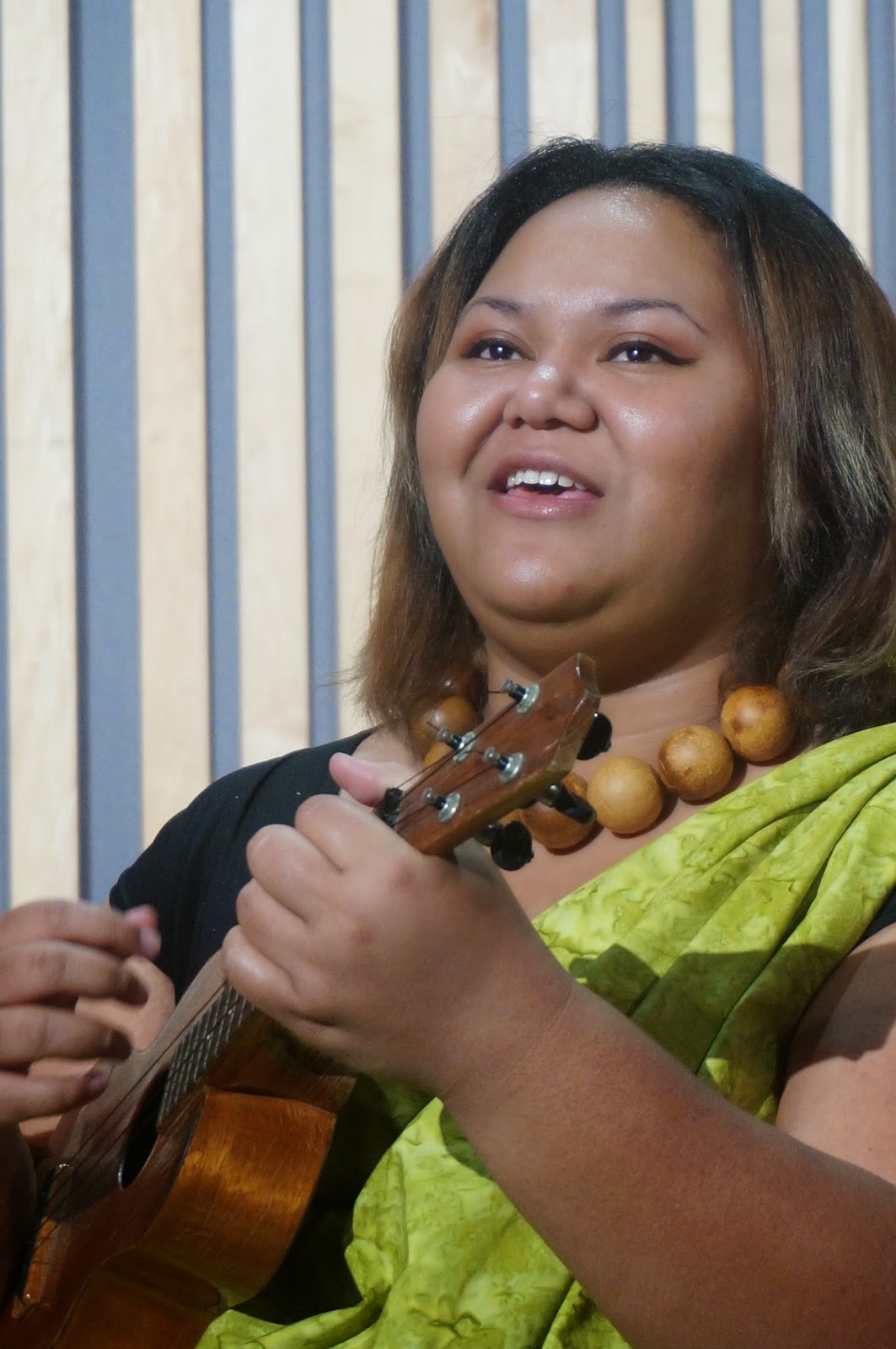
This epic story was brought to life through the talented storytellers (and ukulele players) Taryn Lelea'e Wong, Moses William Goods III, and Kealoha Kelekolio.  These storytellers are phenomenal.  Thankfully, the Smithsonian recorded and webcast their tale, and you can watch it here!  

In addition to talented storytellers, the rhythm of the Islands filled the museum's atrium with performances by hula dancers to music by the Aloha Boys.  The dancers, dressed in red to honor Pele, brought to life traditional Hawaiian dances as well as showing newer forms of Hawaiian dance blended with contemporary Hawaiian music.  
Many of the dances were reminiscent of the ocean's waves, but the dancers evoked an especially fiery energy while dancing as Mo'o (fierce dragon-like monsters of Hawaiian legend).  
There were also several talented craftsmen and women showcasing traditional Hawaiian arts to visitors.  They showed eager viewers techniques involved and explained the significance of each item in Hawaiian culture.  
Here, William Char demonstrates traditional lei making with different leaves, plants, and flowers found on the Hawaiian islands.  The red lei represents Pele, and the white lei to the left represents the ice of Poli'ahu, the Snow Goddess.
Above, Taryn Lelea'e Wong demonstrates traditional feather leis that served a unique role in Hawaiian culture.  Because Hawaii produces no natural gemstones, feather leis were a sign of royalty and high social status.  
This black and red lei took approximately 80 hours to make.
Its black feathers are the naturally colored feathers of a mallard, and the red feathers are dyed goose feathers.
The feathers are either a natural color or dyed, and are incredibly time-intensive to make.  Because of the detail and time required to make a feather lei, they are expensive and thus reserved for those who could afford to pay.  
Unlike other markers of royalty in traditional cultures, Ms. Lelea'e Wong explained, different colors did not necessarily connote higher class or royalty standing - just being able to own and wear a feather lei in itself indicated royalty.
I gained a deeper insight to Hawaiian culture and history and hope to someday experience the islands first-hand.  I am looking forward to Smithsonian and the National Museum of the American Indian's next big cultural festival - the Inti Raymi Andean summer solstice festival in Washington, D.C., and New York City.  I had the chance to see this festival while working in Ecuador in 2013 and am excited to participate in the Washington, D.C., celebrations.  

Sunday, July 24, 2011

Week Two: Summer Interning


The second week of internship was not as cool as the first week based on us not having very many projects to do.  I ended up assigning a memo for myself on a foreign policy issue that was being discussed in some hearing on the Hill during the week.  I was supposed to give my first Capitol Hill tour, which I was a bit nervous about because I really didn't want to get the tour group lost in the underground tunnels, but this problem never materialized because the group I was supposed to give the tour to never showed up.  

On Thursday night, I went to a lecture at the Natural History Museum called "Blended Nation: Portraits and Interviews of Mixed-Race America."  It was a really cool event and definitely something that I can personally relate to.  It is part of a broader exhibit called "Race: Are We So Different?"  That second exhibit was pretty cool and geared to be eye-opening for younger children especially, but it still has a lot of great information for everyone in general to see.  


Heading into the weekend, I went back to Clarendon to hit up Spider Kelly's and the Clarendon Ballroom.  The Clarendon Ballroom is a really cool club with cheap cover (only $5) and the best part is that it is colder inside than outside, which never happens for clubs.  Spider Kelly's is right next door and has a few billiard tables, shuffle board, and old school video games.  

Saturday morning, I went to Mount Vernon to see George Washington's estate and the Marine Museum in Quantico.  Mount Vernon is huge and the organization that owns the estate also bought up the land on the other side of the Potomac River so that the view from the Washington house is the same now as it was when the Washingtons were living there.

The Marine Museum was really cool.  It was basically a history of the Marine Corps from the Revolutionary War through the wars in Afghanistan and Iraq.  It showed how the corps has changed since its early days and all of the different campaigns that the corps has been involved with.  At the end, there is an interactive exhibit about what boot camp is like as well as a target range where you can pay $5 and shoot a laser-equipped M-16 rifle at targets.  They have a computer that prints out your 10 shots and tells you your shooting percentage.  I surprised myself and got an 80% and fired one shot about every 10 seconds - the 80% accuracy is enough to qualify as a Marine sharpshooter.  So I guess I'll have options if this whole law school thing doesn't work out...  After getting back to DC, I went to see the new "Captain America" movie with a bunch of friends from my building.  It was better than expected and we all had a fun time at the Chinatown Theatre.

On Sunday, I slept in and then went back to Georgetown for the afternoon.  After wandering around and window shopping, I discovered a couple really cool design stores - my favorite of all time is CB2.  I think I wanted every single thing in that store in my future dream house/apartment.  For dinner, I went to Pizzeria Paradiso and had an amazing margarita pizza.  On the bus back to my building, I chatted with two tourists from Madrid and Galecia who were trying to find their way to the Capitol Building.  It was great to be able to practice Spanish with them and fun to hear the Spanish accent again.  

Tuesday, March 1, 2011

Film Festival Finales


Last week was the end of two film festivals in DC that I have been attending and blogging about. On Thursday, February 24, the North African Film Festival series came to an end and saved its best (and most timely film) for the night: Rachid Bouchareb’s masterpiece Outside the Law. In French and Arabic, it is a fantastically done film about three [fictional] Algerian brothers and their involvement in the Algerian independence movement both in Algeria and in France. A good film by any standard, it was nominated for the Acadamy Award for Best Foreign Language film this year. Although the discussion following the film was not as good as previous events, the film was one of the best that I have seen recently, and I would highly recommend it.
On Sunday, the Sackler-Freer galleries concluded their 2011 Iranian film festival with three documentaries played consecutively. The first, All Restrictions End, is an unconventional examination of the intersections between fashion and history. Although well done and examining history dating back to the Qajar dynasty, I felt as though the viewer needed a more advanced understanding of Persian literary construction and cultural base that I just didn’t have to really appreciate the film. The second film was We are Half of Iran’s Population, a film featuring several Iranian women’s rights activists filming their questions to the 2009 Iranian presidential candidates and then having three of the candidates watch and respond to them. The film was interesting, as were the reactions of the candidates present. The final film, Pearls on the Ocean Floor, is directed by an American and features Iranian female artists both in Iran and in the global diaspora. Each artist had a unique perspective on what it means to be an Iranian woman, especially one’s placement in the diaspora and connection to Iran.

After viewing all three documentaries, I joined family and friends at a Mexican-Cuban restaurant in the Eastern Market neighborhood called Banana Café. The food was excellent and the portions were large. Dinner also included unlimited tortilla chips and salsa, so no complaints there. It’s not too far from where I currently live so I will definitely have to return.
March will be a busy month, both at work and with all of the local DC events. I can’t believe I am already entering my second month in the city. Between projects at work, community service events, and Noruz (Persian New Year) festivities, the month is sure to pass quickly.

Tuesday, February 15, 2011

Seguna Semana y Tiempo Libre

Although I had a good first week at the internship, the second week was even better and significantly busier. The week revolved around going to four conferences, working on articles, and researching community service projects. Despite the small office, my acronym-association really does some pretty cool and important things on both the local and national levels. I’m glad to be working there and contributing in some small, intern kind of way. The work in my first two weeks makes me confident that I chose this internship over being a research assistant at a different internship I was offered.

I also took advantage of some cool DC events. On Thursday night, I went to the film selected for the Museum of African Art’s North African Film Festival. The film selected was Raja, by a French director and set in Marrakech, Morocco. At the event, I ran into someone who stayed at the same hostel in Marrakech that I did, but a few months earlier! What a small world. The film was…interesting. Dr. Valerie Orlando from the University of Maryland facilitated a thought-provoking discussion with the audience that revolved around Orientalism, who controlled the discourse in the film (and the sociopolitical context in which the film takes place), power, and agency. In addition to hosting an excellent event, the North African Film Festival gave the audience members stickers, flyers, and movie-sized boxes of candy for free. And free is like gold to interns.
Once Saturday rolled around, I went back to the National Mall and took some time to enjoy the beautiful spring weather. I stopped by the Smithsonian Castle, which was an eclectic mix of small exhibits that showcased some of the artifacts in the larger Smithsonian collection as well as history of the institution itself. The castle is cool on the outside, but a bit weird on the inside, considering that a sarcophagus containing the founder’s remains is the first thing past the front doors. After the castle, I went to the Hirshhorn’s outdoor sculpture garden. There are exhibits indoors, but I haven’t had a chance to go there yet.
After the outdoor exhibits, I went to the National Archives. The Archives are not actually part of the Smithsonian Institution, despite being surrounded by them, and is actually run by the U.S. government. I feel like the people in charge of security for the National Archives really took National Treasure seriously, because I have never been in a museum with security on par with an airport. It was really cool to see the actual Constitution (flanked by security guards) and Declaration of Independence, in addition to an amazing Civil War exhibit. I decided not to be a complete tourist so I didn’t buy the replica Declaration for the bargain price of $2.95, but I might have to go back. In other interesting souvenir news, apparently interns and staffers have to run flags up and down the flagpoles at the Capital building and these flags are available for purchase, marketed as “flags flown over the Capital.” As an intern myself, I feel like I could appreciate the story behind such a flag and really empathize with that intern.
I still had a little time to lose after all the museums closed and before meeting friends, so I went back to the favorite Barnes & Noble to finish that Kurt Vonnegut book. Of course, all the stories are excellent, but these are my personal favorites from this collection: “Tango,” “With His Hand on the Throttle,” “Ruth,” and “Out, Brief Candle.”
After finishing the Vonnegut book, I went over to Dupont Circle to meet some MSU people at Kramerbooks. Kramerbooks is a combination between a bookstore (with a pretty good selection), café, and bar/restaurant. The desserts are famous, so another trip is in order soon. In addition to dessert at Kramerbooks, a visit up the Washington Monument and the National Museum of African Art are on my list for next weekend.

Monday, February 14, 2011

Salaam Smithsonian!

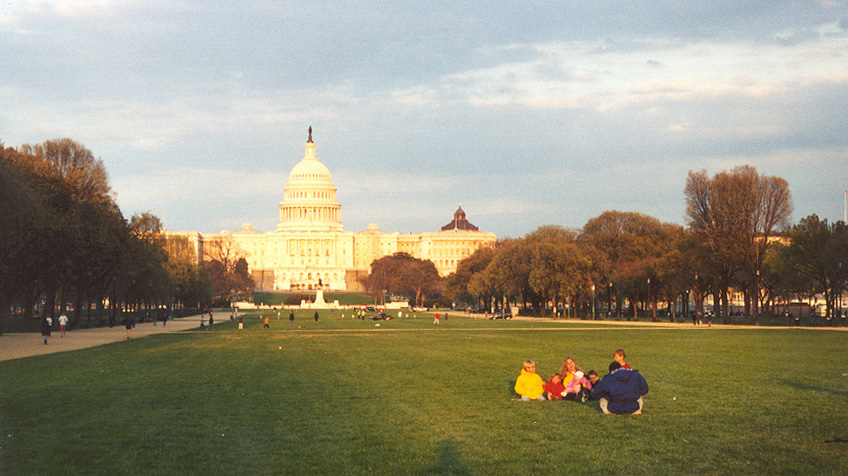
I spent my first weekend in DC with a nice balance of touristy and resident activities. Since the weather during the weekends has been nice, each day has included time just wandering around the National Mall, with the Washington monument to the west and the Capital building to the east. I also had the chance to meet a friend from MSU at an Indian restaurant called Delhi Club in Arlington across from the Clarendon metro stop. The food was great and the menu relatively priced, considering DC food prices. There were also free “refills” of rice, which is always a plus.

On Friday evening, I had the chance to meet with another friend for the Sackler’s Iranian film festival choice, Please Do Not Disturb. It was thought-provoking film, tying together the stories of three individuals and might actually have been the first Persian comedy that I have ever seen (“comedy” for a Persian film means far more comic relief than usual, but still an intense drama). The Meyer Auditorium at the Sackler gallery was like Wells Hall, and large enough to accommodate the crowd that had gathered for the film. It might have been the most Persians that I have seen in one place and I was surrounded in a sea of Pinglish (Persian + English).


Once the actual weekend hit, I took some time to see the four best Smithsonian museums (the American Indian museum is really good, but I saw it in October, so these were the next four on my list): the Holocaust Memorial Museum, Museum of American History, Museum of Natural History, and the Air & Space Museum. All were incredible and definitely warrant multiple visits.

That Saturday, I spent about three solid hours in the Holocaust Memorial Museum, a memorial that is an important reminder for humanity. Definitely need more time because three hours still was not enough time to fully grasp all exhibits and see everything in the museum. Below is part of a video seen toward the end of the museum and is part of survivor Gerda Weissmann Klein’s story.


With an hour left before the museums closed, I went to the Museum of American History. February is Black History month and on one of the upper levels, there was an actor teaching young children about the sit-ins. While a museum of African American history is currently under construction, there was a fascinating exhibit at the American History museum – a collection of art and artifacts by the Kinsey family. The range of artwork and historical documents was incredible and I will have to return to see more of it. The American History museum also has a Julia Childs exhibit, complete with her kitchen and segments from her television program and appearances.The next day, I got back on the museum circuit and stopped by the Museum of Natural History. The museum is pretty interactive and there were a lot of families and their children. The obvious highlights of the museum were its impressive dinosaur and human evolution collections. The new Cyprus exhibit was also fascinating, as the island was a crossroads where several civilizations converged. There is a special Chinese Orchids exhibit which brings a nice feeling of spring to the DC climate. The museum also has a very cool forensic anthropology exhibit with remains and artifacts found in the Jamestowne settlement entitled “Written in Bone.”

After browsing the Natural History museum, I stopped by the Air & Space Museum. The planes and other equipment in this museum are amazing. The museum has the original plane that Wilbur and Orville Wright flew at Kitty Hawk as well as Amelia Earhart’s bright red Lockheed Vega plane in which she set several aviation records. Other planes on display include Charles Lindenberg’s “Spirit of Saint Louis,” the U-2 spy plane, and the original military plane that became the first to fly faster than the speed of sound. In addition to its large World War I and Space exhibits, the museum also houses a large collection of missiles, drones, and warheads. Cold War era Pershing and Saber missiles create an imposing presence as soon as one enters the doors. Others include the first ICBM designed by the United States, de-activated warhead capable missiles, and the equipment used to launch satellites into space (and the anti-satellite ASATs).After each day’s museum excursion, I wandered over to 12th & E streets, where there is a Barnes & Noble store with a Starbucks café. On my first trip there, I discovered a newly released collection of Kurt Vonnegut, Jr. short stories entitled While Mortals Sleep. I’m going to wait to purchase it until the paperback edition is out, but that doesn’t mean that I can’t read it…

Twitter Delicious Facebook Digg Stumbleupon Favorites More

 
Design by Free WordPress Themes | Bloggerized by Lasantha - Premium Blogger Themes | Walgreens Printable Coupons