Showing posts with label Noruz. Show all posts

Tuesday, March 25, 2014

Norouz at the United Nations


Thursday, March 20th, 2014 was the first day of Spring.  The following Tuesday, the Iranian mission to the UN and eight other central Asian countries (Afghanistan, Azerbaijan, Kazakhstan, Kyrgyzstan, Tajikistan, Turkey, Turkmenistan, and Uzbekistan) hosted a Norouz lunch and cultural event at the Palais des Nations in Geneva.  It was great to see so many countries putting on a great event together to share this beautiful piece of shared culture with the United Nations community.  Each country had a table with information about its particular celebrations for the holiday as well as food and sweets from that country.  There were also musicians that played from a classical Iranian musical group after the delegates made speeches and wished the attendees a happy new year.
Classical Iranian Music
For thousands of years, Iranians, and those in Central Asia influenced by Persian culture from the empire's spread thousands of years ago, celebrate spring's arrival in a holiday called Norouz.  Norouz literally translates as "new day" and has its roots from thousands of years ago in ancient Zoroastrianism.  It marks the beginning of the year on the Iranian (solar) calendar, so while it's 2014 in the USA, it's 1393 in Iran (Iran's calendar begins its years counting in 621 AD when Mohammad PBUH made the pilgrimage to Medina).  Every year except this year (on account of me being in Geneva), our family has been together to celebrate, even when I was in DC.  As we do not have as many relatives nearby, we take the opportunity each year to invite over different friends to join us in celebrating.  There are also shows each year put on by student organizations at the universities, like last year's 1392 celebration at Michigan.
Norouz is celebrated by over 300 million people around the globe and dates back more than 3,000 years.  Norouz is even recognized by the UN General Assembly in Resolution 253 (A/Res/64/253) and included on the UNESCO list of Intangible Cultural Heritage of Humanity.  It's a great holiday and something my family celebrates every year (alongside our American traditional holidays), so I'll provide more of a description below.

The holiday celebrations last for thirteen days, although preparations begin before, including khaneh tekani - "shaking the house," otherwise known as "spring cleaning" - and chaharshanbeh soori.  Chaharshanbeh Soori takes place on the eve of the last Wednesday of the year (Tuesday night) and involves jumping over a fire while shouting, "sorkhie to az man va zardie man az to!" This chant asks the fire to give the jumper its healthy red color and take away the jumper's sickly yellow pallor.  The idea is to have the fire cleanse the jumper, removing all sickness and bad luck from the past year so that he or she can start fresh for the new year to come.  Unfortunately, I grew up in a city with too small an Iranian population, so we only ever celebrated this part of Norouz once - in a family friend's driveway at night jumping over a hay bale set ablaze.  Welcome to Michigan.

For the holiday itself, there are some traditional foods associated with the celebrations.  This typically means a bean and noodle soup (ash-e reshteh), fish with herbs and rice (mahie sabzeh), and desserts (think baklava and cardamom rice cookies).  However, the Iranian table switched it up and did chicken kubideh (ground meat kabobs) with rice and fessenjan (a chicken pomegranate dish).  The food was all still amazing.
Unconventional Haft Sin - everything was purple-themed
The biggest aspect of preparing for Norouz on the day itself though is setting up the special table - sofreh-e haft sin (pronounced "seen"), the "table of the seven s's."  "Haft sin" refers to placing seven items on the table that start with the letter "س" in Farsi and each have a special significance, many having to do with rebirth, health, and prosperity.  Setting the table as a family is very similar to placing ornaments on a Christmas tree together.  The "seven s's" and their significance are as follows:
  1. Sabzeh (سبزه) - green sprouts from lentils or wheat, with a red ribbon tied around, symbolizing life.  On the 13th day of celebrations, Sizdah bedar, families go on picnics and people tie the sprouts together and throw them into moving water so that the current will carry their wishes onward to be fulfilled in the New Year;
  2. Samanou (سمنو) - dish made of wheat germ or lentils (we don't usually, or ever, have this on our table), symbolizing affluence;
  3. Sib (سیب) - apples, symbolizing beauty and health;
  4. Sonbol (سنبل) - hyacinth flowers, one of my favorite flowers for its fragrance;
  5. Senjed (سنجد) - dried fruit from a lotus tree, symbolizing love;
  6. Seer (سیر) - garlic, symbolizing good health;
  7. Somagh (سماق) - sumac, a deep fiery red color representing beauty and the color of the sunrise. 
Haft Sin Norouz table - 1391
There are also other "non-س" items that are placed on the table that carry their own significance.  These include:
  1. A Qur'an;
  2. A book of poetry (Divan-e Hafez shown in picture above);
  3. Vinegar (serkeh سرکه), symbolizing old age and patience;
  4. Gold coins (sekkeh سکه), symbolizing wealth and prosperity;
  5. Goldfish, symbolizing life;
  6. Rosewater for its fragrance;
  7. Colorfully dyed eggs, symbolizing fertility;
  8. An orange floating in a bowl of water, representing the earth in the universe (it is believed that the orange will rotate ever so slightly at the exact moment of the vernal equinox);
  9. Candles lit for each child in the family; and
  10. A mirror, placed behind the lit candles so that it reflects the light back to the viewers.
Even though I am in Geneva, it was great to be able to see a bit of Norouz at the UN, and to run into coworkers at the event as well.  Wishing everyone an amazing 1393!


!!! نوزوز تان پیروز

Sunday, March 17, 2013

Noruz 1392 - Happy New Year!

 !نوروز مبارک 

Happy New Year!  Even though American New Year is on January 1st, Persian New Year (Noruz) is on the vernal equinox, meaning around March 20-21st each year.  Yes, Persians are late for everything, even New Year's.  Just to confuse the calendars even more, Iran uses a different calendar and so the new year is actually 1392 (621 years before 2013!).

Noruz is an ancient Zoroastrian holiday still celebrated by millions of people today.  It falls on the first day of spring every year, but the holiday celebrations themselves last for 13 days (but for some reason, no one ever lets me take 13 days of school off - I call foul).  To start off, there is Chaharshanbe Souri, celebrated on the eve of the last Wednesday of the old year (Tuesday Night folks, cuz Farsi is confusing).  People build fires and jump over them saying, "Sorkhi to az man o zardie man az to!" (Give me your beautiful red color and take back my sickly palor!).  It can get pretty epic.
The idea is that the fire will burn away (not literally, don't worry) all of the ills, sickness, and bad things from the past year so that you have a fresh new start for a positive new year.  It's pretty fun to just jump over fires but because I live in cities, I've only ever celebrated this part once with a real fire (other times by jumping over sparklers).
For the rest of Noruz, the 13 days are filled with family visiting each other and then on the actual day, you set up the Haft Sin (Seven S's, seven things that begin with س).

  1. Sabzeh - sprouts with a red ribbon tied around them.  On the 13th day (Sizdah Bedar), people go for a picnic and throw the sabzeh into moving water to carry good wishes for the new year.  Sometimes single women will tie the sprouts in knots hoping to get married during the year.
  2. Samanu - wheat or lentil dish
  3. Sib - apples, for good health
  4. Sonbol - hyacinth flower, for its fragrance
  5. Senjed - fruit from a lotus tree, symbolizes love
  6. Seer - garlic, symbolizes health
  7. Somagh (sumac) - the color of sunrise/sunset, symbolizes beauty
Other things on the table include a Qur'an, a book of poetry, gold coins (for wealth & prosperity), orange floating in a bowl of water (symbolizes the earth in the universe, the orange is supposed to spin in the water on the exact moment of the equinox), brightly colored eggs (fertility), bowl of milk (health), goldfish (life, fertility), rosewater (important in Persian culture), vinegar (serkeh, also a س), and candles (one for each child in the family, placed in front of a mirror to reflect the positive light back to the family).  Then, you read some Hafez and other poetry and eat some amazing food.  Older people have to give gifts to everyone younger than them, so if you're the youngest, you clean house.
Noruz is basically awesome.  This year, it is on March 20th, but due to scheduling, my family will celebrate later.  However, there are always the annual Persian Student Associations' Noruz culture shows to look forward to!  This year, the University of Michigan had another great culture show, called "Eshghe Bahar" (Love of Spring).  Lots of dancing, music, and some funny skits.  There were also guest performances - one dance by the Chinese Students Association that fused traditional and modern dancing as well as a performance by Ta'amullat Fi Buhayrit al Zaman, a dance group that performs folk dances from the Middle East.


UMich PSA also had stand up comedian Tehran Soparvaz (Tehran "So-Fly") perform.  He was hilarious and extremely engaging with the performers and audience throughout the show, even after his routine.  They have had other Persian stand-up comedians perform at shows before, but this was the best.  I didn't get video from the show, but there are a few videos out there with some of his older stand-up routines.

(start at 4:06 for Tehran Soparvaz)

There was also a performance by an Iranian grad student on traditional Persian musical instruments (the stringed instrument is the kamancheh, and the kid is playing the tombak and the daf).  It was phenomenal.  Check out the whole performance below.

 !نوروزتان پیروز

Thursday, March 31, 2011

Noruz and Early Spring in the District

In the weeks since I last wrote, lots has been happening. On the work side, we were extremely busy with nationwide community service projects and hosting large conference featuring some pretty influential speakers. We are now gearing up for more events, and I am busy as ever writing articles, figuring out placement for the summer, as well as housing for the summer and fall. Through friends, I started taking a small, conversation-based Farsi class. It is really good to be practicing speaking again, as I haven't had much of an opportunity since graduating in December. The class moves quickly, and it's pretty impressive how good some of the American students are with the language.


Noruz, Persian New Year celebrated on the vernal equinox annually, was on March 20th this year. It is now the year 1390. Part of Noruz traditions involves gathering with family to celebrate, but this year, since I am on the coast, my family was fortunate enough to visit me. We spent the time going to several DC attractions including the Air & Space Museum, American Indian Museum, Botanical Gardens, Library of Congress, and the Vietnam, World War II and Lincoln memorials. We
also visited the Shahnameh exhibit at the Sackler Gallery, Moby Dick House of Kabob, and Maz Jobrani’s comedy show, to add a Persian flare to the DC experience. The Sackler also had a Noruz special for the community where I had the chance to play some backgammon.
Listen to Maz Jobrani on NPR:
For Noruz, we went back to Kabob Bazaar in Arlington for their special buffet of traditional foods and all the rice one could ever eat. It was amazing, to say the least. After dropping my family off at the airport, I spent the rest of that day walking around Georgetown.
Since everything closes early in DC, if I am looking for something cheap to do afterward, I usually head over to the local Barnes and Noble bookstore. I finished To Kill a Mockingbird, a book that I had always wanted to read but had not yet done so until now. I have moved onto a book called The White Tiger by Aravind Adiga. After only the first chapter, I am hooked.
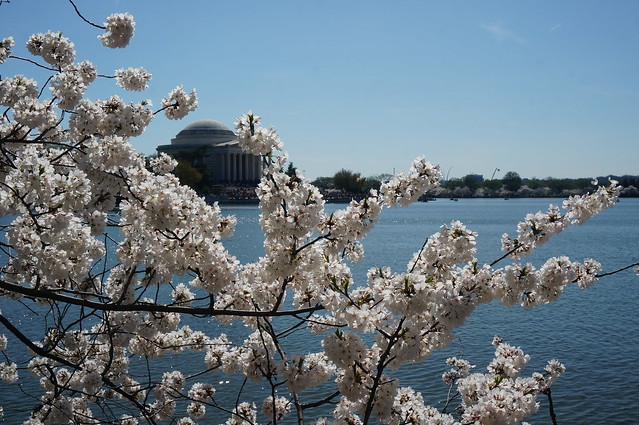
The weather has started to get warmer and cherry blossoms and magnolia trees are flowering everywhere. The Cherry Blossom Festival will begin in April, and I have some friends coming into DC just to see it. The waterfront area of the southwest side is also very pleasant to walk around, and I wandered there this past weekend. In exploring the area along the river, I saw a random sign for a Titanic memorial. After following the sidewalk along the marina, I found it. It's nice to know that Washington, DC decided to immortalize Leonardo DiCaprio in a monument somewhere. And I think I found the place to throw my sabzi into the river on Sizdah Bedar...

Tuesday, March 1, 2011

Film Festival Finales


Last week was the end of two film festivals in DC that I have been attending and blogging about. On Thursday, February 24, the North African Film Festival series came to an end and saved its best (and most timely film) for the night: Rachid Bouchareb’s masterpiece Outside the Law. In French and Arabic, it is a fantastically done film about three [fictional] Algerian brothers and their involvement in the Algerian independence movement both in Algeria and in France. A good film by any standard, it was nominated for the Acadamy Award for Best Foreign Language film this year. Although the discussion following the film was not as good as previous events, the film was one of the best that I have seen recently, and I would highly recommend it.
On Sunday, the Sackler-Freer galleries concluded their 2011 Iranian film festival with three documentaries played consecutively. The first, All Restrictions End, is an unconventional examination of the intersections between fashion and history. Although well done and examining history dating back to the Qajar dynasty, I felt as though the viewer needed a more advanced understanding of Persian literary construction and cultural base that I just didn’t have to really appreciate the film. The second film was We are Half of Iran’s Population, a film featuring several Iranian women’s rights activists filming their questions to the 2009 Iranian presidential candidates and then having three of the candidates watch and respond to them. The film was interesting, as were the reactions of the candidates present. The final film, Pearls on the Ocean Floor, is directed by an American and features Iranian female artists both in Iran and in the global diaspora. Each artist had a unique perspective on what it means to be an Iranian woman, especially one’s placement in the diaspora and connection to Iran.

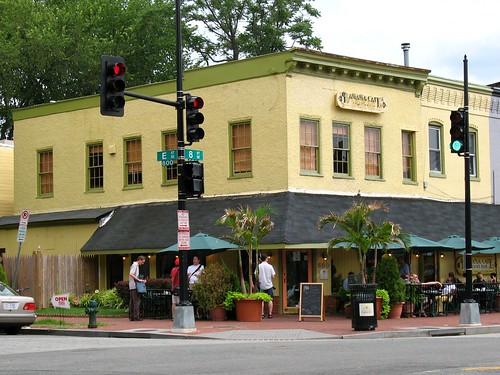
After viewing all three documentaries, I joined family and friends at a Mexican-Cuban restaurant in the Eastern Market neighborhood called Banana Café. The food was excellent and the portions were large. Dinner also included unlimited tortilla chips and salsa, so no complaints there. It’s not too far from where I currently live so I will definitely have to return.
March will be a busy month, both at work and with all of the local DC events. I can’t believe I am already entering my second month in the city. Between projects at work, community service events, and Noruz (Persian New Year) festivities, the month is sure to pass quickly.

Twitter Delicious Facebook Digg Stumbleupon Favorites More

 
Design by Free WordPress Themes | Bloggerized by Lasantha - Premium Blogger Themes | Walgreens Printable Coupons