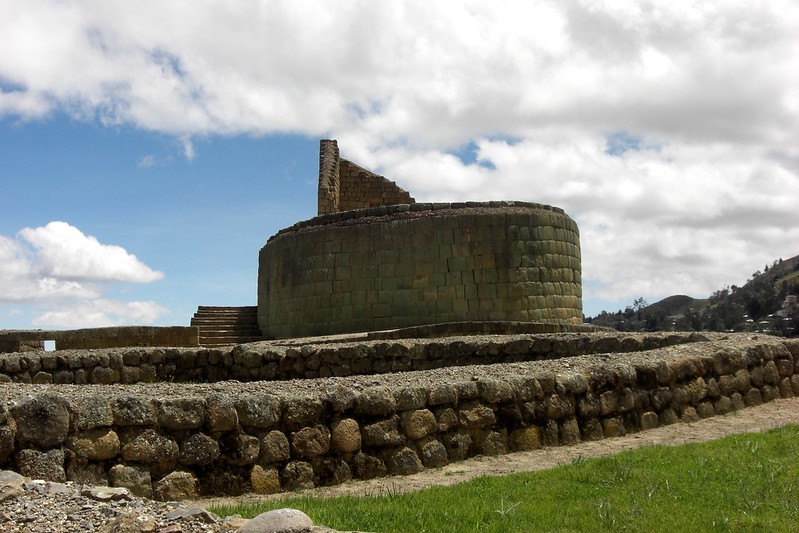
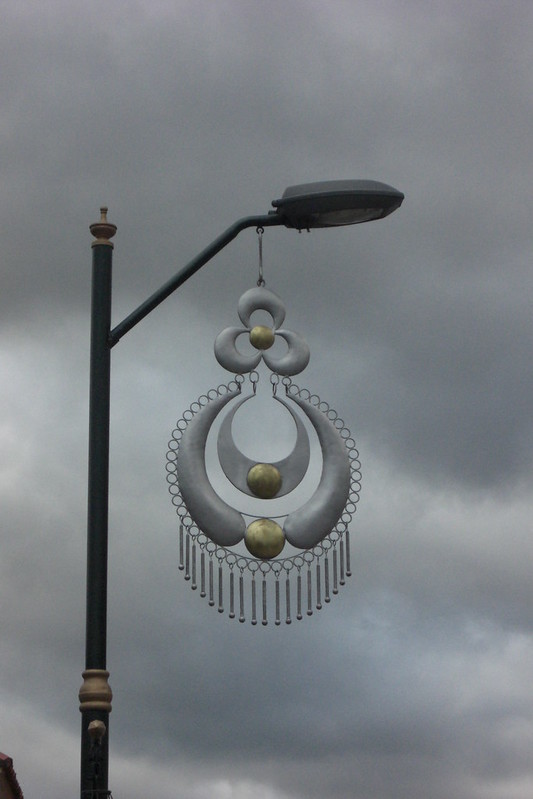
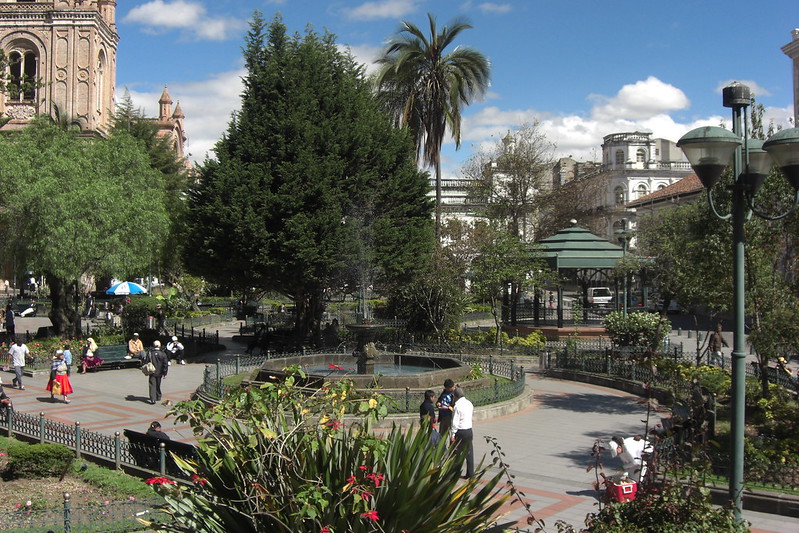
This past weekend, starting the day after I finished working at the NGO in Quito, I flew to Lima, Peru, to visit one of my friends from high school in Michigan who is in the middle of her two year service with the Peace Corps. Although her site is a small town outside of
Huaraz in Ancash, she was in Lima this weekend for medical checks so it worked out perfectly to visit. Even though she had been to Lima previously, she had never before had time to get out and see much of the city (and it was my first time in Peru), so we had a very fun, action-packed weekend and saw nearly everything cool on
this list from Time Magazine.
 |
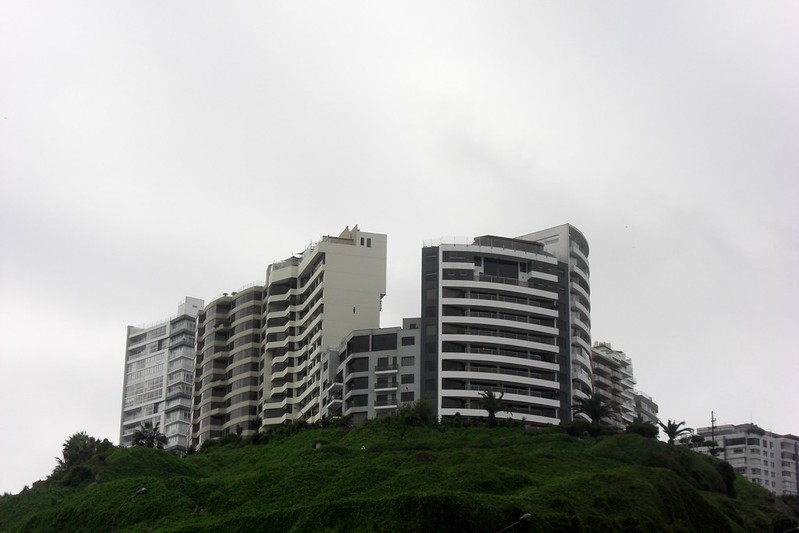
| Miraflores from the Highway |
Friday, August 23, 2013
This morning, I woke up super early to get to the airport to catch a 7:00am flight direct from Quito to Lima. My favorite taxi driver picked me up to take me to the airport and we had a great conversation along the way. I learned that he is actually a professor as well, but since the school where he teaches only contracts professors on a semester-by-semester basis and even then does not pay very much, he works as a taxi driver the rest of the days of the week (and weekend) to supplement his income to support his children's education.
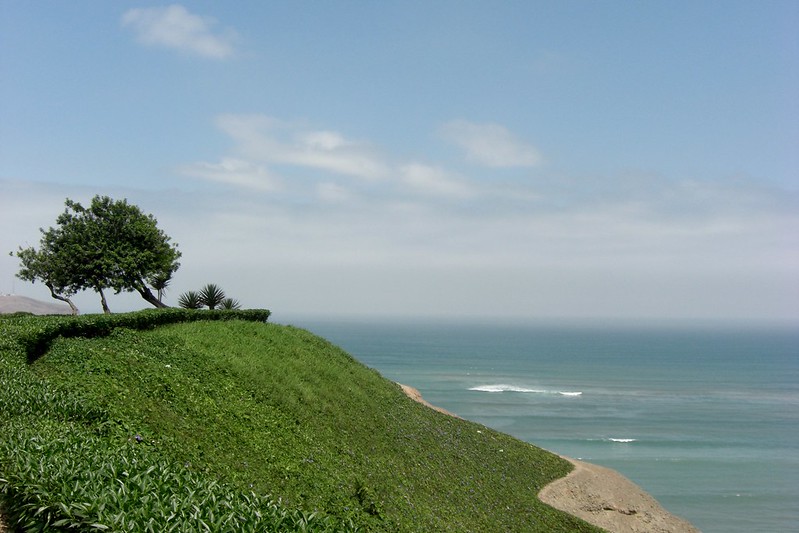
Upon arriving in Lima, my friend had already arranged for a taxi driver from the hostel to come and pick me up from the airport. He was also a very nice person and told me about the city, things to see, and his family. Even though it was cloudy all day (it's currently winter in Lima), I absolutely loved taking the highway to Miraflores that goes along the Pacific Ocean. Absolutely beautiful.
 |
| Miraflores Beach |
I had about a half hour at the hostel to check in and change from airplane clothes to my suit before getting picked up in another car and going to a Peruvian law firm to meet up with a few Peruvian attorneys. Both attorneys were incredibly nice people and it was very interesting to learn about their practice, the challenges of practicing law in Peru, and the centralized relationship between Lima and the provinces. Those were some of the same issues that were discussed in my Law & Development seminar last year (2L) and so it was really great to learn about these topics from these two attorneys' perspective over a delicious lunch at a Peruvian sea food restaurant overlooking the park along the ocean. I even tried a Pisco Sour, ceviche, yuca, a fantastic tuna, and some other delights from Lima.
 |
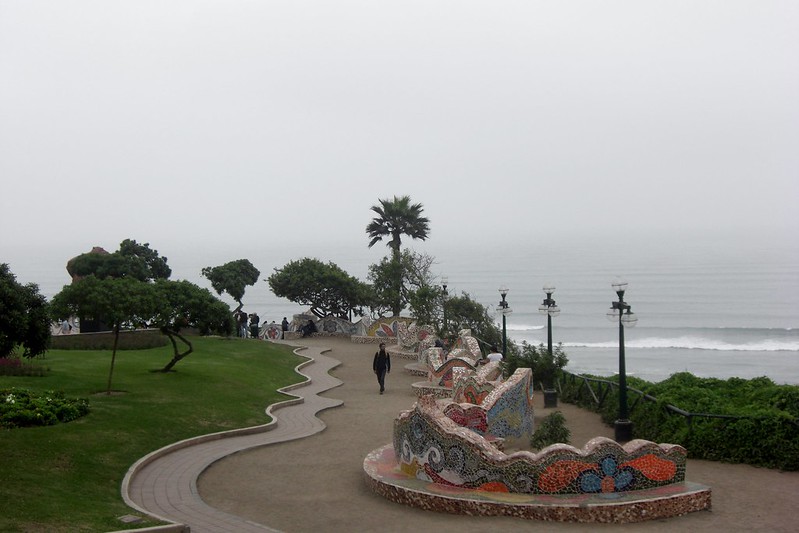
| Parque de Amor, Miraflores |
After lunch, I went back to the hostel, changed, and then took a walk around Miraflores to get to know the area a little better before my friend finished with her Peace Corps things for the day. I ended up taking a double-decker bus tour of Miraflores from Parque Kennedy and learned a lot about the neighborhood and its architecture. However, it was
freezing on the bus (the second story of the bus was open). It was funny because during the day, the weather was beautiful, but I guess it can be exactly like Michigan. It just reinforced the fact that it was rather dumb to completely forget to bring a rain jacket or windbreaker on this trip. I don't think I'll be forgetting it on the next trip I take.
 |
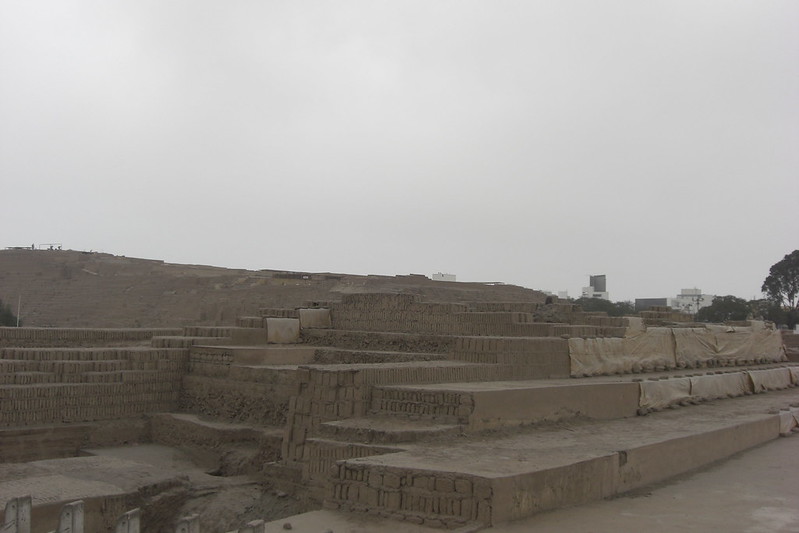
| Huaca Pucllana, Inca Ruins in Miraflores |
After the bus tour, I met up with my friend back at the hostel. We talked and caught up for a bit before going to
La Lucha by Parque Kennedy (they have delicious food). At La Lucha, we met up with two more American Peace Corps volunteers for dinner. My friend ended up having to get her wisdom teeth out at 8:30pm that night, so we went to a Peruvian oral surgeon's office at night in a car sent by Peace Corps so she could have the teeth removed. The procedure was surprisingly quick and we then went back to crash at the hostel to hopefully be ready for a full day on Saturday.
 |
| La Lucha - best sandwiches! |
Saturday, August 24, 2013
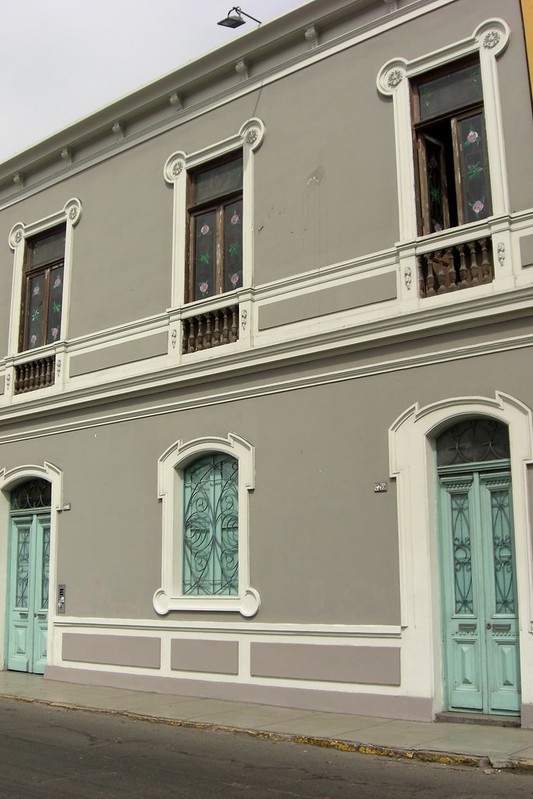
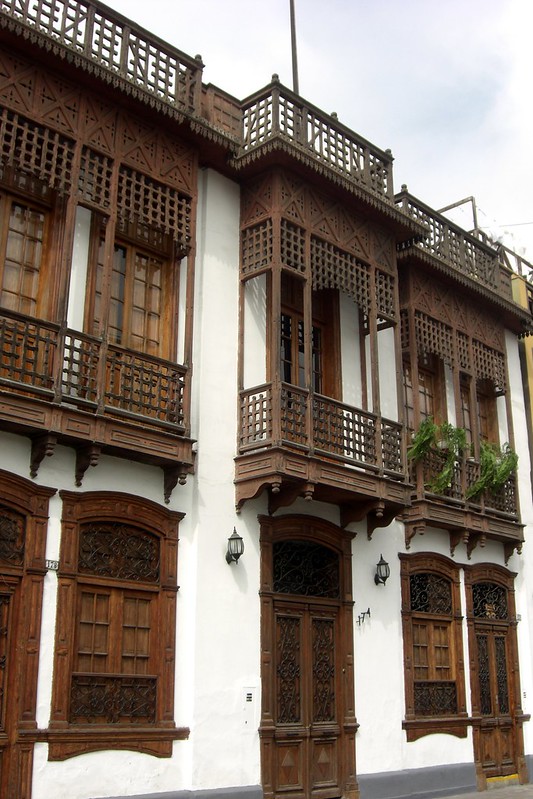
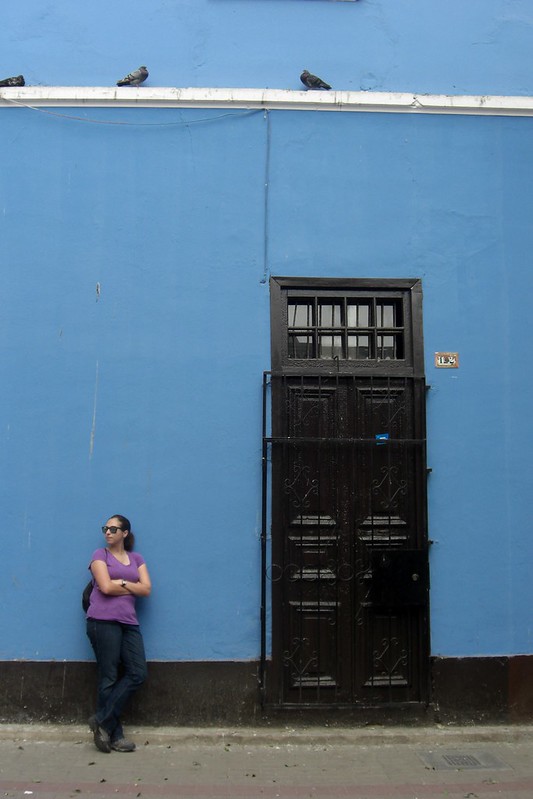
We took our time in the morning, but luckily my friend felt fine after getting the wisdom teeth out (which was amazing to me because I had mine taken out the summer before and it took about a week after the surgery to get rid of dry socket and pain issues). We had breakfast at the hostel and then went to the Barranco neighborhood of Lima. The streets and buildings along the way were beautiful and it was very cool to see all of the colorful buildings with a view of the ocean along the way. One of the first things we did upon crossing from Miraflores into Barranco was to cross this bridge into Barranco located behind a very old church.
 |
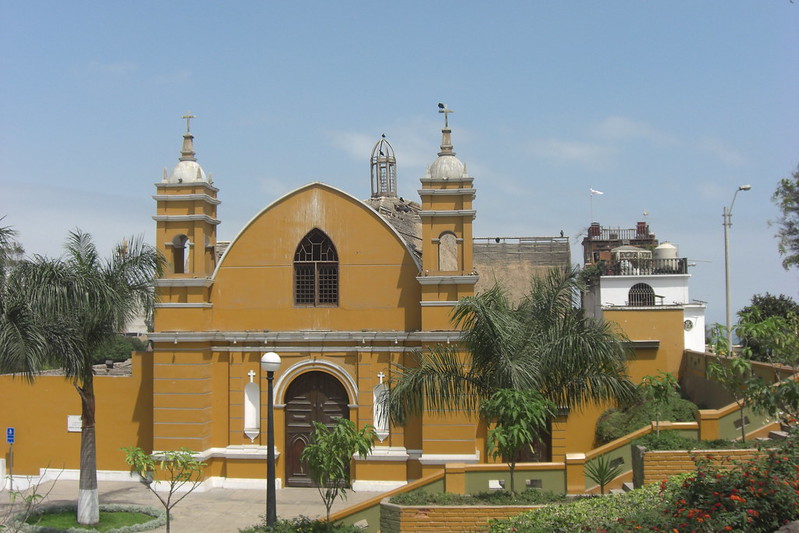
| (this is the church - bridge is off to the left) |
You are supposed to make a wish, then hold your breath while crossing the bridge. If you can make it to the other side and were able to hold your breath the whole time, your wish will come true. I made it to the other side (although now I cannot remember what I wished for - so hopefully something awesome will happen and the bridge will be right!). The church next to the bridge was pretty cool, too. Underneath the red and yellow paint, you could see the adobe construction. There were also a ton of vultures that lined the rooftop - which was both kind of cool and very creepy.
 |
| Feria del Cafe |
Wandering through Barranco, we came across a coffee fair in one of the plazas. We walked around and looked at all of the different coffee-dedicated booths where one woman gave me a sample of Peruvian coffee. I tried it, first black, and then with sugar, and both times it confirmed the fact that I am a tea drinker. My friend, who likes coffee, had to finish it for me. At another booth, there was a woman selling honey that had been made by bees pollinating coffee flowers and that honey was amazing. It was hard not to take all of the free samples. There were also some cardboard cutouts at the coffee fair, so of course we took pictures with those.
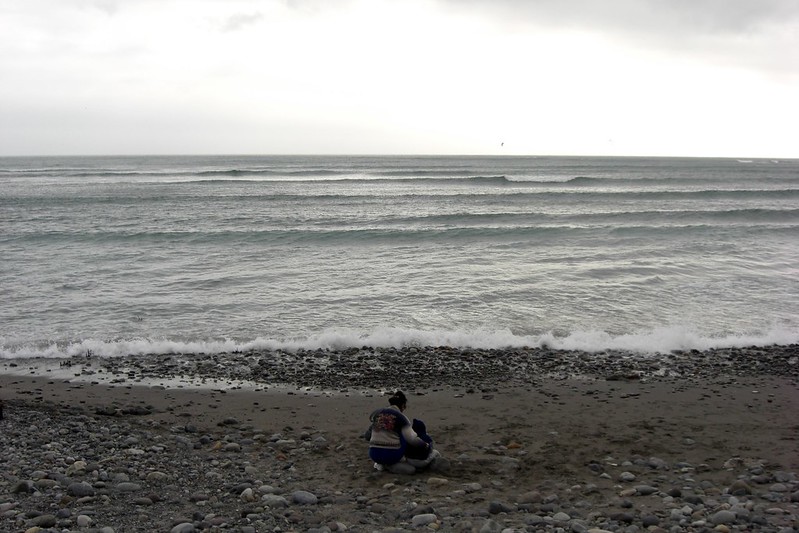
From the coffee fair, we wandered further into Barranco, and I was very impressed to see the mixture of older colonial and newer modern architecture. We ate lunch at a very good burrito restaurant in Barranco (owned by an American, I believe) before walking back down to the beach to return to Miraflores. I took off my hiking boots and waded in the Pacific Ocean(!) for a bit. I thought I was in shallow enough water that I would be fine with my jeans rolled up to my knees, but then a big wave came and splashed me, getting my jeans soaking wet with salt water. The water was actually not that cold (infinitely warmer than the water from the waterfalls in Ecuador), and after I got my socks and shoes back on, we continued walking up from the beach to Miraflores. We rested at the hostel for a bit (so I could dry my jeans and so my friend could work on a couple emails she needed to finish for one of her projects) before planning our next move.
 |
| Mother & Child by the Pacific Ocean |
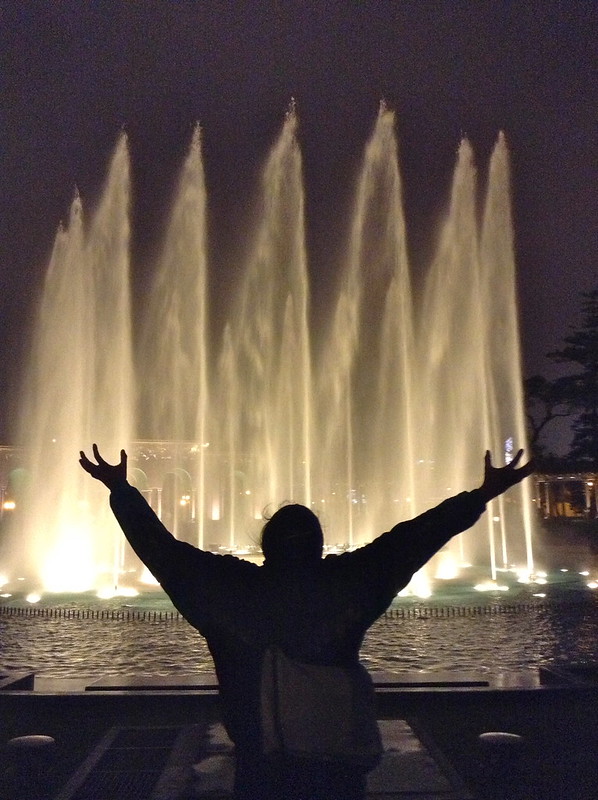
That night, we headed out after dark from the hostel to the Parque de Aguas for a light show. It was so cool to me that the area we were in was safe enough to walk around at night and take public transportation. The park itself was also very safe and full of families and children eager to see the lights show. You'd never see anything like this in Quito, so it was so cool for me to see people out and enjoying themselves at night. It was only a few Nuevo Soles to get into the park, so extremely affordable (probably about $1.00 USD or less). The lights show itself was pretty cool. There was music and the show took place at one of the main fountains (although I thought some of the other fountains were really cool). My favorite part about the main show was that they showed traditional Peruvian dance styles from across the country paired with music from those regions. It was really cool to learn about all of the diversity across Peru through this show. After the show was over, we walked around to all of the other fountains and then headed over to another park across the street to quick catch the end of the set that DJ Quechaboi was spinning.
Sunday, August 25, 2013
In the morning, we took a couple small buses called convis to the Pachacamac Ruins, about 45 minutes outside of Lima. We found tour companies on the internet advertising trips from Lima to the ruins for about $45.00 USD but we took our own trip for less than $10.00 USD, just by nicely asking people and police officers for directions.
 |
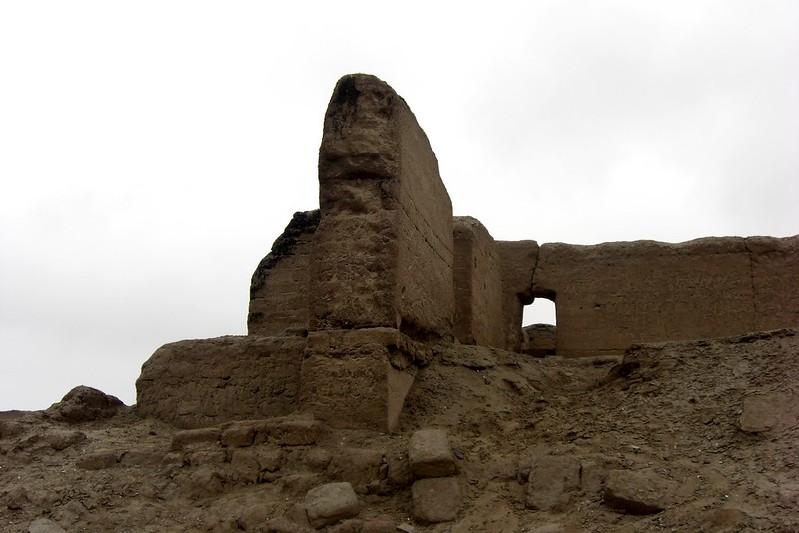
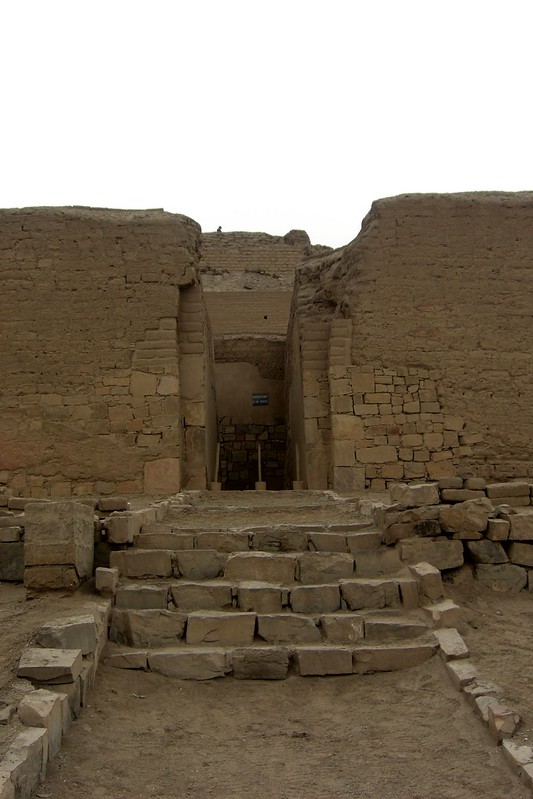
| Pachacamac Ruins |
Pachacamac was built by the Incas on top of another indigenous group's site. The complex is actually fairly large and there were about 12 different sites to see as well as a small museum. The pyramid and the Templo del Sol were my favorite of the sites. It was really cool to walk around the entire complex and hike through the sites. The Templo del Sol even overlooks the ocean. It was amazing though how dusty and dry everything was, even though this is the coastal region of the country. This was the first time today where I felt like Indiana Jones.


One of the coolest things that we say today was the MALI - Museo de Arte Lima, which had an amazing exhibit on José Sabagol (1888-1956). He is sort of like the Peruvian
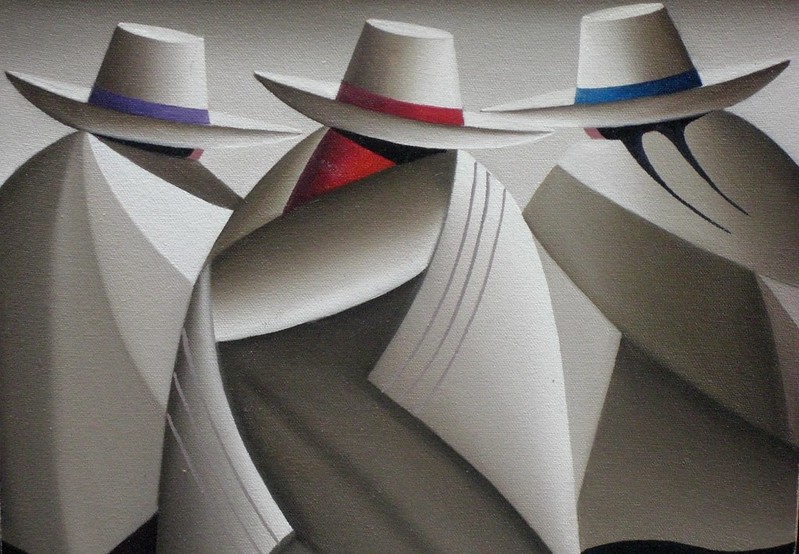
Oswaldo Guayasamin in terms of his popularity and status as a symbol of that country's nationality. Sabagol was considered the "first Peruvian painter" because, "for the first time in the history of the Republic of Peru, Andean subjects were incorporated into the collective imagination as a central element of the nation." Sabagol was one of the main leaders in the quest for "essential Peruvianess" in the indigenista movement. He also tried to break down barriers between the Sierra and the Coast, Lima and its provinces. His obra inspired broad and diverse representations of Peru, which included the recovery of the legacy of Peru's indigenous cultures.
 |
| Alcalde de Varayoc |
 |
| Mujer de Varayoc |
 |
| Las Llamas |
 |
| Balcón de Herodes |
Between 1919 and 1923, Sabagol went to Mexico and described the trip to be a huge source of inspiration. He greatly admired Diego Rivera's work and wanted the Mexican art movement of the time to serve as the model for development of art in Peru. "By the end of the 1920s, a vision of Peru as a dual - or alternatively, mestizo - nation had taken shape, built on the basis of two clearly differentiated cultural traditions: the Hispanic and the indigenous." "One of Sabagol's greatest contributions to 20th century Peruvian culture is, without a doubt, his work in the field of revaluing rural and popular aesthetics, undertaken under the influence of his experience in Mexico." He used motifs inspired by mates (carvings on gourds) in his own art and graphic design projects. Some of my favorite pieces from the exhibit were: Titcaca, Sembríos Andinos, Algarrobo, Las Llamas, Balcón de Herodes, Indio Quechwa, Alcalde de Calea, Varayoc de Chinchero, and Mujer de Varayac. The paintings of the indigenous alcades (mayors) dominating the landscape were interpreted as a symbol of indigenous cultural continuity and its modern affirmation. (Source: Sabagol exhibit in MALI).
 |
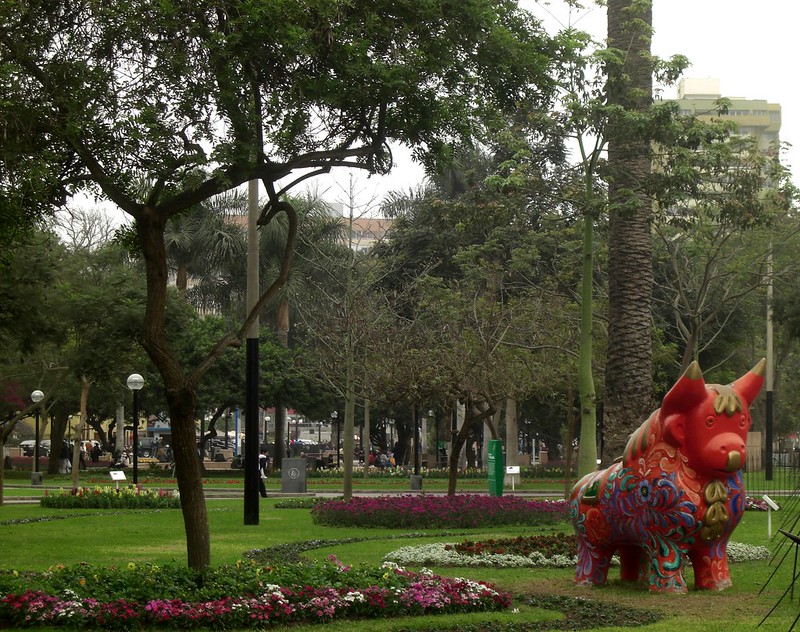
| Traditionally decorated Toros de Pucará |
On exiting the MALI, I saw more of these little ceramic bulls in the museum gift shop. I asked the clerk if she knew the history of the bulls, and she was able to tell me that they are called Toro de Pucará and it is an Andean Peruvian symbol from the Sierra region of the country that came after the arrival of the Spanish. The bulls are a symbol of good luck and families in the Sierra place one in their house to ward off bad luck, bring good luck, and protect the house. I thought it was pretty interesting to learn more about the bulls - a Peruvian appropriation of a Spanish symbol with a distinct meaning in Andean Peruvian culture.
 |
| Modern-styled Toro de Pucará |
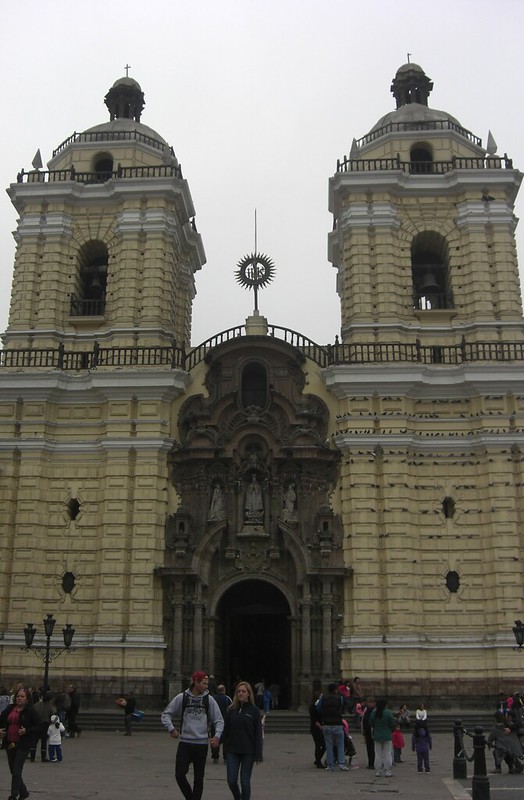
After the MALI, we walked into the centro historico and saw the Plaza de Armas and Presidential Palace. We walked around the plaza to the Iglesia y Monestario de San Francisco, where there is a museum with catacombs underneath. My friend had already gone through the catacombs tour, so she rested outside while I went into the catacombs.
 |
| Iglesia de San Francisco |
The tour guide sounded like he came straight from a telanovela. It was pretty ridiculous and very difficult not to laugh as he talked about a painting of The Last Supper where the artist included cuy (guinea pig) on the table. Like a telanovela, it is possible that the tour guide memorized a script because he did not seem to understand any of my questions about the catacombs in English or when I asked in Spanish. Inside the catacombs was pretty cool. They used to bury people underneath the church until Lima built its own cemetery. There are thousands of people who were buried in the catacombs. It was really cool to see this archaeological site too and I even found an old piece of fabric that must have come from the clothing one of the bodies was buried in and noticed a skull with a bullet hole in it. Now I really felt like Indiana Jones.

Monday, August 26, 2013
Monday was a nice and lazy day. I woke up early this morning because all of the Chinese students staying at the hostel must have had some event they had to leave early for and were shouting through all of the hallways in Chinese before they left. They were also shouting right outside my window loudly, so once I woke up, I wasn't able to fall back asleep. It was really cold in the morning (like Cuenca and Riobamba cold), so I went to the kitchen to make some hot tea (not coffee, see above). A Swiss medical student was also up early in the kitchen so we ate breakfast together and had a nice conversation. He was checking out of the hostel that day, but his bus to his next destination was scheduled to leave at 11:00pm, so he spent the day with my friend and me.
The three of us first went to the market near Parque Kennedy. My friend had some work to do from a coffee shop, so she worked there while the Swiss student and I went to check out the market. We were able to get some nice deals and I ended up buying another alpaca sweater. Now I have one from Ecuador and one from Peru. And I will be the warmest person in Michigan once it snows. I also found a little red Toro de Pucará that I am going to give to my taxi driver when he takes me to the airport to go back to the United States as a 'thank you' gift. I also found this little wooden version of
Sorry, but instead of pawns it has llamas, foxes, sheep, and condors.
 |
| Toro de Pucará in Parque Kennedy, Miraflores |
After the market, the three of us went back to Miraflores to the park by the ocean with a little mall to check out movie theatre times and ticket specials. The theatre back by Parque Kennedy had the same movies with cheaper prices, so we ate lunch at La Lucha again (by the ocean this time) then went to purchase our tickets at the other theatre. We headed to a supermarket to buy some groceries then to the hostel to eat dinner and chill until the movie started at 6:30pm. We ended up seeing this movie called
Freelancers, although it has a different title in Spanish. At least it wasn't dubbed over, but it still amazes me how a movie with Robert DeNiro and Forest Whittaker could be so absolutely a-w-f-u-l (although maybe 50 Cent should have been the clue there). At least it was funny because it was so horrible.
Once the movie was over, I still had some soles in coins in my pocket (even after buying airplane snacks), and since the money changers will not change out coins, we took 6.75 in soles to the nighttime market in Parque Kennedy to spend them on as many bracelets as we could buy for 6.75. My friend is going to Michigan State University for her master's right now and I went to MSU for undergrad, so we bought three matching green and white bracelets and taught the Swiss guy how to say, "Go Green! Go White!" and give him the third bracelet. It is possible that he now thinks we are crazy.
Tuesday, August 27, 2013
This morning, I woke up early, ate a grapefruit, then hopped into the taxi to go back to the airport. For some reason, when I used Expedia to buy my tickets, there was a direct flight from Quito to Lima, but the cheapest option on the return trip was to go from Lima to Bogota to Quito. Which seemed strange to me, especially once I got to Lima and found out that there were in fact several direct flights from Lima back to Quito. But, whatever, I went to Bogota. I hung out in the Bogota airport for about 4 hours watching planes take off. While I was waiting there, my boss from the NGO in Quito showed up. Apparently she was in Bogota for a conference that past weekend and was also on her way back to Quito. We talked for a little bit before boarding the plane to learn that she had a seat in the row behind mine. Too funny.
Having the chance to visit Lima was wonderful, and it was fantastic to see my friend from my hometown. The city itself was very different from Quito (it was safer, they had a LIBRARY, and there was water), but next time, I would like a little bit more time in Peru to be able to visit Huaraz and do some trekking there (it is supposed to be beautiful) as well as fulfill a childhood dream of visiting Machu Pichu. However, it was still a great trip!
Landing in Quito was a breeze and now, I only have one more day to see last-minute things, pack up, and get ready to fly home!
 |
| waiting for a convi at the Pachacamac Ruins |




 2:06 AM
 J-Mad
J-Mad











 Posted in: