Showing posts with label Inti Raymi. Show all posts

Saturday, June 20, 2015

Inti Raymi 2015: The Andean Sun Comes to D.C.


While working in Ecuador, one of my most memorable trips with coworkers was to visit Cotacachi and Cuicocha, a couple hours north of Quito in the province of Ibarra.  The area is beautiful, and our trip was made especially memorable because we happened to arrive in the town during Inti Raymi - the Inca festival of the sun.  
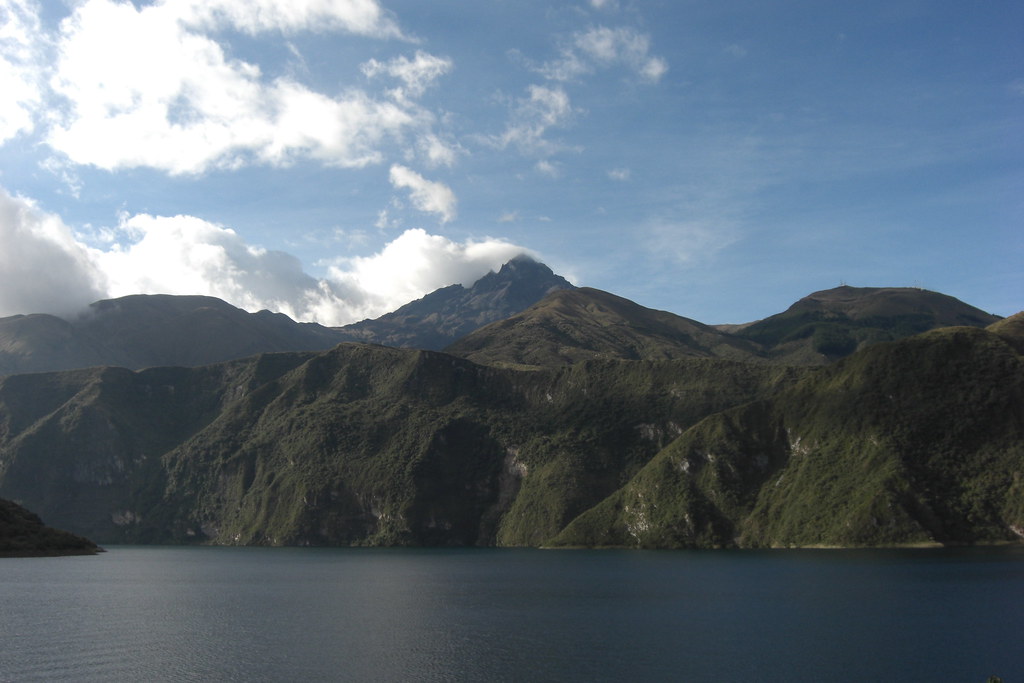
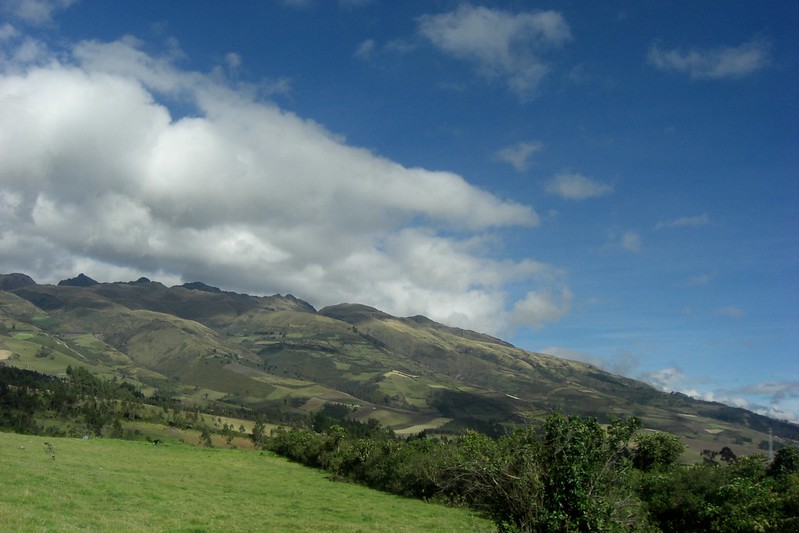
Lago Cuicocha, Ibarra, Ecuador, 2013
Inti Raymi is a celebration of the winter solstice throughout many Andean communities across Bolivia, Peru, and Ecuador (remember, it's the Southern Hemisphere so their winter solstice is the northern's summer solstice).  Taking place on the shortest day of the year, the festival is a celebration of the sun, longer days, planting, and the harvest to follow.  Although the festival itself is widely celebrated, each community has its own unique expression.
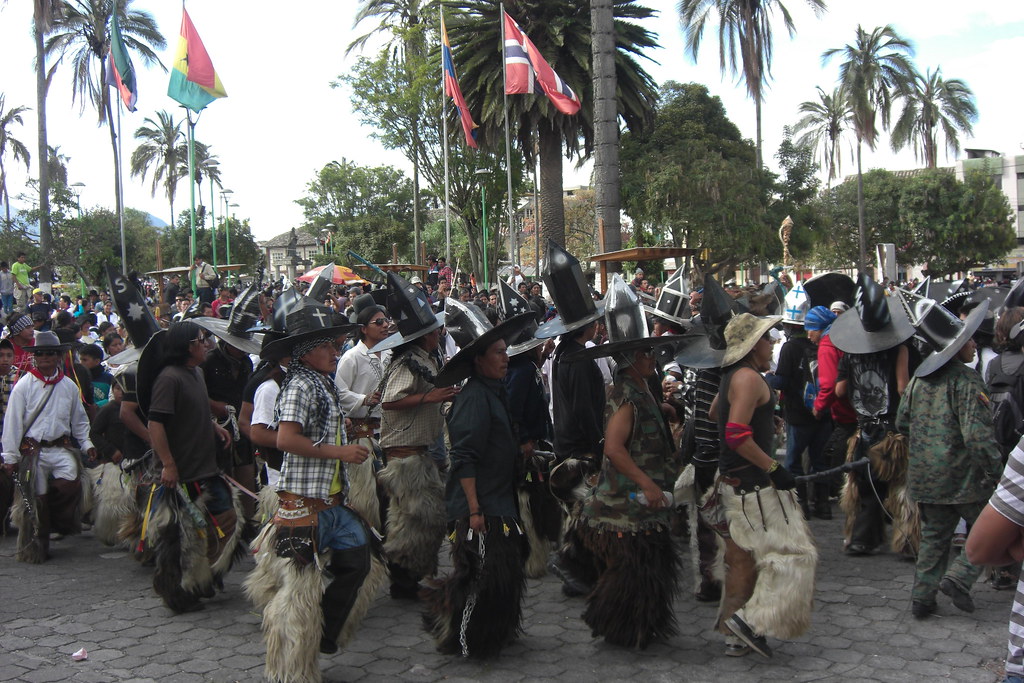
Inti Raymi Dancers, Cotacachi, Ecuador, 2013
On the day that we arrived, the festival was celebrated with groups of men in sheepskin chaps, tall hats, and metal whips whistling and dancing in circles, weaving their way through the town (with riot police on standby in case any dancer became overzealous).  The trip was a lot of fun, even with the gambles that come from eating street food and hitch hiking nighttime buses back to Quito.  


In Washington, D.C., the Smithsonian's National Museum of the American Indian hosted its own version of Inti Raymi this year.  You can see Smithsonian's pictures from the event here.  The festivities began with an opening ritual for the fertility of Pachamama (mother earth) in the tradition of the town of Macha, in the northern Bolivian province of Potosí.  The festival incorporates both pre-Columbian and Christian elements.  
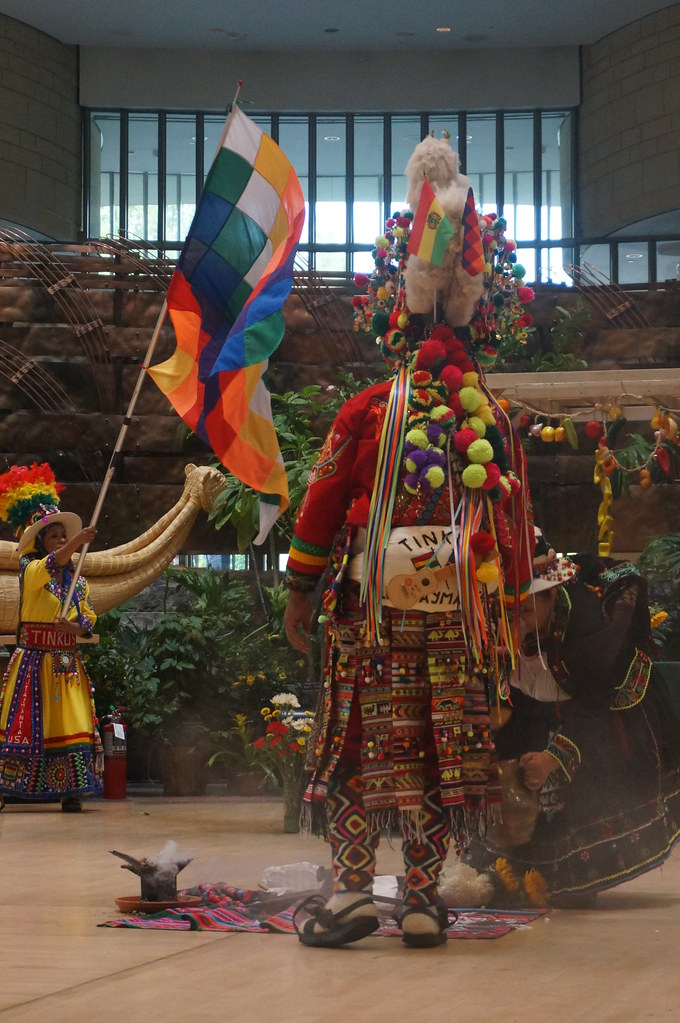
Tinku Pachamama Ritual
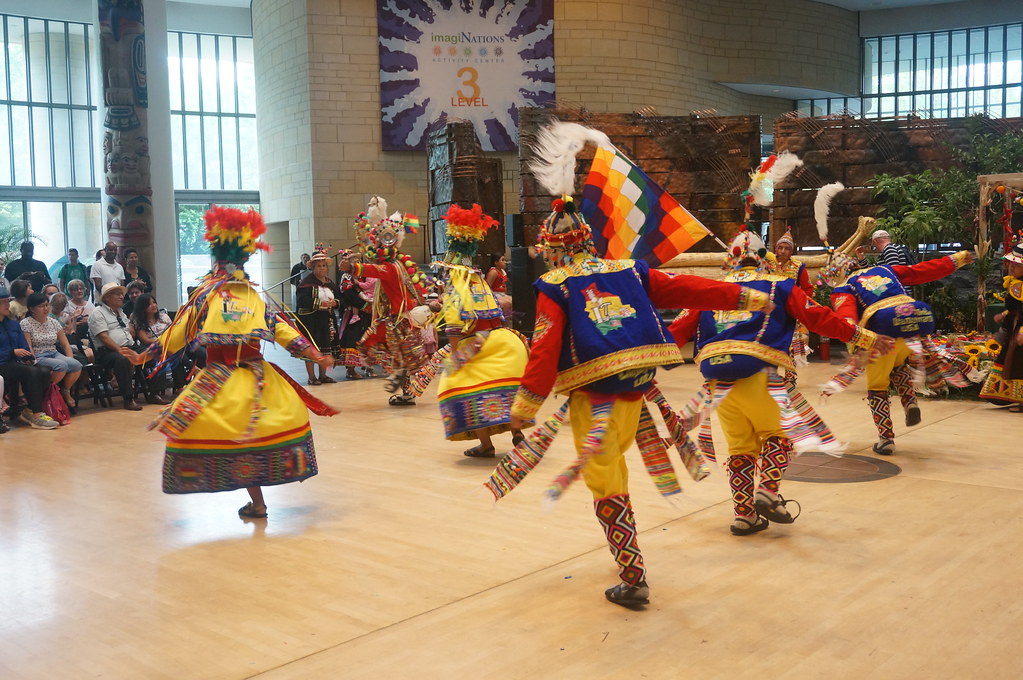
Then the dances began!  It's hard to capture here how amazing these dancers were.  They performed three performances with only a half hour break between each, but never lost any energy.  The beat pulsed through the museum with each unfaltering step.  
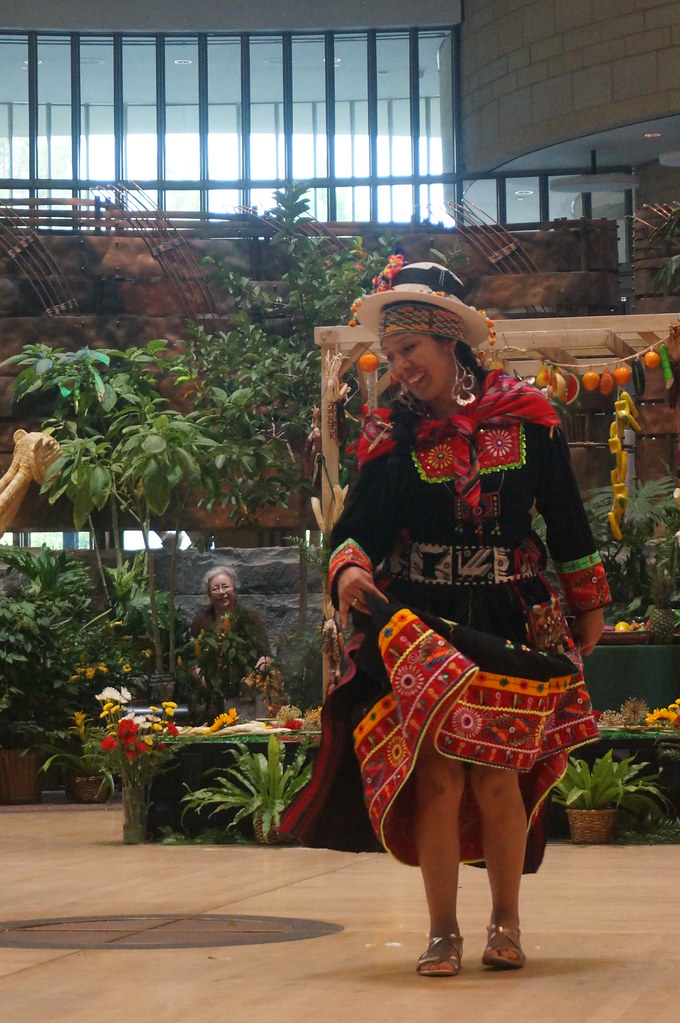
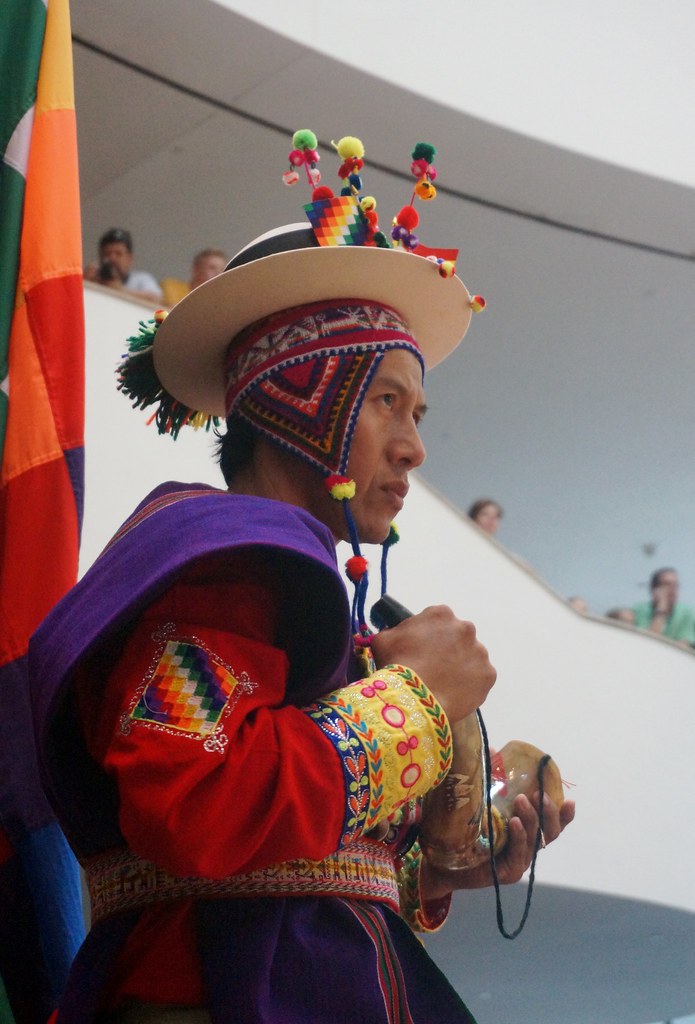
Bolivian Dancer
The first set of dances were the zapateados, dances that showcase the performers' footwork and focus on rhythm.  The next set of dances were the Huaylas, a dance from the highlands in which the dancers imitate the movements they perform in the fields while sowing potatoes.  
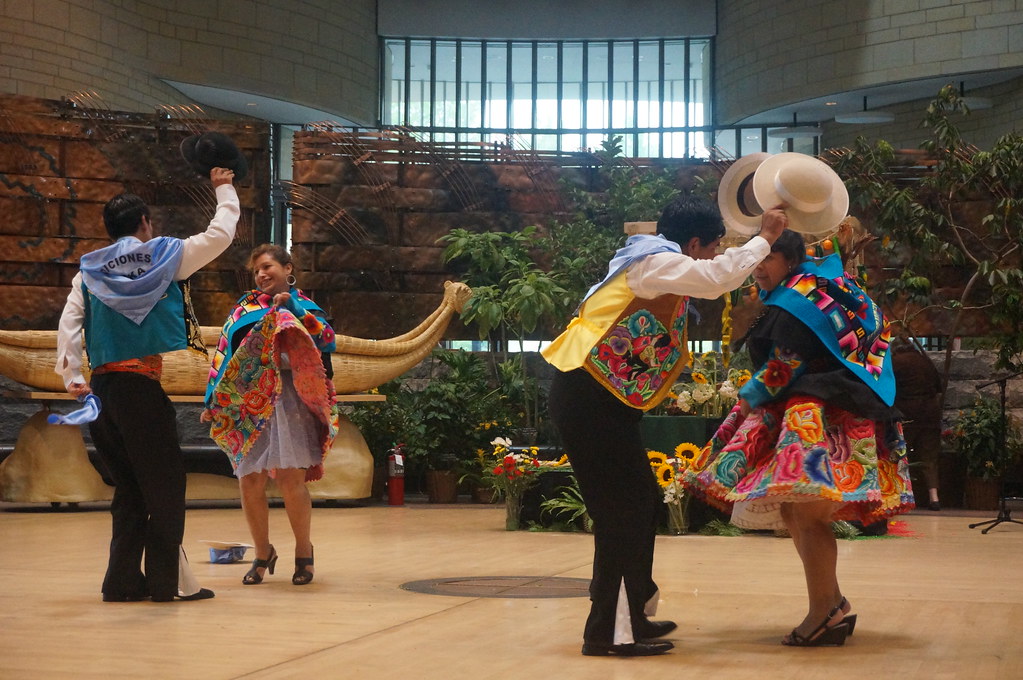
Huaylas Highland Dance
My favorite dance was the Tinku, variations of which are performed in parades.  This dance was the most energetic, with the dancers spinning and jumping, keeping pace with a quick rhythm.  The skill of the individual dancers, and the dancers as a whole, unparalleled with this dance.


Tinku Troupe Dance
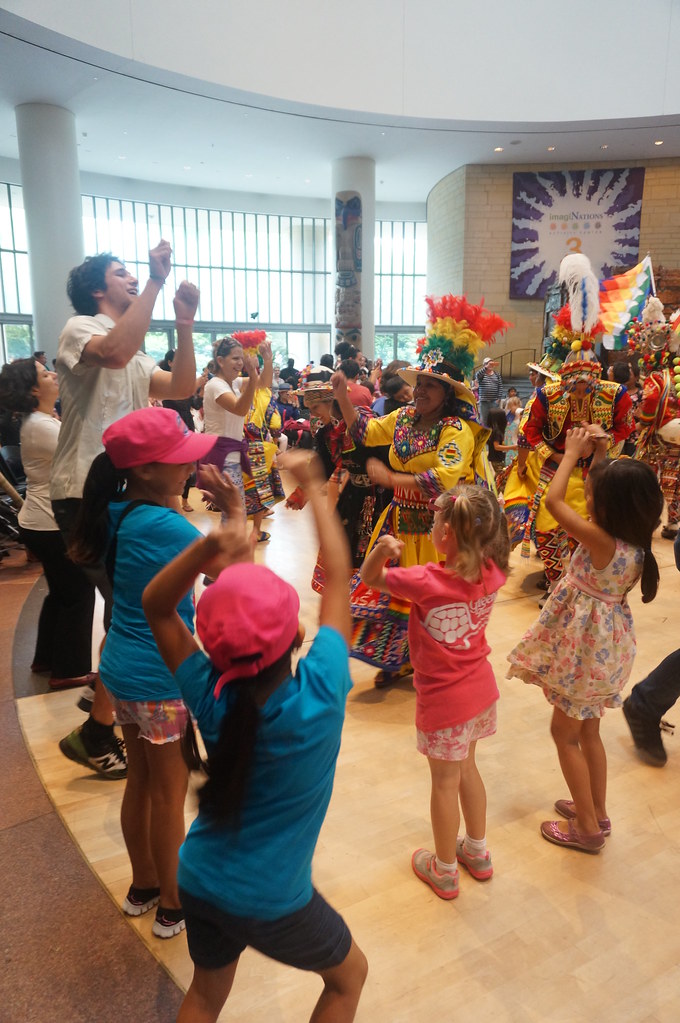
The audience even got involved too!


The dancing, music, and colors were beautiful.  The festival as celebrated in D.C. had more Bolivian and Peruvian influences, but it was really cool to see how a festival with similar roots was celebrated by these communities in the United States as compared to the festival I observed in a small Ecuadorian town.  


I thanked one of the Bolivian dancers after the show for sharing her performance, and her emotional reply left an impression with me: "I have lived in this country for 28 years and have never felt more Bolivian than I do today.  To perform in the Inti Raymi festival, in the nation's capital, here in this museum is a tremendous honor for me."
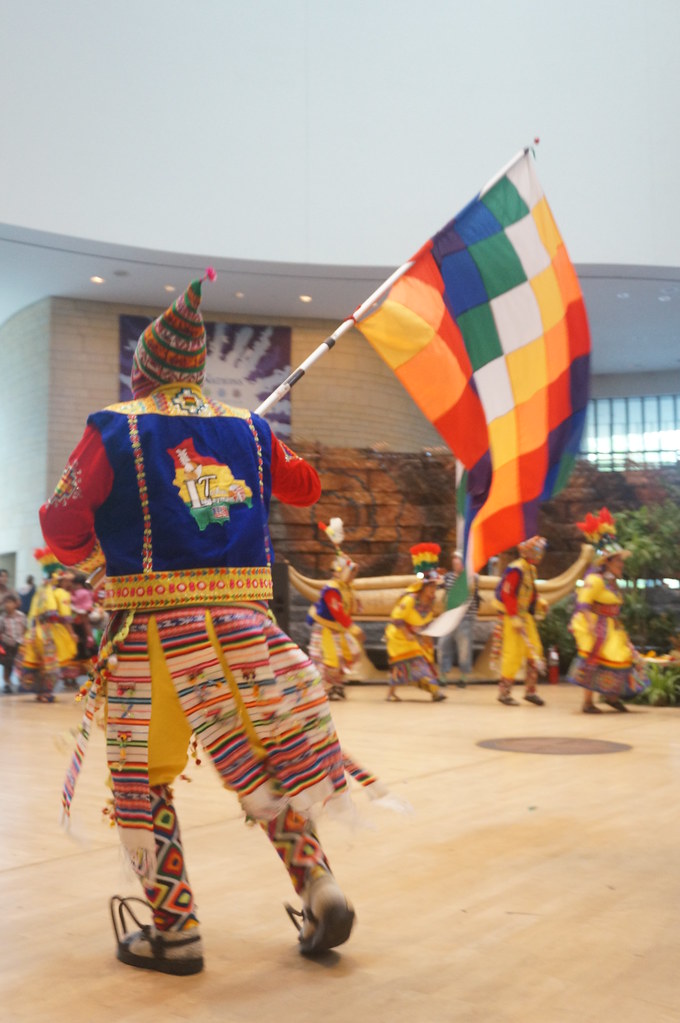
Dancer with Andean Indigenous Movement flag

Monday, May 25, 2015

A (Free) Ticket to Paradise at the Smithsonian's Hawaiian Festival

Last weekend, the Smithsonian's National Museum of the American Indian brought a little piece of paradise to Washington, D.C., with the 2015 Hawaiian Cultural Festival.  The festival, lasting May 16 & 17, brought together artists of all sorts to share hula, chanting, storytelling, traditional and contemporary Hawaiian music, food, traditional artists to celebrate Pele and Hi'iaka with D.C. residents and visitors.
Pele and Hi'iaka are Hawaiian deities that figure prominently in indigenous culture.  Pele is the goddess of fire, volcanoes, and maker of lands, and Hi'iaka is her brave and clever youngest sister.  Because Pele is the goddess of fire and volcanoes, she is honored by the color red.  Pele holds such a special place in Hawaiian culture that there is a custom in her honor as a volcano erupts.  It is said that as a volcano erupts and its lava flows down, a family should clean their home and set out a meal before leaving.  If they do this, it will be seen as a sign of welcoming and respect for Pele and her lava's path will part around the family's home, leaving it unscathed by her wrath.  
As shared by the Smithsonian, the epic journey of Pele and Hi'iaka (the abridged version; click here to watch the full story being told) goes like this:
Pele was driven out of the island of Kahiki (an island far from the Hawaiian islands) by her older sister Namaka.  Pele, the Fire Goddess and maker of lands, bids farewell to Kahiki knowing she can never return.  One majestic canoe carries her family across the vast ocean.  A favorite uncle and keeper of the sacred fire sticks travels with Pele, and she is led across the oceans by her brother Kamohoali'i.  After several battles with Namaka, Pele finally settles on the Big Island of Hawaii, where she occassionally spars with the goddess of snow and ice, Poli'ahu.   
Once, while in a deep dream, Pele travels to the island of Kauai and falls in love with a prince Lohi'au, an Ali'i (royal) of the island.  When her youngest sister Hi'iaka awakens her, Pele finds that she is far too weak to travel and begs Hi'iaka t travel and fetch Lohi'au for her.  Hi'iaka reluctantly agrees, as long as Pele takes care of Hi'iaka's sacred Lehua grove (a flowering tree unique to the islands) while Hi'iaka is on her journey.  Pele gives Hi'iaka a magic skirt of lei, and with it, Hi'iaka embarks upon an epic quest.  Along her journey, Hi'iaka battles fierce dragon-like monsters, the Mo'o clan and their leader Mo'olau.  Hi'iaka rescues Lohi'au from the monsters and brings him back to the impatient Pele, only to find that Pele, in her despair, had destroyed Hi'iaka's beloved Lehua grove.
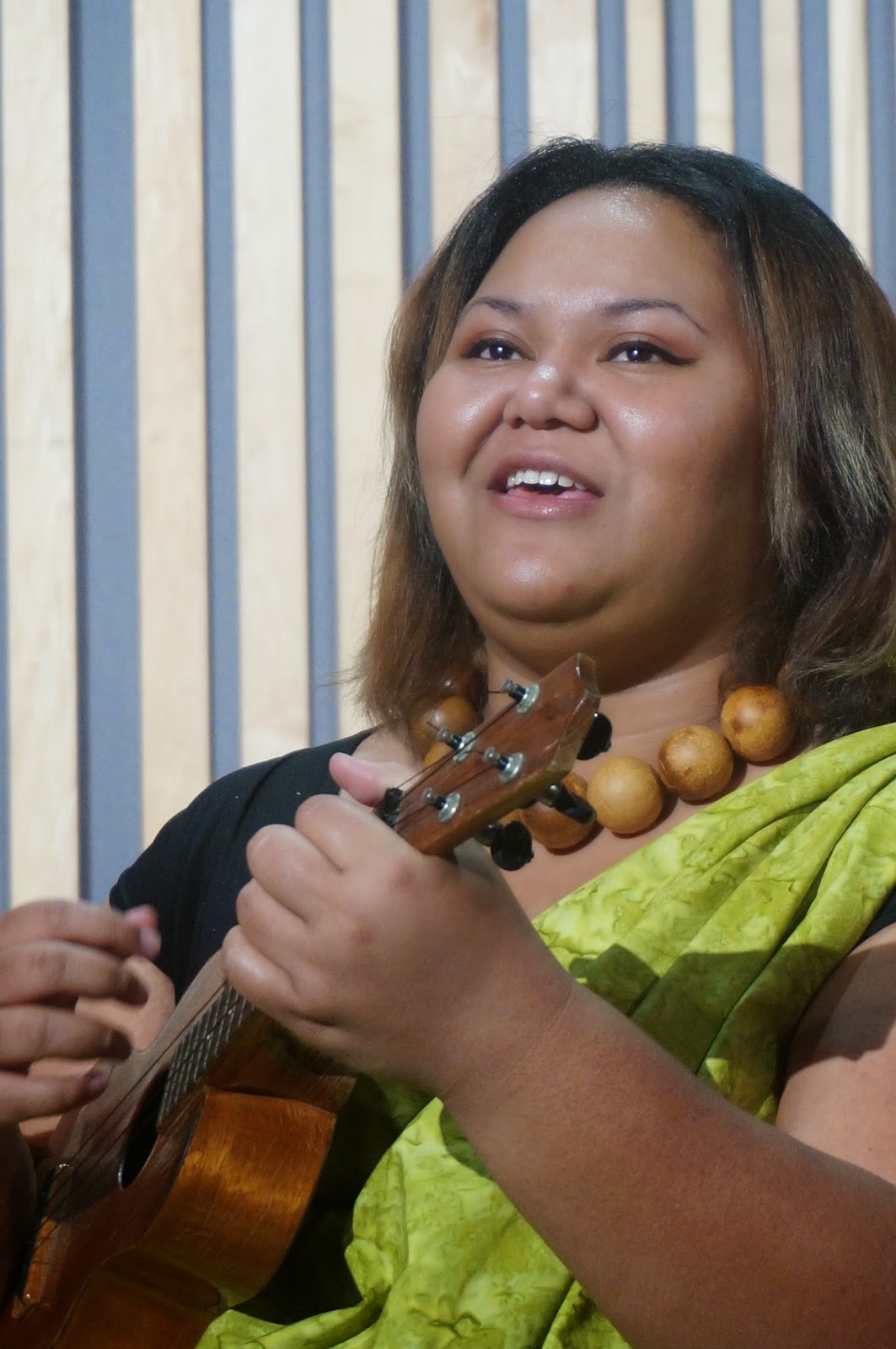
This epic story was brought to life through the talented storytellers (and ukulele players) Taryn Lelea'e Wong, Moses William Goods III, and Kealoha Kelekolio.  These storytellers are phenomenal.  Thankfully, the Smithsonian recorded and webcast their tale, and you can watch it here!  

In addition to talented storytellers, the rhythm of the Islands filled the museum's atrium with performances by hula dancers to music by the Aloha Boys.  The dancers, dressed in red to honor Pele, brought to life traditional Hawaiian dances as well as showing newer forms of Hawaiian dance blended with contemporary Hawaiian music.  
Many of the dances were reminiscent of the ocean's waves, but the dancers evoked an especially fiery energy while dancing as Mo'o (fierce dragon-like monsters of Hawaiian legend).  
There were also several talented craftsmen and women showcasing traditional Hawaiian arts to visitors.  They showed eager viewers techniques involved and explained the significance of each item in Hawaiian culture.  
Here, William Char demonstrates traditional lei making with different leaves, plants, and flowers found on the Hawaiian islands.  The red lei represents Pele, and the white lei to the left represents the ice of Poli'ahu, the Snow Goddess.
Above, Taryn Lelea'e Wong demonstrates traditional feather leis that served a unique role in Hawaiian culture.  Because Hawaii produces no natural gemstones, feather leis were a sign of royalty and high social status.  
This black and red lei took approximately 80 hours to make.
Its black feathers are the naturally colored feathers of a mallard, and the red feathers are dyed goose feathers.
The feathers are either a natural color or dyed, and are incredibly time-intensive to make.  Because of the detail and time required to make a feather lei, they are expensive and thus reserved for those who could afford to pay.  
Unlike other markers of royalty in traditional cultures, Ms. Lelea'e Wong explained, different colors did not necessarily connote higher class or royalty standing - just being able to own and wear a feather lei in itself indicated royalty.
I gained a deeper insight to Hawaiian culture and history and hope to someday experience the islands first-hand.  I am looking forward to Smithsonian and the National Museum of the American Indian's next big cultural festival - the Inti Raymi Andean summer solstice festival in Washington, D.C., and New York City.  I had the chance to see this festival while working in Ecuador in 2013 and am excited to participate in the Washington, D.C., celebrations.  

Saturday, July 20, 2013

Otavalo Market and Peguche Waterfalls

On Saturday, July 20, 2013, I met up with 4 co-workers and a few of their friends bright and early at the Carcelen Bus Station in the northern part of Quito (at 7:00am!).  We were easily able to buy tickets and board our bus to our destination - the famous Saturday morning markets at Otavalo.  We arrived around 9:00am, had a quick breakfast, and then hit the market stalls.  
The day before, a friend from work and I went to the Mariscal market in Quito to price-check all the goods there to have an idea of which goods would be cheaper in Quito and which would be cheaper in Otavalo.  Without even bargaining, we got some pretty good asking prices that served us well as a great frame of reference for the Otavalo shopping adventure.  The Otavalo Saturday market is a pretty big tourist attraction and because of this, I think a lot of the similar goods that you could find in Quito were a bit overpriced, although there is a larger selection for jewelry in Otavalo (and the prices were not bad with a bit of bargaining).  We were able to do some pretty good bargaining and walked away with a backpack full of pretty cool stuff.
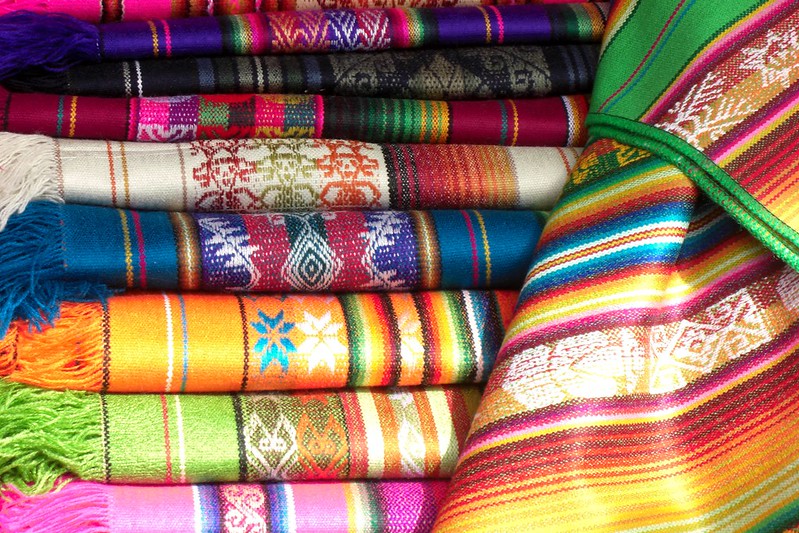
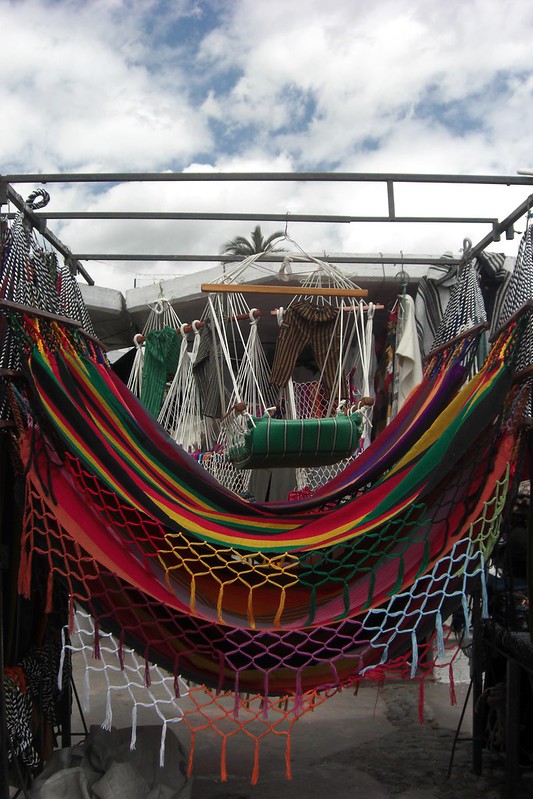
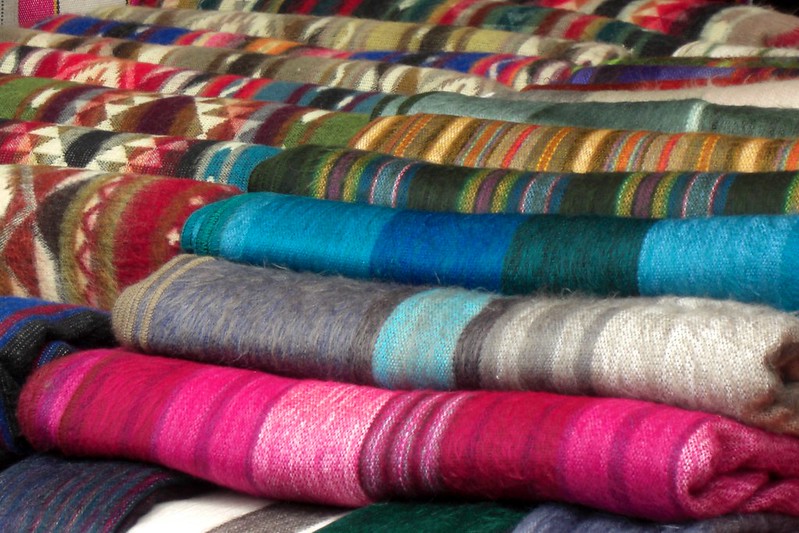
There were a lot of cool things in the market and we had fun just wandering around and bargaining with the shop owners.  Some of the extranjeros in our group thought that bargaining too much was a bad thing and insulting, but the bargaining is part of the fun and the experience.  The starting price is always too high and especially if you are willing to buy more than one item, the final price will likely be significantly lower.  Also, if you stick to your offered price, are determined, and willing to walk away if it isn't lowered, venders may accept your original offered price (which is a win for you).  The pictures here are only a few kinds of goods at the market (lots more things than this, obviously, but the pathways between the stalls are tight and I didn't want to have my camera out everywhere).
After our market shopping experience and a quick lunch, our big group split up.  My friend and I had already been to Cotacachi and Cuicocha, so we stayed in the Otavalo area and headed to the Peguche Waterfalls, about a 5 minute taxi ride south of the town.  There is a tiny town (called Peguche) which is pretty poor - just a dusty little place with cinderblock houses and tin roofs.  You enter the park through a gate that was built in 1613 by enslaved indigenous men, women, and children.  After the gate, you walk a bit through the park on a cobblestone pathway.  The park is free to enter and it was cool to see all of the Ecuadorian families out in the park playing soccer, having picnics, and just enjoying themselves.
The waterfall itself is a tourist attraction so the area right by the falls has a pretty mixed crowd.  But the waterfall also has spiritual significance related to the Inti Raymi festival.  Festival participants bathe in the ice cold water to cleanse themselves before the festival.  It was pretty cool to be able to see the waterfall knowing this having seen one day of the festival earlier in one of our weekend trips. There are some trails leading around the falls so we were able to hike up to the top of the falls as well as hike a bit in the forest to see the falls from a distance.

Saturday, June 29, 2013

Cotacachi y Cuicocha

Fellow volunteers and I took the bus from the north bus station in Quito to Cotacachi, a town about 5 miles northwest of Otovalo (which I still need to go to for some hiking and the market there).  That weekend, there was a festival with all of the indigenous groups in the area called Inti Raymi in Kichwa (it means "sun festival") and also commemorates San Juan, San Pedro, and San Pablo.  We went to the town to see what it was all about.

On the first day, the men start dancing around 9:00am or 10:00am and dance until about 7:00pm at night.  The dancers wear these leather chaps that have sheep or alpaca furn the outside.  they also have these giant black hats that are made out of a hard material and have symbols on them of all different kinds.  I think the hats kind of serve a dual purpose because the next item that the dancers have are whips made out of rope, steel cables, or chains.  As they dance around the town, they whip the ground.  The dancers, at least the male dancers, also drink a lot all day, so there were tons of teams of riot police dispatched all over the little town to prevent fights from breaking out between the different groups of dancers.  On Sunday, the women danced, but since some of us had to work, we were only able to see the part of the festival on Saturday.
After wandering around the town for a bit and watching the different groups' dancing, we took a couple of taxis to a nearby lake called Laguna Cuicocha.  I guess you used to have to pay to get into the park where the lake is located but now it is free to enter.  The lake is absolutely gorgeous.  There are lush green mountains that border one edge and then you can walk around the other edge.  The park even has a little visitor's center where you can purchase hot empanadas and canelazo.  The lake itself is actually fairly large and there is a small island in the middle.  Too bad we didn't have more time left in the afternoon because I would have loved to canoe or kayak on that lake.

At night after we ate dinner, we walked around the town again, but stuck only to main, well-lit streets (pretty much the entire male population of the town was plastered and they still had those steel whips).  While Otovalo is famous for its Saturday market, Cotacachi is famous for its leather goods.  I was not even planning on buying anything, but then my friend wanted to look around so we ended up wandering into a store and started trying on jackets (dangerous).  We both ended up walking out with really cool bomber-style jackets.  While we were trying them on and deciding if we wanted to purchase them, our other friend decided to come in the store and mess with us to get us to hurry up.  He ended up buying a jacket even more expensive than either of ours.
After half of our group was clad in Cotacachi leather jackets, we wandered down a street and got help from two very nice women who were running a food stand at night (they were going to be dancing the next day).  They called cabs for us and waited outside with us until the cabs arrived, and tought us some Kichwa words while we waited.  They even went to the cabs first to make sure they were the cabs that were called to make sure it was safe for us to hop in.  They also told the cab drivers where to take us so that we could get on a bus back to Quito.  While we were waiting with them, we saw a group of drunk men stumble out of a house next door.  They were followed by a woman who must have been one of the men's wife - she was carrying all the steel cable whips (smart lady).
Once we got on the bus leaving Otovalo and heading back to Quito, there were no seats left so we stood for a little bit until more people got off and some seats opened up.  While we were standing, there was a lady who had two seats to herself and just had a bag sitting on the empty window seat.  She was really stubborn and refused to move the bag so that one of us (or one of the other 10 people standing) could sit down, claiming she paid for both seats.  Who knows what was going on with her, but it made the ride back pretty hilarious.

All in all, it was a great trip (even though I got sick from whatever we ate for dinner).  And the jacket is pretty cool too - it's too hot to wear it much here, but it will be perfect for fall and winter in Michigan.

Twitter Delicious Facebook Digg Stumbleupon Favorites More

 
Design by Free WordPress Themes | Bloggerized by Lasantha - Premium Blogger Themes | Walgreens Printable Coupons